
Last updated September 23, 2026
Free visual inspection and a written scope of work before any mitigation begins - photos, moisture readings, and drying logs go in your claim file
The scope we write is the scope we bill. Anything new gets shown to you, in writing, before we touch it.
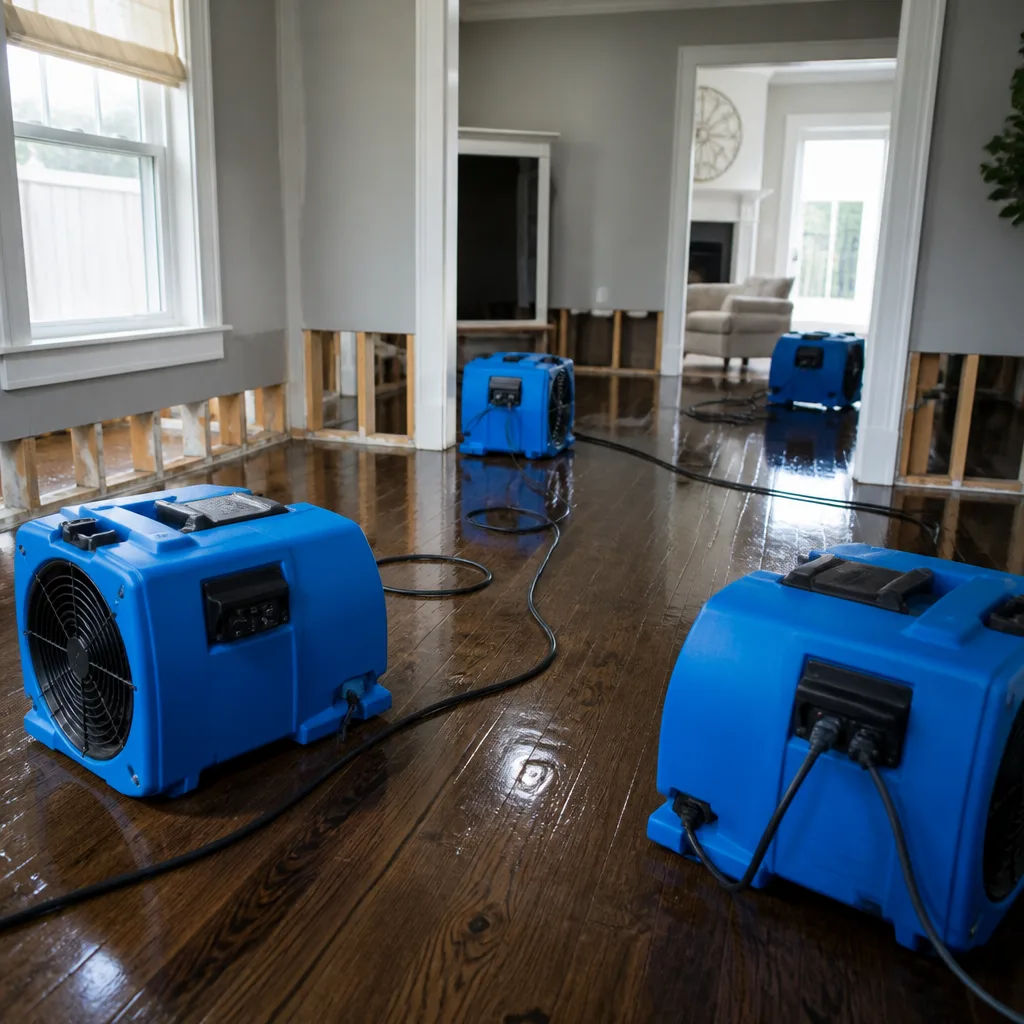


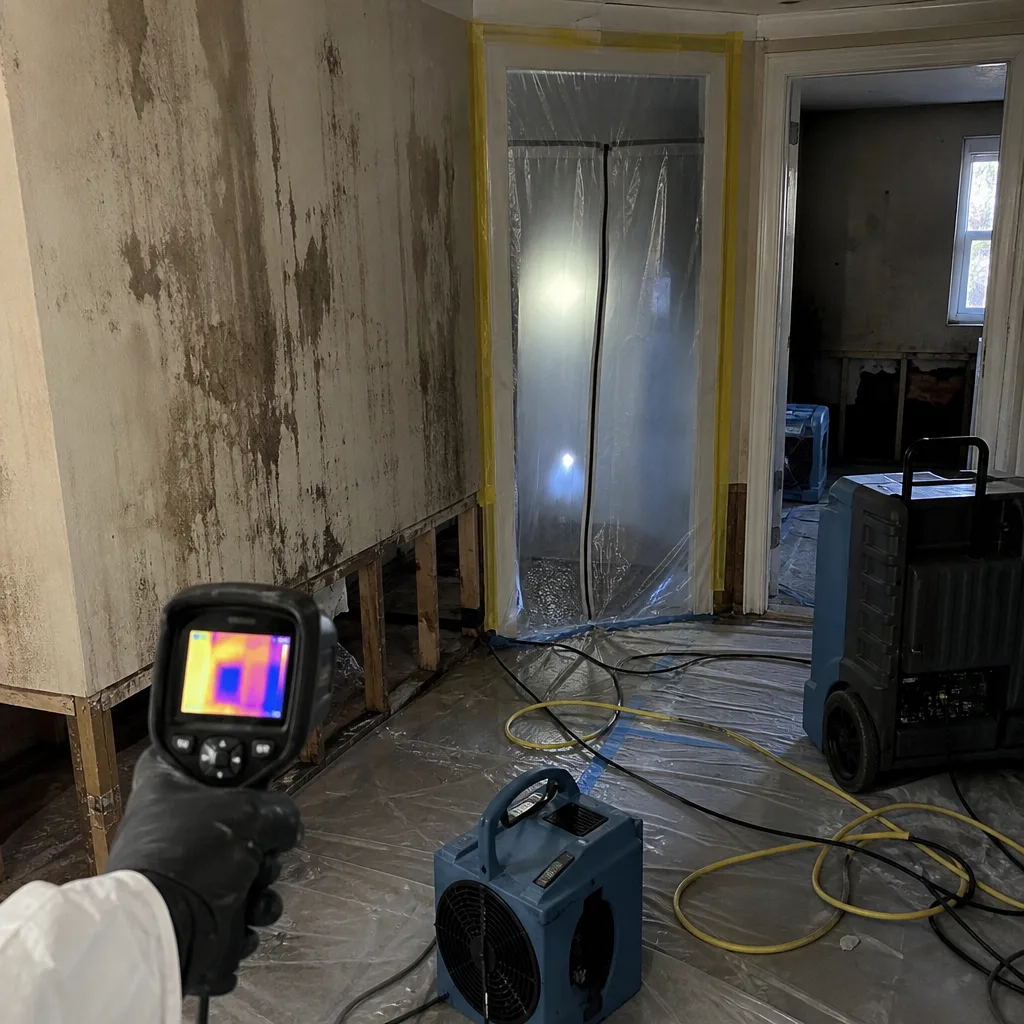 Before
 After
After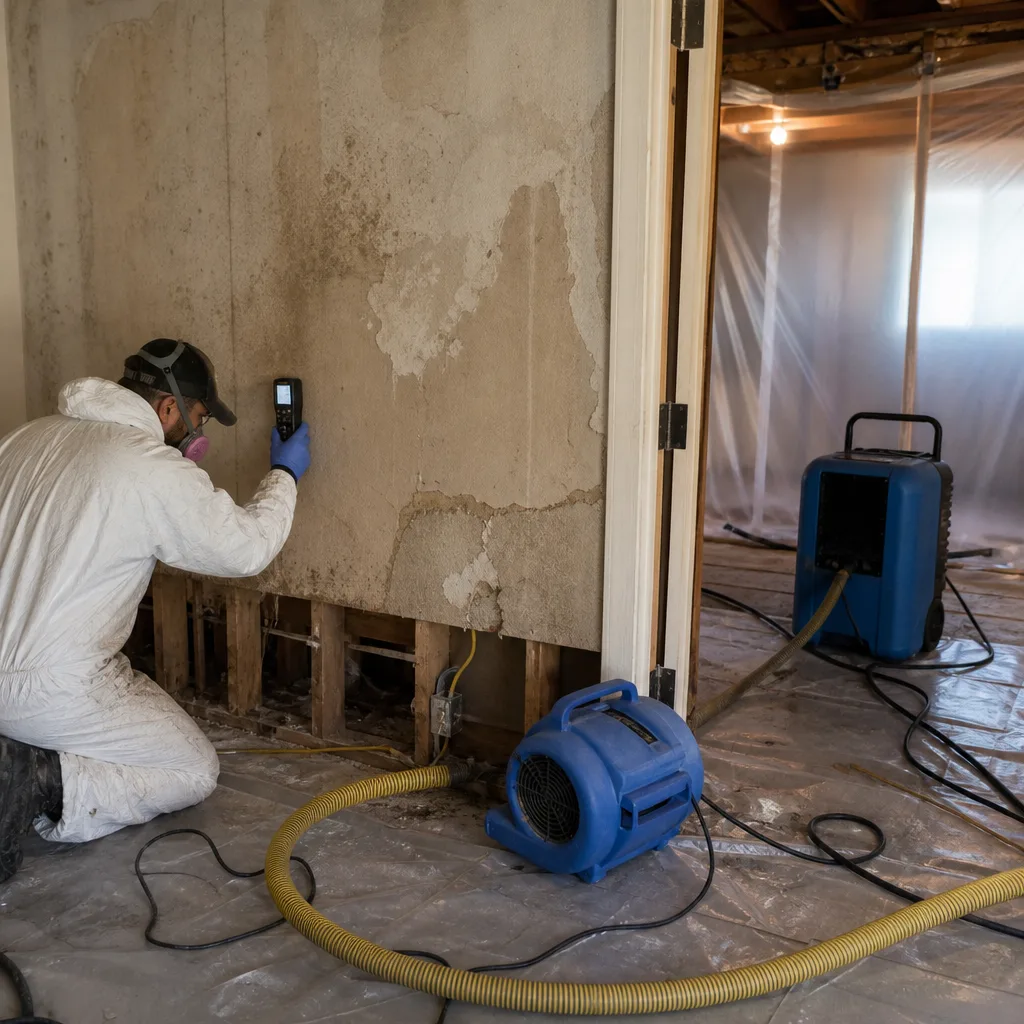 Before
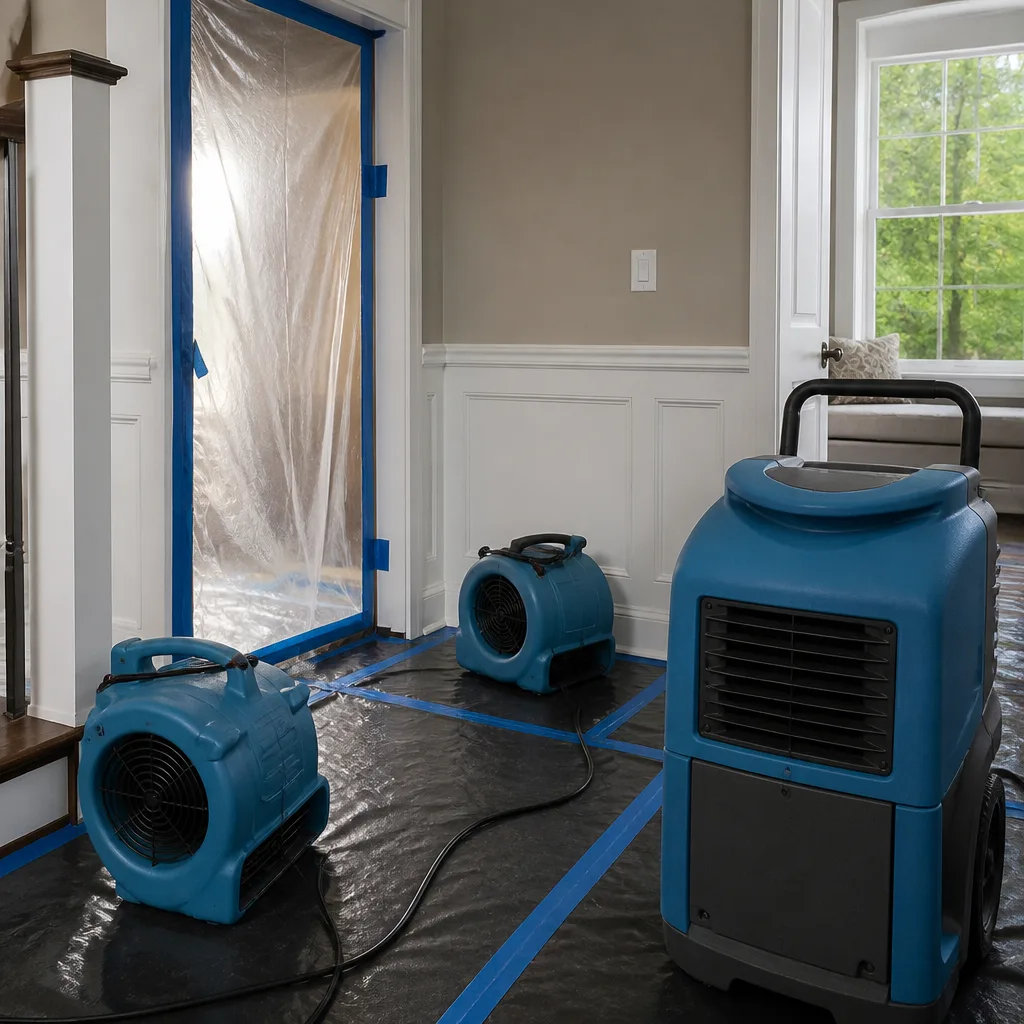 After
After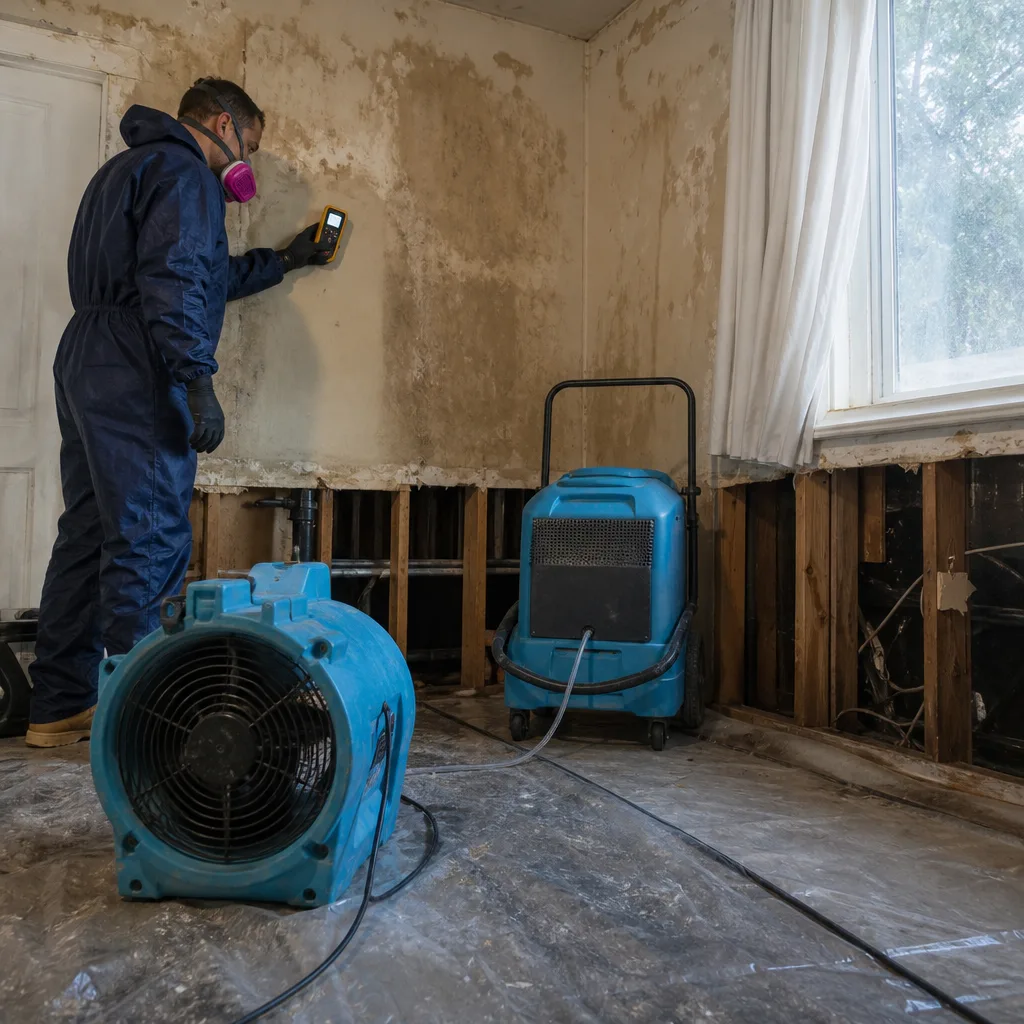 Before
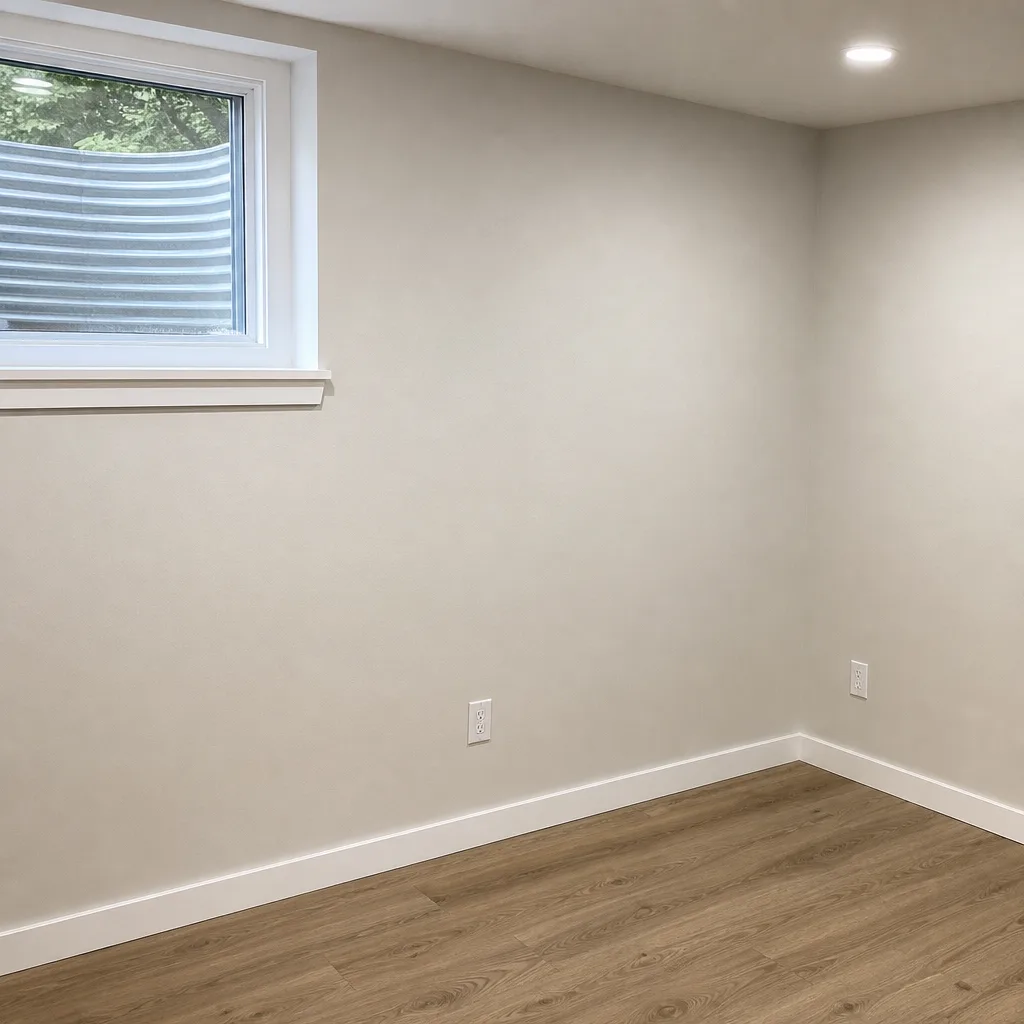 After
AfterHow to Hire a Damage Restoration Contractor in Tukwila: A Step-by-Step Guide
Washington State does not require restoration contractors to hold a specialty license for water mitigation. Any general contractor with a valid license can legally show up at your Tukwila door after a burst pipe, and your insurer has no obligation to pay an invoice that lacks documented moisture readings, daily drying logs, or a written scope agreed to before work started. In our experience reviewing competitor estimates for Tukwila homeowners, the claims that get denied or short-paid almost always trace back to one decision: the homeowner signed before verifying documentation practices. This guide shows you exactly how to verify credentials, read contracts, compare bids, and avoid the red flags that cost Tukwila property owners thousands in uncovered repairs, or see our Complete Guide to Damage Restoration in Tukwila for more depth.
Quick Answer
Hiring a damage restoration contractor in Tukwila means verifying a valid Washington contractor license, IICRC WRT certification, and general liability insurance through the WA L&I website; requesting a written price before work begins with daily drying logs and photo documentation included; and refusing assignment-of-benefits agreements that shift claim control away from you. The contractor who documents properly gets your claim paid. The one who doesn’t leaves you holding the invoice.
Table of Contents
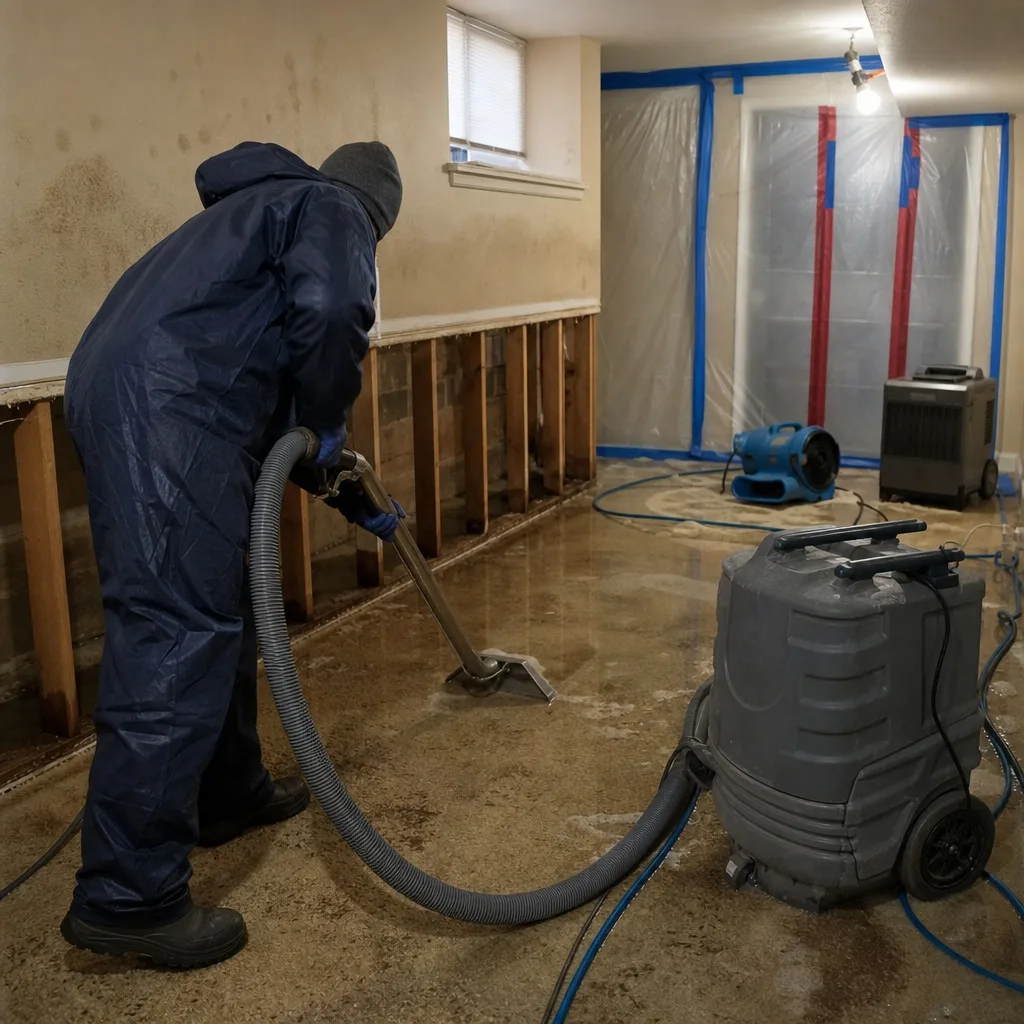
- How to Verify Licenses, Certifications, and Insurance in Washington
- Four Contract Clauses That Protect Tukwila Homeowners
- Why Assignment-of-Benefits Agreements Shift Claim Control Away From You
- How to Compare Restoration Bids Scope-to-Scope, Not Price-to-Price
- Post-Storm Contractor Red Flags Specific to Tukwila
- What Proper Documentation Looks Like on Every Job
- Common Mistakes to Avoid
- When to Call a Professional
- Frequently Asked Questions
 Before
 After
AfterHow to Verify Licenses, Certifications, and Insurance in Washington
The first step in hiring any damage restoration contractor in Tukwila is pulling their credentials yourself. Do not accept a photo of a license card or a certificate on a wall. Washington’s Department of Labor & Industries maintains public databases that take under five minutes to search, and what you find there determines whether your insurer will even consider the contractor’s invoice.
Step 1: Verify the Contractor License
Go to secure.lni.wa.gov/verify/ and enter the contractor’s name or UBI number. You are looking for three specific items:
- Status: Active, not expired or suspended.
- Bond: A valid surety bond on file, typically $12,000 for general contractors.
- Insurance: Current general liability coverage listed.
Washington issues specialty contractor licenses for trades like electrical and plumbing, but not for water mitigation or mold remediation. This gap means a contractor can legally perform drying work with only a general contractor registration. That is why the next two checks matter even more.
Step 2: Confirm IICRC Certification
The Institute of Inspection, Cleaning and Restoration Certification (IICRC) sets the actual standards insurers recognize. For water damage, look for WRT (Water Damage Restoration Technician) and ASD (Applied Structural Drying). For mold, look for AMRT (Applied Microbial Remediation Technician). Ask for the technician’s IICRC ID number and verify it at iicrc.org/page/registry. A company may hold a corporate certificate, but the technician on your Tukwila job needs individual certification. We have seen jobs in Tukwila’s Allentown and McMicken Heights neighborhoods where the crew that arrived held no personal certifications, and the insurer rejected the drying log because the person who signed it lacked standing under IICRC S500 standards.
Step 3: Validate Insurance Directly
Request a certificate of insurance (COI) naming you as additional insured for the project duration. Call the insurance company listed to confirm the policy is active. Minimum coverage for restoration work in King County should include general liability of at least $1 million per occurrence and workers’ compensation if the contractor employs anyone. Uninsured workers on your property create liability that your homeowner’s policy may not cover.
In Tukwila’s commercial zones near Southcenter Mall, we have also seen property managers require pollution liability coverage for sewage or biohazard work. Ask specifically if your loss type triggers additional coverage requirements.
Four Contract Clauses That Protect Tukwila Homeowners
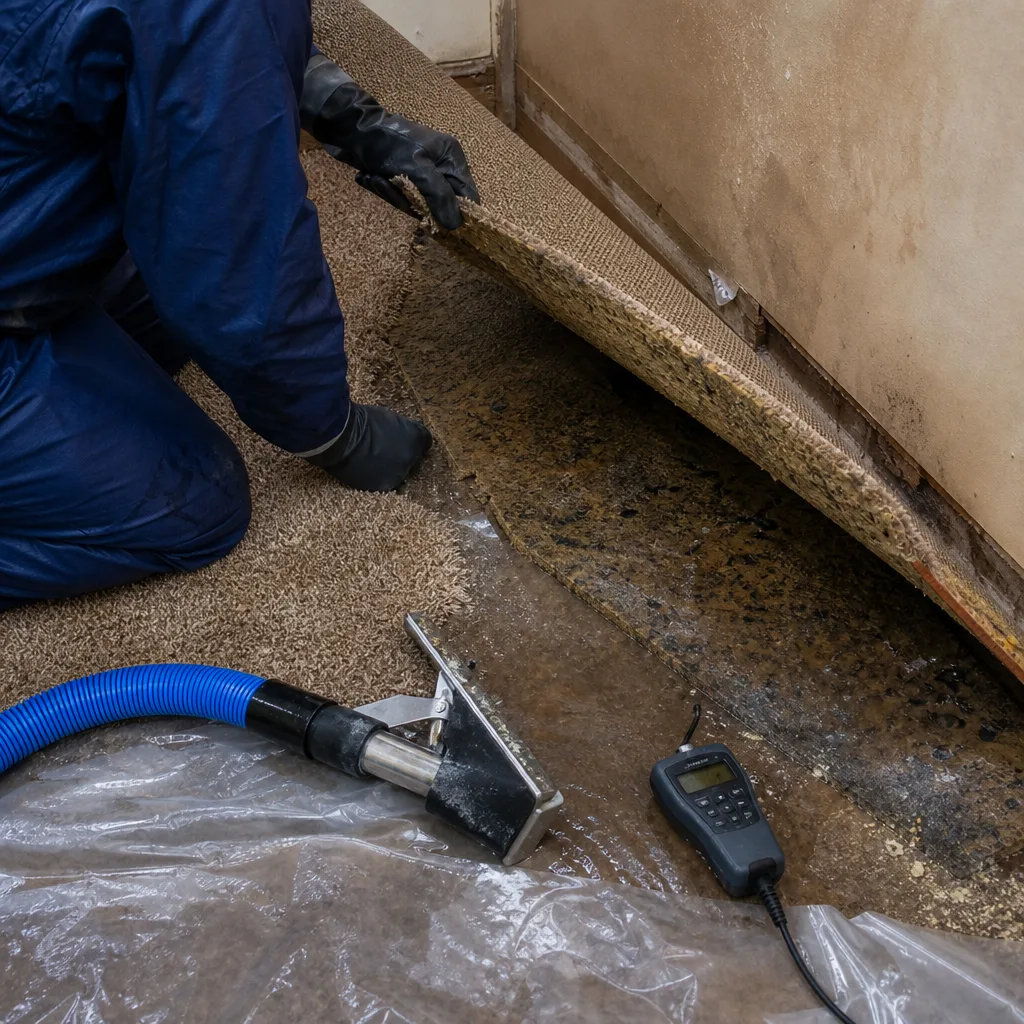
The contract you sign before work begins determines what documentation your insurer receives and whether your claim gets paid without a fight. These four clauses separate professional restoration contractors from those who leave homeowners with uncovered bills.
Clause 1: Written Price Before Work Begins
Every restoration job in Tukwila should start with a written scope and price, signed by both parties, before equipment runs or demolition starts. This is Haven Standard, Clause 1 at our company, and it exists because we have seen too many Tukwila homeowners sign vague work authorizations that balloon once the crew is inside. A written price protects you from scope creep and gives your adjuster a fixed document to approve. If a contractor says they cannot price until after they start, they are either inexperienced or planning to bill time-and-materials without a cap.
Clause 2: Daily Drying Log Delivery
Psychrometric data, recorded daily, proves the drying progress your insurer requires to release payment. The log should include: temperature and relative humidity readings for each affected room, specific humidity calculations, moisture content readings for affected materials (wood framing, drywall, subfloor), equipment placement maps, and dehumidifier pint removal totals. Ask when and how you receive this log. Email delivery within 24 hours of each monitoring visit is standard practice. A contractor who keeps logs “on file” or delivers them at job completion is documenting for their own convenience, not your claim.
Clause 3: Photo Record on Every Visit
Photo documentation should cover pre-loss condition, moisture mapping, equipment placement, progressive drying stages, and post-completion clearance. The contractor should specify who takes photos, what equipment they use, and how you access the files. At minimum, expect date-stamped images shared through a secure portal or emailed link within 24 hours of each visit. Photos taken on a personal phone and texted days later do not meet the documentation standard that insurers in King County now expect.
Clause 4: Post-Completion Moisture Clearance Standard
The contract should define what “dry” means in measurable terms. IICRC S500 specifies moisture content readings within 4 percentage points of a dry standard reference for the same material in an unaffected area of your Tukwila home. Without this clause, a contractor can declare the job finished while wall cavities still hold elevated moisture, leading to mold growth that your insurer may classify as a separate, uncovered loss. The clearance should be documented in writing, with readings, photos, and a signed release.
Why Assignment-of-Benefits Agreements Shift Claim Control Away From You
Assignment of benefits (AOB) is a legal document where you transfer your insurance claim rights to the contractor, who then bills your insurer directly and negotiates payment on your behalf. AOB agreements are common in restoration, particularly in water and storm damage, and they are increasingly problematic for Tukwila homeowners.
When you sign an AOB, you lose control of your claim. The contractor decides what to bill, when to supplement, and whether to litigate if the insurer disputes charges. In Washington, AOB agreements are not prohibited, but they are not standard practice either. We have reviewed AOB contracts from Tukwila jobs where the contractor billed for equipment that never ran, charged triple the regional rate for dehumidifier rental, and sued the homeowner’s insurer without the homeowner’s knowledge, leaving the homeowner exposed to counterclaims.
What to Ask For Instead
Direct insurer coordination without assignment. A professional contractor in Tukwila should:
- Provide a written scope and price for your approval
- Submit that scope to your adjuster with supporting documentation
- Revise only with your written agreement
- Accept payment from you or your insurer based on the approved scope
This preserves your claim rights and keeps pricing transparent. At DryMark Restoration Tukwila home, we coordinate directly with adjusters daily, but every scope change requires homeowner signature, and no AOB is ever requested. The Haven Standard requires the homeowner retain claim control.
How to Compare Restoration Bids Scope-to-Scope, Not Price-to-Price
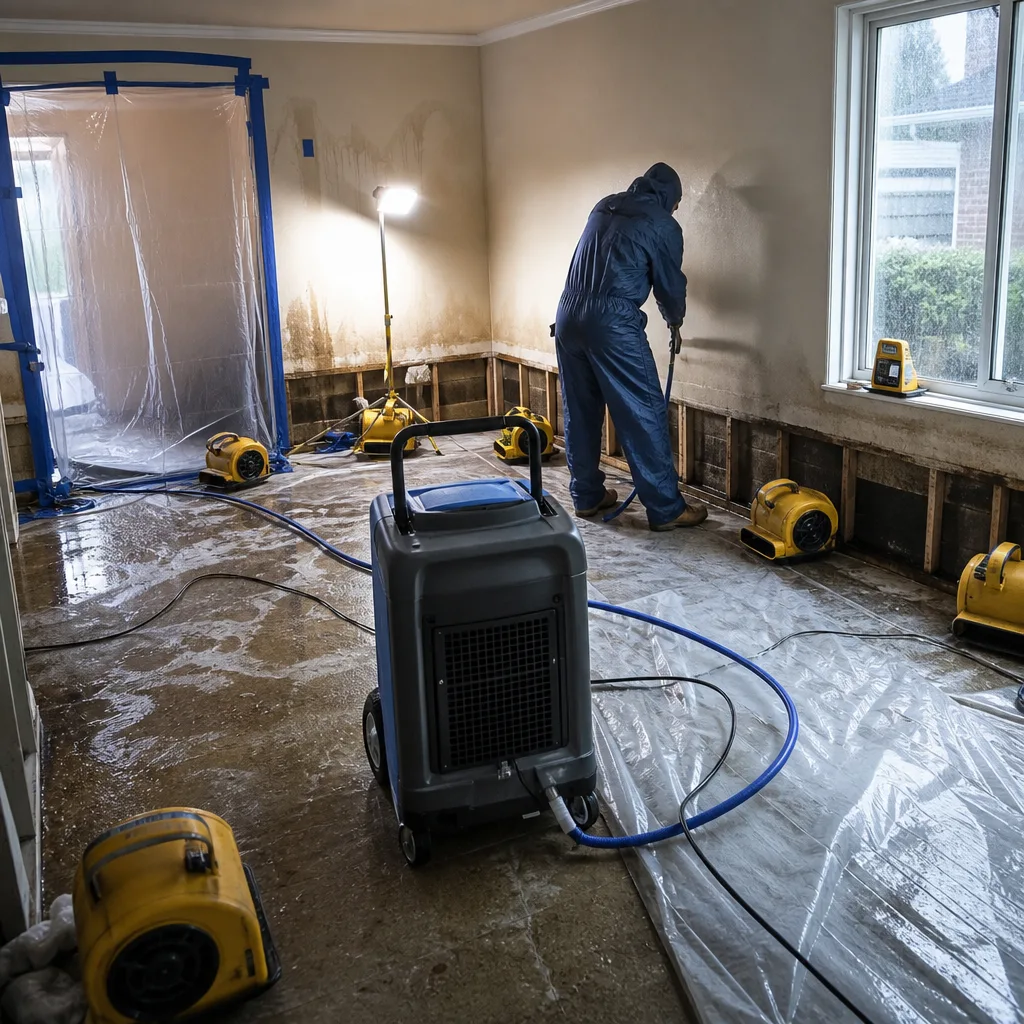
The lowest bid in Tukwila restoration often becomes the most expensive job. Underbid scopes create supplement fights mid-job, delay completion, and leave homeowners paying out-of-pocket for work the original estimate omitted.
The Scope-to-Scope Method
Instead of comparing total prices, line up the scope items. A proper Water Damage Restoration Maintenance Checklist for Tukwila Homeowners should guide every scope, which must specify:
- Affected square footage by room, with dimensions
- Material classification of wet surfaces: Category 1 (clean water), Category 2 (gray water), or Category 3 (black water/sewage)
- Class of water loss (1-4) based on evaporation load and affected materials
- Equipment specifications: number, type, and capacity of air movers, dehumidifiers, and specialty drying systems
- Demolition scope: exactly what comes out, to what height, and how disposal is handled
- Antimicrobial application: product name, EPA registration number, and application method
- Monitoring frequency: how often technicians return with moisture meters and thermal imaging
- Reconstruction estimate: separate line item, not buried in mitigation pricing
Two bids for $4,200 and $6,800 are not comparable until you verify they address the same scope. The $4,200 bid may assume Class 2 drying with six air movers when your Tukwila home needs Class 4 with Injectidry cavity drying and a desiccant dehumidifier for the crawl space. The supplement to add that equipment mid-job often exceeds the original bid.
In Tukwila’s older neighborhoods near the Duwamish River, we regularly encounter homes with original plaster and lath, balloon framing, or unvented crawl spaces that change the drying strategy entirely. A bid that treats these as standard drywall jobs will underperform and require costly corrections.
Equipment Documentation Matters
Ask which brands and models the contractor deploys. Professional-grade drying equipment from Phoenix, XPOWER, and B-Air carries documented cfm and pint-removal ratings that insurers recognize. Off-brand or consumer-grade equipment may not produce the psychrometric data your adjuster needs to approve extended drying time. The bid should list equipment by model, not by generic description.
Post-Storm Contractor Red Flags Specific to Tukwila
Tukwila’s location at the confluence of the Duwamish and Green Rivers, combined with its mix of residential neighborhoods and commercial corridors, makes it a target for post-storm contractor solicitation; read our Seasonal Damage Restoration Care for Tukwila: Year-Round Homeowner’s Guide to prepare ahead. The patterns repeat after every significant weather event.
Red Flag 1: Door-Knocking Within 48 Hours of the Event
Legitimate restoration contractors in Tukwila are mobilizing existing customers and emergency calls, not canvassing neighborhoods. Door-knockers often work on commission for out-of-area companies that rent local phone numbers temporarily. They carry no inventory, have no local warehouse, and disappear once the job is billed.
Red Flag 2: Verbal-Only Pricing
Any contractor who will not put a price in writing before starting work is operating outside standard practice. Verbal estimates in Tukwila after storms often start low and escalate with “unforeseen” conditions that were visible at inspection. Written price before work begins is non-negotiable.
Red Flag 3: Pressure to Sign Before the Adjuster Visits
Your insurance adjuster needs to see the loss in its original state, or as close as possible, to scope covered damage. A contractor who pressures you to authorize demolition or equipment placement before adjuster inspection may be trying to prevent a competing scope from entering the file. This is common in Tukwila’s denser neighborhoods where multiple properties file claims simultaneously.
Red Flag 4: Request for Upfront Payment or Deposit
Restoration contractors bill on completion or through insurer direct payment. A request for deposit, especially cash or wire transfer, indicates financial instability or intent to abandon the job. This pattern spikes in Tukwila after regional flood events when fly-by-night operators follow the weather.
Red Flag 5: No Local Physical Address
Verify the contractor has a Washington State address, not a P.O. box or virtual office. Check the address on mapping services to confirm it corresponds to an actual warehouse or office, not a residential mailbox. Tukwila homeowners have been left with incomplete jobs by contractors who listed a Southcenter Mall suite number that turned out to be a mail-forwarding service.
What Proper Documentation Looks Like on Every Job
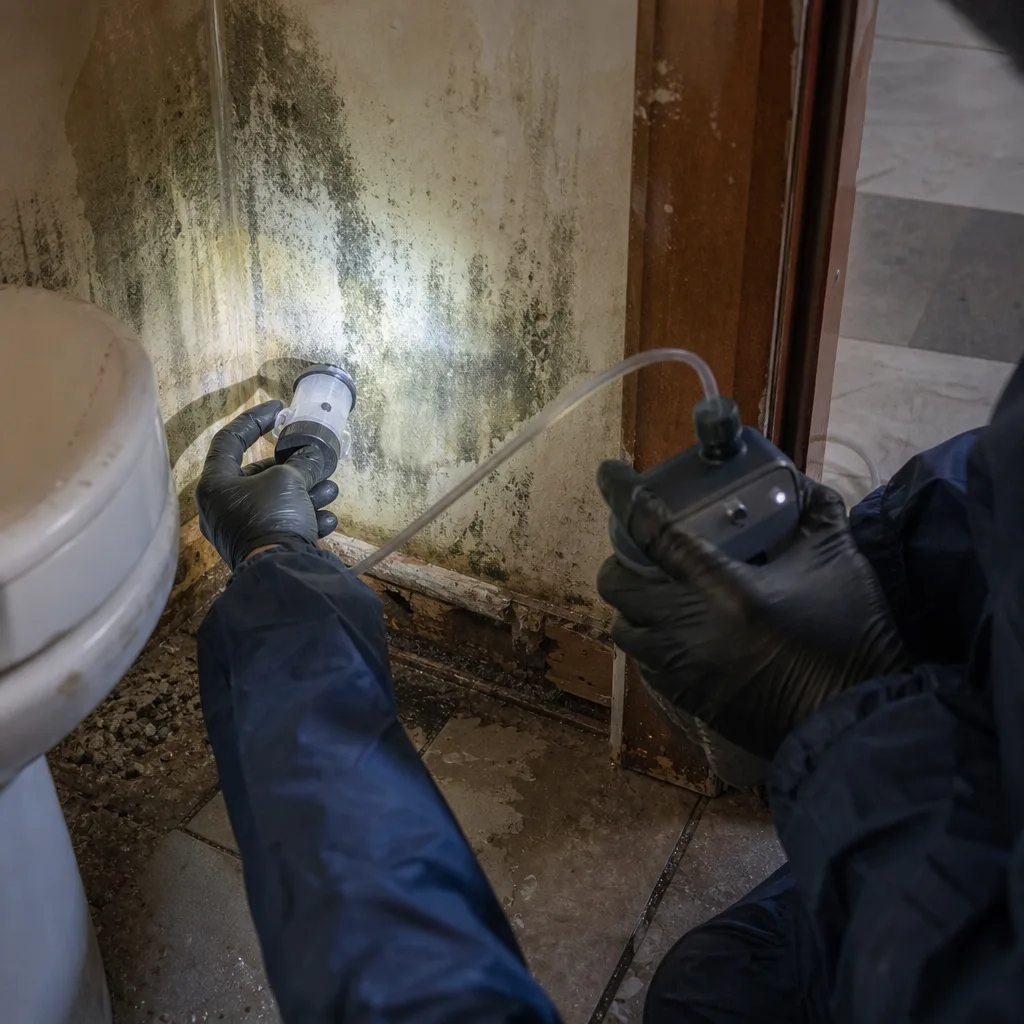
Documentation is the difference between a paid claim and a disputed invoice. Insurers in King County have tightened documentation requirements significantly since 2020, and Tukwila homeowners who understand what to expect can verify they are receiving it.
The Initial Documentation Package
Before equipment runs, you should receive:
- A written scope with line-item pricing, signed by you and the contractor
- Moisture mapping with readings from a calibrated pin or pinless meter, recorded by room and material
- Pre-loss photos of all affected areas
- Equipment placement plan showing intended locations and quantities
- Tertiary drying plan if cavities, subfloors, or crawl spaces are involved
Tertiary drying refers to moisture removal from structural cavities after surface materials are addressed. In Tukwila’s river-adjacent properties, we regularly find water migration into sill plates and rim joists that requires Injectidry systems or controlled demolition to access. The initial plan should identify this need, not discover it days later.
The Daily Documentation Package
Each monitoring visit should produce:
- Updated moisture readings with trend analysis (is the material drying, stable, or wetting?)
- Psychrometric data: temperature, relative humidity, and specific humidity
- Vapor pressure differential between affected and unaffected areas
- Equipment adjustments: additions, removals, or repositioning with justification
- Date-stamped photos showing progressive drying
Vapor pressure differential measures the force driving moisture from wet materials into the air. A contractor who tracks this can demonstrate scientifically that drying is progressing, not just assume it based on time elapsed. This is the documentation that turns restoration invoices into payable insurance claims.
The Completion Documentation Package
At job completion, expect:
- Final moisture readings meeting the dry standard defined in your contract
- Post-completion photos of all affected areas
- Equipment retrieval confirmation with final counts
- Written clearance statement with technician signature and IICRC certification number
- 365-Day Done Right Promise or equivalent written warranty
At DryMark Restoration Tukwila, every job under The Haven Standard includes these packages as standard deliverables, never upsells. Our Water Damage Restoration in Tukwila service documents to IICRC, RIA, and IFA standards using equipment from Dri-Eaz, Phoenix, XPOWER, B-Air, and Injectidry, with daily logs that adjusters in King County recognize and pay without dispute.
Common Mistakes to Avoid
- Verifying only the company name, not the individual technician. Washington licenses companies, but IICRC certifies individuals. The person who shows up at your Tukwila home needs their own credentials, not just the company’s.
- Accepting a “not-to-exceed” estimate without a detailed scope. A cap without line items still leaves the contractor room to underperform within the limit. Insist on the scope that produces the number.
- Ignoring the reconstruction phase in the initial contract. Mitigation contractors often do not perform rebuild work, leaving you to coordinate a separate contractor while your home remains stripped. Clarify who handles reconstruction before you sign.
- Signing during emotional stress without a second opinion. Water and fire damage create urgency that contractors exploit. Our Free Second Opinion on any competitor’s written estimate exists for this reason. Bring the scope, we will review it at no charge.
- Failing to document pre-existing conditions. Photograph your Tukwila home’s baseline condition before any loss if possible, and certainly before the contractor starts work. Disputes over what damage the loss caused versus what existed before are common in older Tukwila properties.
- Assuming insurance covers everything the contractor recommends. Coverage depends on your policy terms, not the contractor’s opinion. A professional contractor distinguishes between covered mitigation and non-covered improvements, and documents each separately.
When to Call a Professional
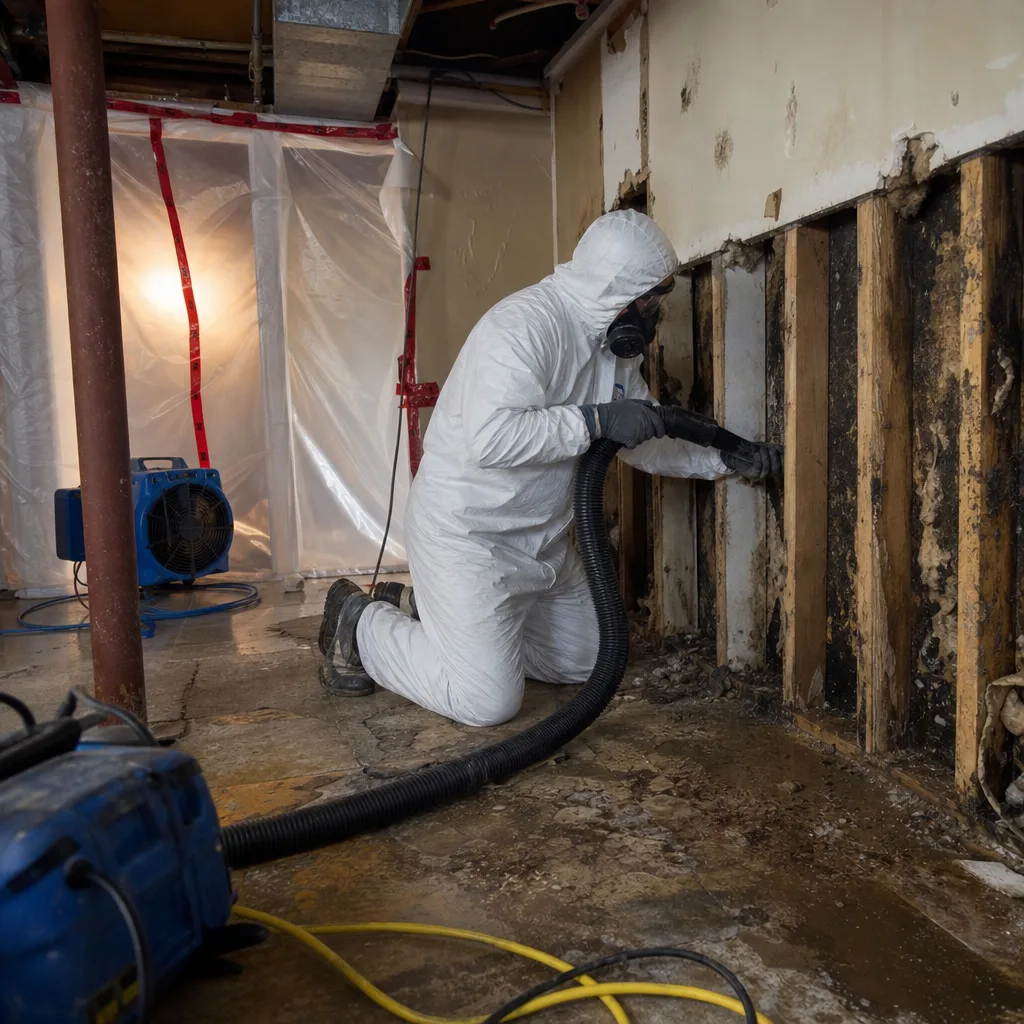
Call a damage restoration contractor immediately when water has affected finished materials, mold is visible or suspected, fire damage has compromised structure or air quality, or sewage or biohazard contamination is present. In Tukwila, the combination of older housing stock, river-adjacent water tables, and dense commercial-residential mixing means these conditions escalate faster than in drier, newer markets. A water line break in a Tukwila rambler with a post-war crawl space can saturate insulation and subfloor within hours, creating Category 3 conditions if sewage backup is involved.
For fire and smoke damage, professional assessment is needed even when visible damage seems limited. Smoke particles penetrate wall cavities and HVAC systems in ways that surface cleaning does not address. Our Fire & Smoke Damage Restoration in Tukwila service includes thermal fogging and hydroxyl generation documented to specific odor-elimination standards.
DryMark Restoration Tukwila offers free estimates in Tukwila. Call (253) 642-8884 to schedule a documented assessment with a written scope before any work begins.
Frequently Asked Questions
Visit secure.lni.wa.gov/verify/ and search by contractor name or UBI number. Confirm active status, bond on file, and current insurance. For restoration specifically, also verify individual IICRC certification at iicrc.org/page/registry, since Washington does not require a specialty license for water mitigation.
A contract should include four protective clauses: written price before work begins, daily drying log delivery with psychrometric data, photo record on every visit with 24-hour access, and post-completion moisture clearance defined by specific moisture content readings. Without these, your insurer has no documented basis to approve payment.
Coverage depends on your policy and the mold’s origin. Mold from a sudden, covered water loss is often covered; mold from long-term humidity or maintenance issues typically is not. A professional assessment distinguishes between these causes and documents accordingly. Our Mold Remediation in Tukwila service provides the origin analysis and documentation that insurers require for coverage decisions.
For active water damage, same-day response is standard for established Tukwila contractors with local inventory. Reconstruction and non-emergency work is scheduled after written scope and pricing. Be wary of anyone promising immediate reconstruction; proper rebuild work requires permitting, material ordering, and scheduled trades.
An assignment of benefits transfers your insurance claim rights to the contractor, who then controls billing and negotiation. You should not sign one without legal review. Instead, require direct insurer coordination with your approval on all scope changes. This preserves your claim rights and pricing transparency.
Line up scope items, not totals. Verify affected square footage, material classifications, equipment specifications by model, demolition scope, antimicrobial products, monitoring frequency, and reconstruction plans match. An underbid often omits necessary equipment or assumes simpler drying conditions than your Tukwila property presents. Call (253) 642-8884 for a Free Second Opinion on any competitor’s written estimate.
The Bottom Line
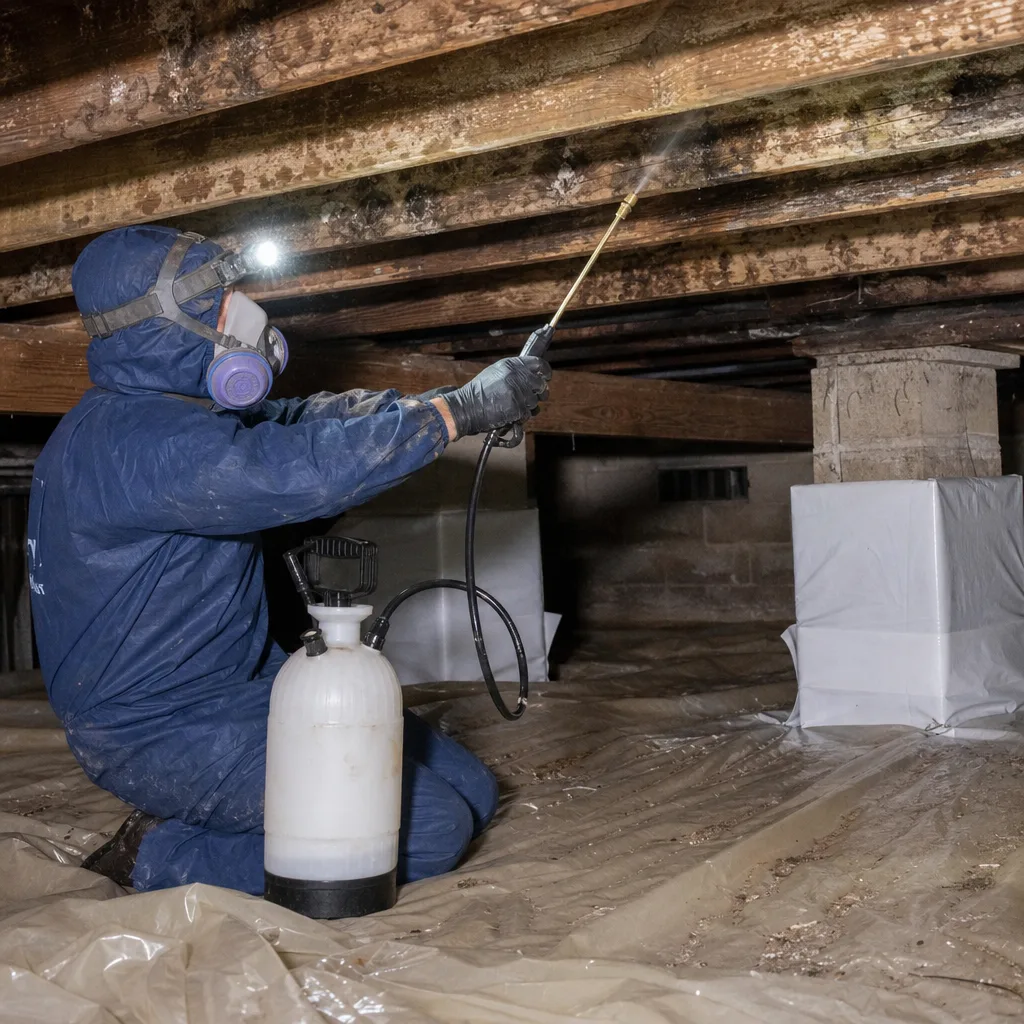
The contractor you hire after a loss in Tukwila determines whether your claim gets paid, whether your home dries properly, and whether you face uncovered bills months later. Verify credentials through official databases, insist on written documentation standards before signing, compare bids by scope rather than price, and refuse pressure tactics that bypass your adjuster. The documentation practices that protect your claim are not extras; they are the foundation of professional restoration work. For more guides & resources, visit our blog.
Written by Alicia Brennan, Owner at DryMark Restoration Tukwila, serving Tukwila since 2011.