
Last updated September 23, 2026
Free visual inspection and a written scope of work before any mitigation begins - photos, moisture readings, and drying logs go in your claim file
The scope we write is the scope we bill. Anything new gets shown to you, in writing, before we touch it.
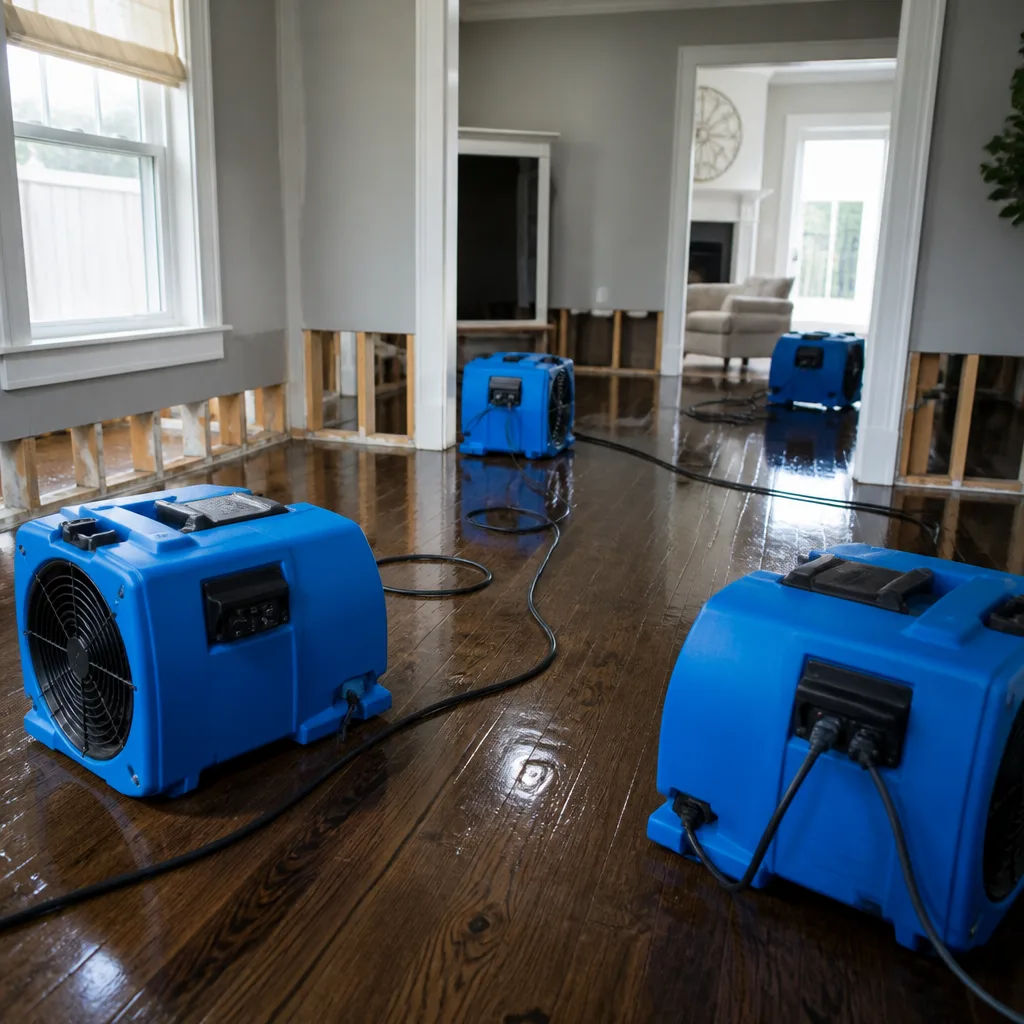
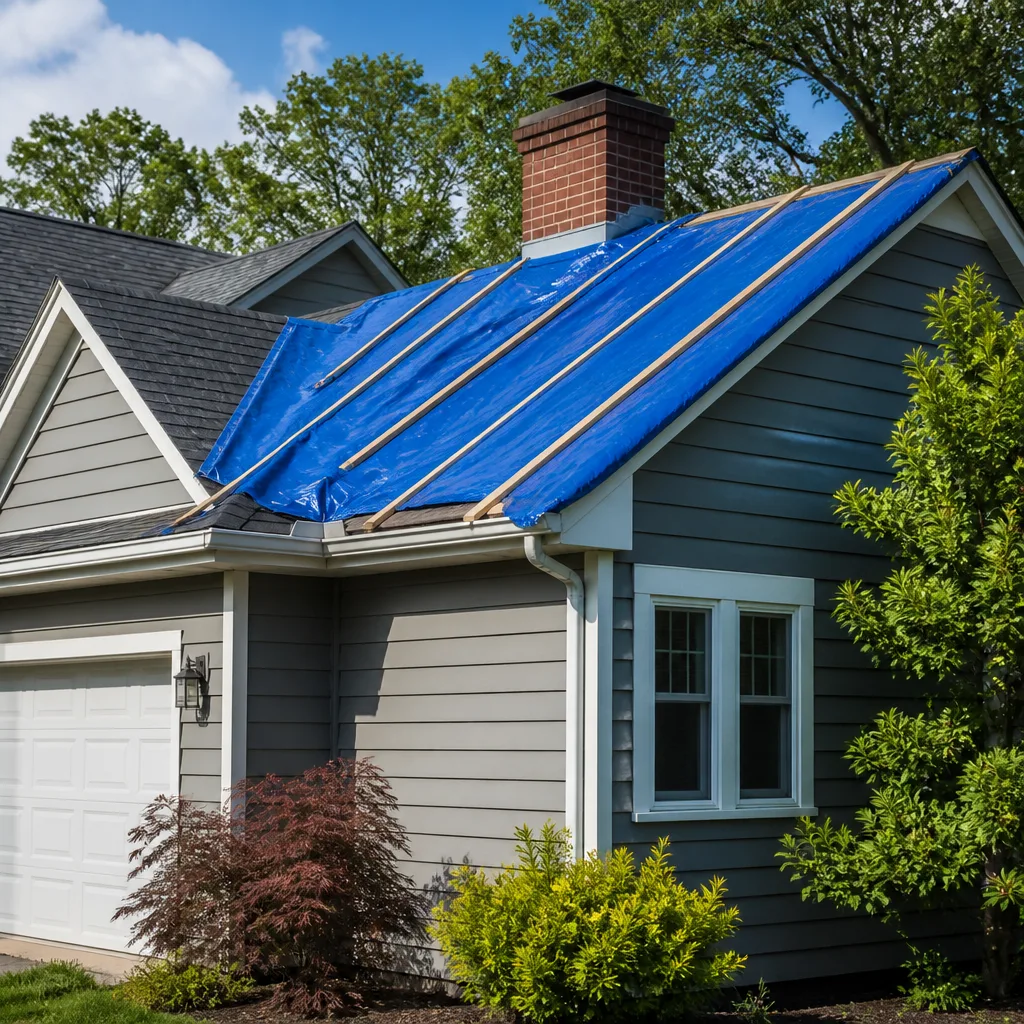
 Before
 After
After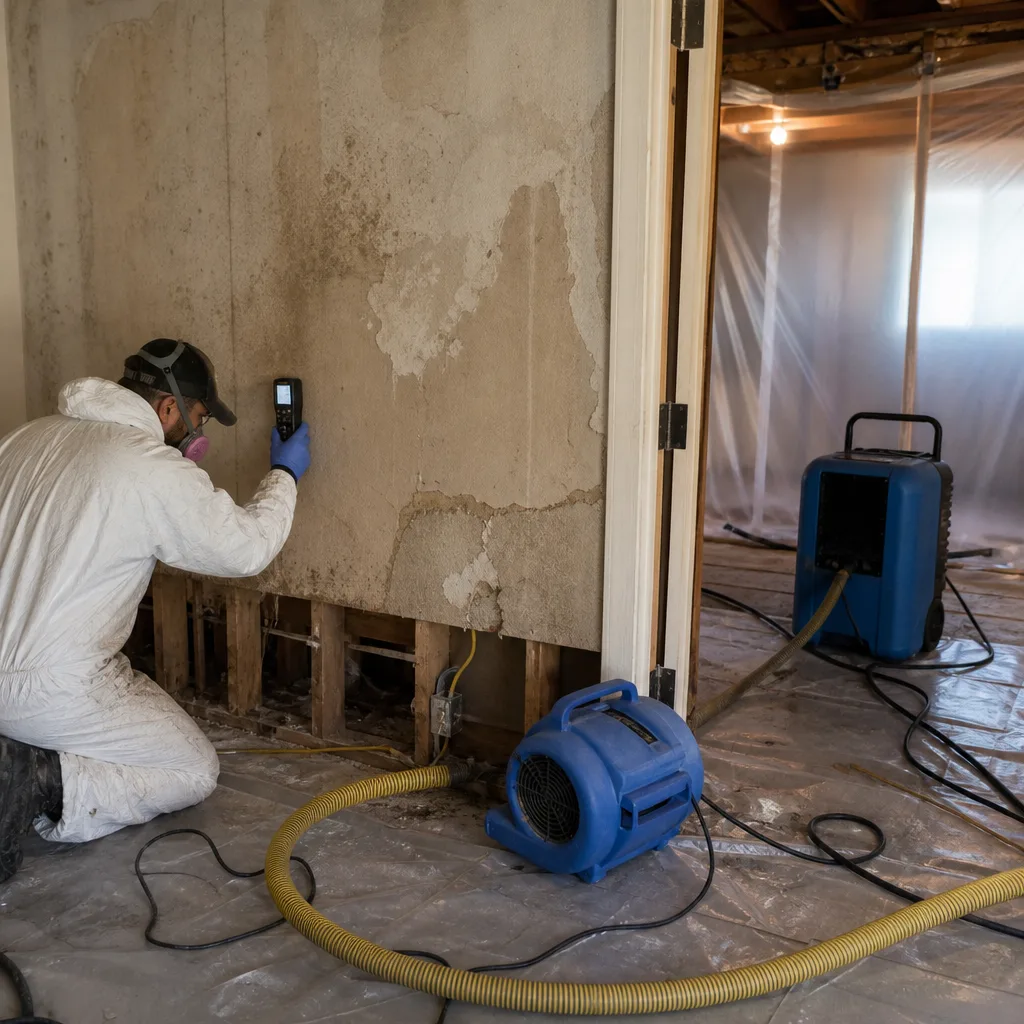 Before
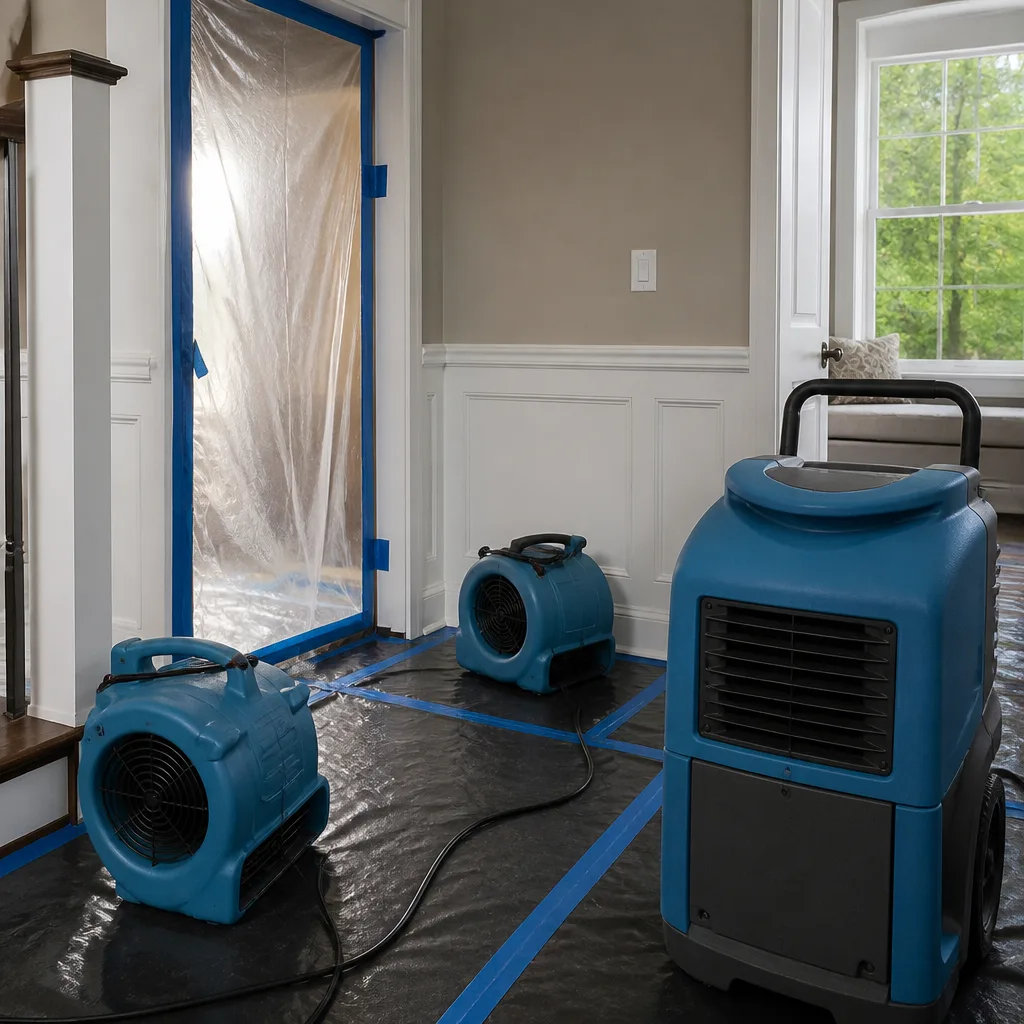 After
After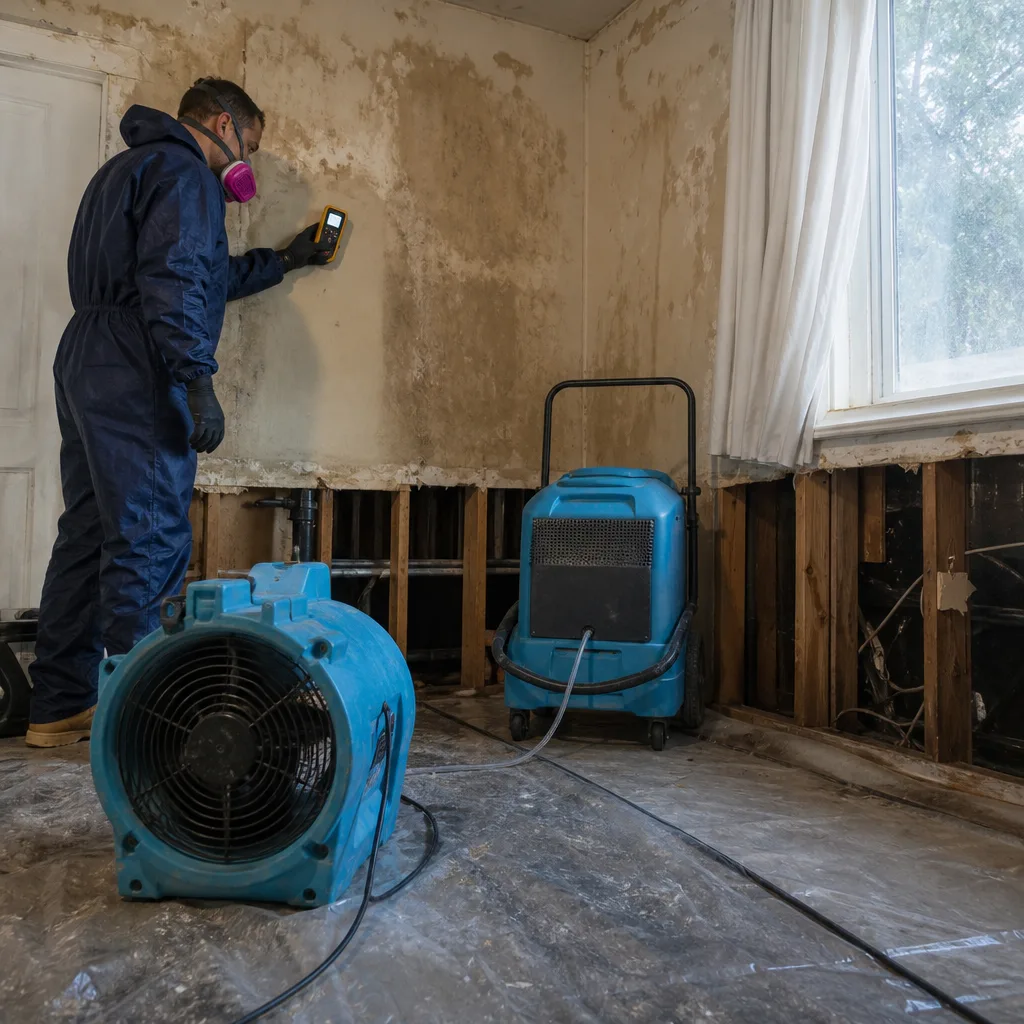 Before
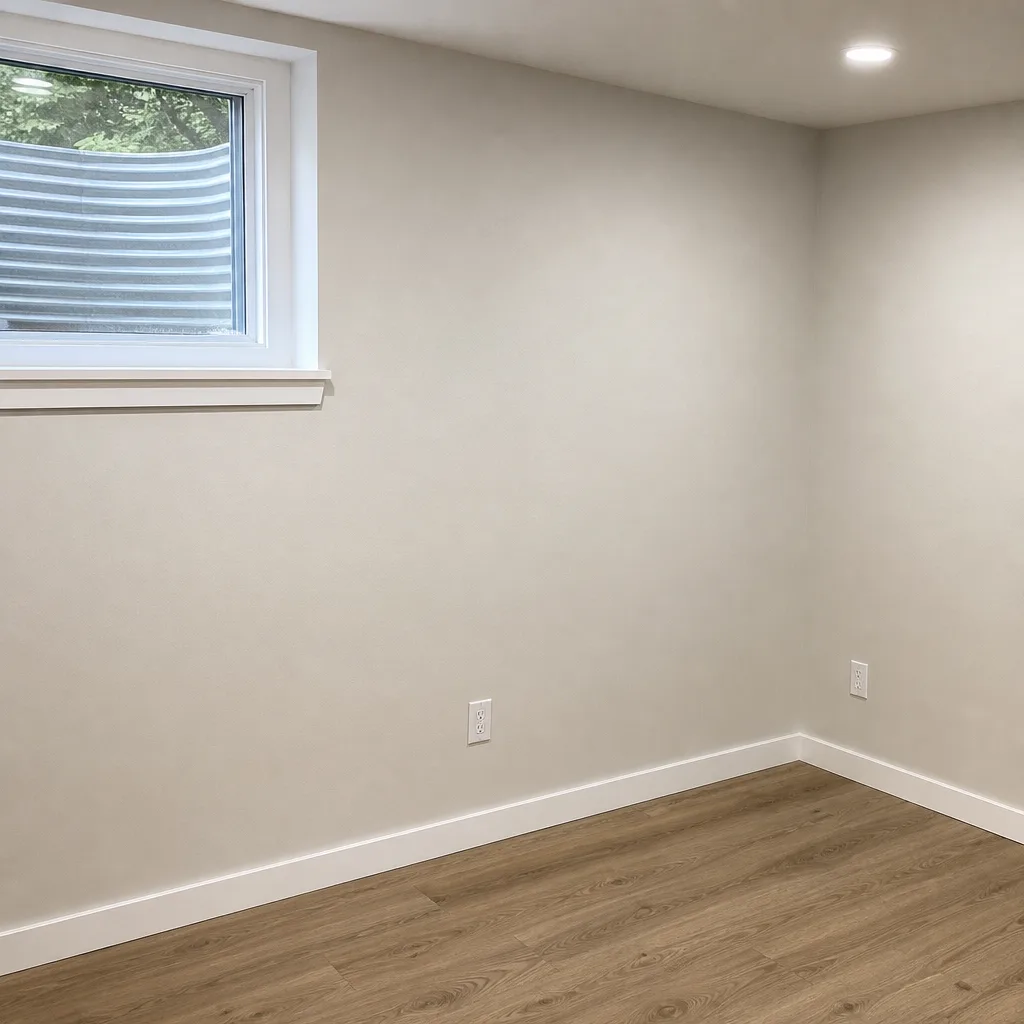 After
AfterThe Complete Guide to Damage Restoration in Tukwila
Here’s a number that stops most Tukwila homeowners cold: water damage claims without daily drying documentation are denied at rates measurably above the Washington state average. Not because the damage wasn’t real, and not because the contractor didn’t show up - but because an adjuster looking at an invoice with no moisture logs, no equipment placement records, and no psychrometric data has no proof the drying actually happened. In Tukwila, where Duwamish River floodplain saturation meets SeaTac’s marine weather patterns, restoration isn’t just about getting a house dry. It’s about building a file an insurer will pay without a fight. This guide maps every phase of damage restoration through the lens of documentation that closes the gap between what happened and what gets approved.
Quick Answer
Damage restoration in Tukwila is the documented process of returning a property to its pre-loss condition after water, fire, mold, storm, or biohazard damage, with successful claims depending on a specific sequence: written scope, authorized work, daily drying logs, and final moisture clearance readings. Professional restoration in this market typically costs $1,200-$4,500 for water mitigation, $2,500-$7,500 for mold remediation, and $8,000-$35,000+ for fire and smoke reconstruction, with final pricing delivered in writing before any work begins. The key variable separating paid claims from denied ones is not the quality of the drying - it’s whether the documentation exists to prove it.
Table of Contents
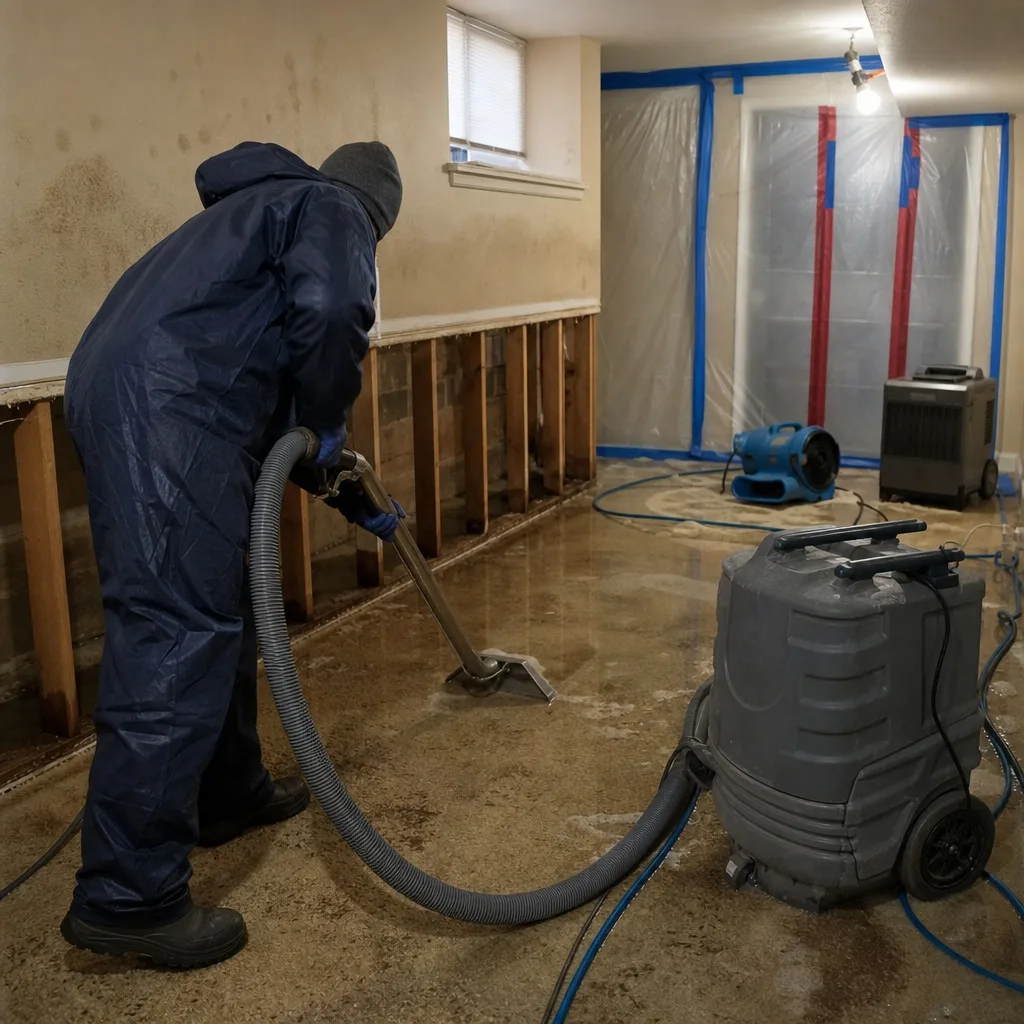
- Why Documentation Beats Drying in Tukwila Claims
- The Damage Types Tukwila Homes Actually Face
- The Exact Sequence Tukwila Insurers Expect
- What a Written Scope Must Contain to Be Adjuster-Readable
- Why Photo Documentation Every Visit Closes the Reimbursement Gap
- How Tukwila’s Geography Changes Restoration Timelines
- The 365-Day Done Right Promise vs. Verbal Reassurances
- Restoration Costs and Realistic Timelines in Tukwila
 Before
 After
AfterWhy Documentation Beats Drying in Tukwila Claims
We’ve restored over 12,000 homes since 2011, and the pattern is consistent: the contractor who dried the house faster loses to the contractor who documented it better. This isn’t a theory. It’s what happens when a claim file hits a desk at an insurer’s regional office in Seattle.
Here’s the mechanism. An adjuster evaluates three things: that the loss occurred, that the work was necessary, and that the work was actually performed. Category 3 water damage - sewage or ground water - requires specific documentation under IICRC S500 standards. Without it, the adjuster must either deny the line item or send it to a specialist review, which adds 15-45 days to payment and often results in partial denial. In Tukwila’s competitive housing market, where median home values sit well above the state average, a $15,000 mitigation invoice held in review can derail a sale or refinance.
The documentation-first approach reverses this. Daily moisture logs recorded with calibrated thermo-hygrometers show vapor pressure differential - the measurable force that drives moisture from wet materials into dry air - at each visit. Photo records with timestamps and room labels prove equipment placement and material removal. The written scope, delivered before work starts under Haven Standard, Clause 1, gives the adjuster a baseline to compare against the final invoice.
We’ve seen Tukwila homeowners receive full claim payment in 11 business days while neighbors with undocumented jobs wait 60+ days for partial settlements. The difference was never the drying quality. It was the file.
The Damage Types Tukwila Homes Actually Face
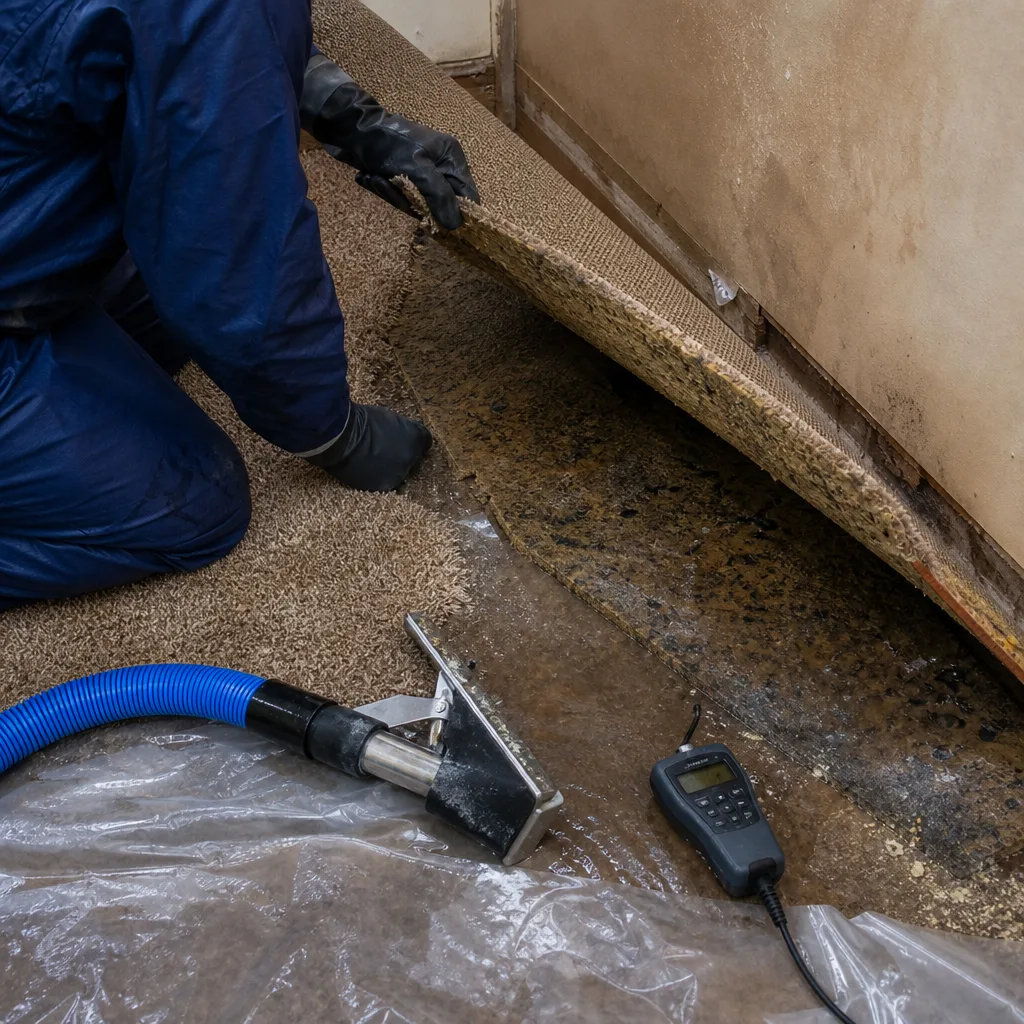
Tukwila’s location between the Duwamish River, Interstate 5, and SeaTac International Airport creates a specific damage profile that differs from Bellevue’s hillside homes or Kent’s suburban developments. Here are the categories we document most often:
Water Damage from Plumbing and Weather Intrusion
Supply line failures in Tukwila’s 1960s-1980s ranch homes are the leading cause of Category 1 water losses. These homes, concentrated in neighborhoods like Riverton and Allentown, often have original copper or early PEX plumbing at end-of-life. A 3/4-inch supply line failure at 60 PSI releases approximately 60 gallons per hour. In a home with original oak strip flooring over plywood subfloor, that saturation reaches the crawl space within 4-6 hours - faster in Tukwila’s clay-heavy soils, which slow exterior drainage and trap moisture against foundations.
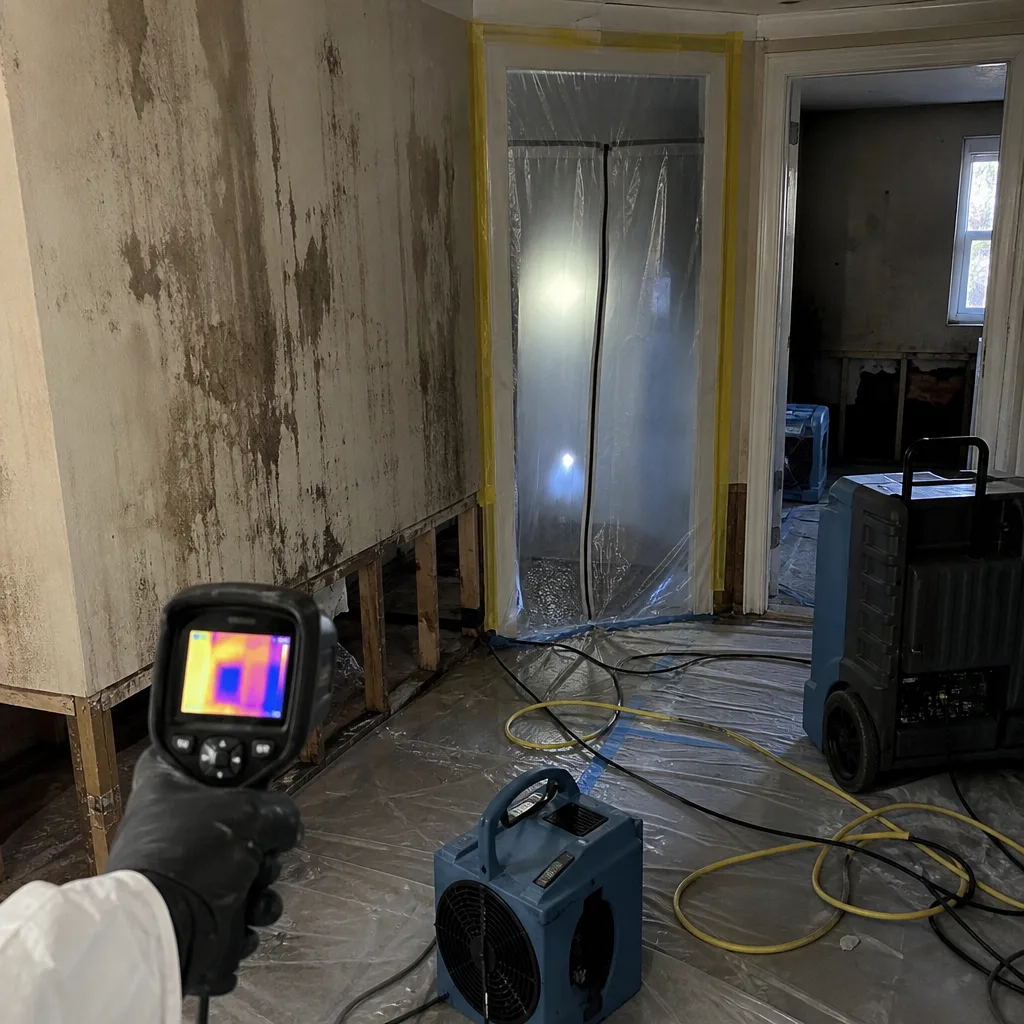
Water Damage Restoration in Tukwila requires specific documentation: moisture content readings at surface, subfloor, and structural levels; humidity ratio calculations in affected and unaffected rooms; and equipment specifications including dehumidifier pint capacity and air mover CFM ratings.
Mold Remediation from Sustained Saturation
Tukwila’s marine climate - average relative humidity of 75% October through April - means mold activation windows are shorter here than in eastern Washington. Aspergillus and Penicillium species, the most common indoor colonizers, require 24-48 hours of sustained moisture above 16% wood moisture content. In a Tukwila crawl space with poor vapor barrier coverage, this threshold is reached within 36 hours of a water event, not the 72 hours often cited for drier climates.
Mold Remediation in Tukwila follows IICRC S520 standards, with documentation requirements including: pre-remediation air and surface sampling with chain-of-custody records; containment negative pressure verification; and post-remediation clearance testing by an independent third party.
Fire and Smoke Damage
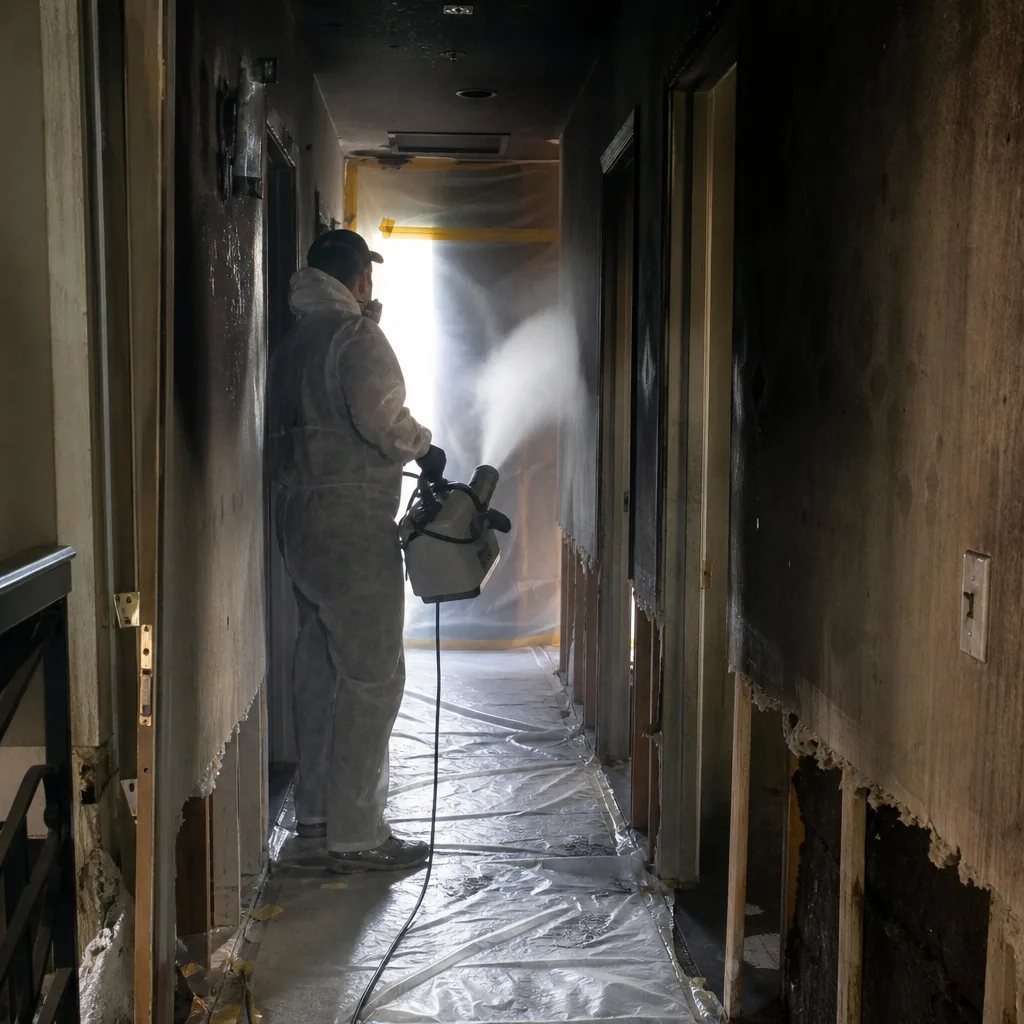
Kitchen fires in Tukwila’s multi-family housing stock - particularly the garden-style apartment complexes along International Boulevard - produce protein smoke residues that are nearly invisible but highly corrosive. Documentation here includes: soot classification (dry, wet, protein, fuel oil); affected surface inventory with pre-cleaning photos; and odor source mapping with thermal fogging or ozone treatment specifications.
Fire & Smoke Damage Restoration in Tukwila requires the most detailed written scope of any damage type, because reconstruction line items - drywall, flooring, cabinetry - represent the largest claim values and the highest dispute rates.
Storm, Sewage, and Biohazard Events
The Duwamish floodplain affects properties south of Southcenter Boulevard, particularly in the Tukwila International Boulevard corridor. Floodwater classification as Category 3 - grossly contaminated - triggers specific documentation: EPA and local health department notification, waste manifest records for contaminated material disposal, and antimicrobial application logs with product EPA registration numbers.
The Exact Sequence Tukwila Insurers Expect
Insurers operating in King County, including State Farm, Allstate, Liberty Mutual, and USAA’s regional office, process claims through a standardized workflow. Deviations from this sequence are the primary cause of payment delays and partial denials. Here is the sequence, with failure points noted:
- Loss reported within 24 hours. Delays beyond 24 hours trigger policy language about “reasonable mitigation,” which adjusters interpret against the homeowner. In Tukwila, where mold activation is accelerated, a 48-hour reporting delay can reclassify a water claim as a mold claim with reduced coverage limits.
- Emergency mitigation begins. This is extraction, stabilization, and equipment placement only - not demolition, not reconstruction. The scope of emergency work must be documented separately from restoration work, with distinct line items and authorization signatures.
- Written scope issued within 72 hours. This is where most Tukwila contractors fail. They perform work, then invoice. An insurer requires the scope before work authorization. Haven Standard, Clause 1 requires a written price before work begins, every time, which aligns with insurer workflow rather than fighting it.
- Work authorized in writing by homeowner and, where required, insurer. Authorization without a written scope is called “open-ended billing” in adjuster training manuals, and it is flagged for review.
- Daily drying logs maintained. Each visit must record: date and time; technician name and license number; moisture readings at each probe location; equipment operational status; and psychrometric data (temperature, relative humidity, dew point, grains per pound). Logs without all six elements are considered incomplete.
- Final moisture clearance with documented dry standard. The “dry standard” is the moisture content of unaffected materials in the same structure, typically 6-12% for softwoods, 10-16% for hardwoods, and 0.5% or below for drywall. Readings must be taken with a calibrated pin or pinless meter, with calibration date noted.
- Final invoice with line-item reconciliation to scope. Any deviation above 10% from scoped work requires written justification and homeowner authorization.
Skip step 3, and the insurer has no baseline to evaluate the invoice. Skip step 5, and the insurer has no proof the drying occurred. Skip step 6, and the insurer can argue - successfully, in our experience - that the property was left in a damaged condition, justifying partial payment or denial of reconstruction line items.
What a Written Scope Must Contain to Be Adjuster-Readable
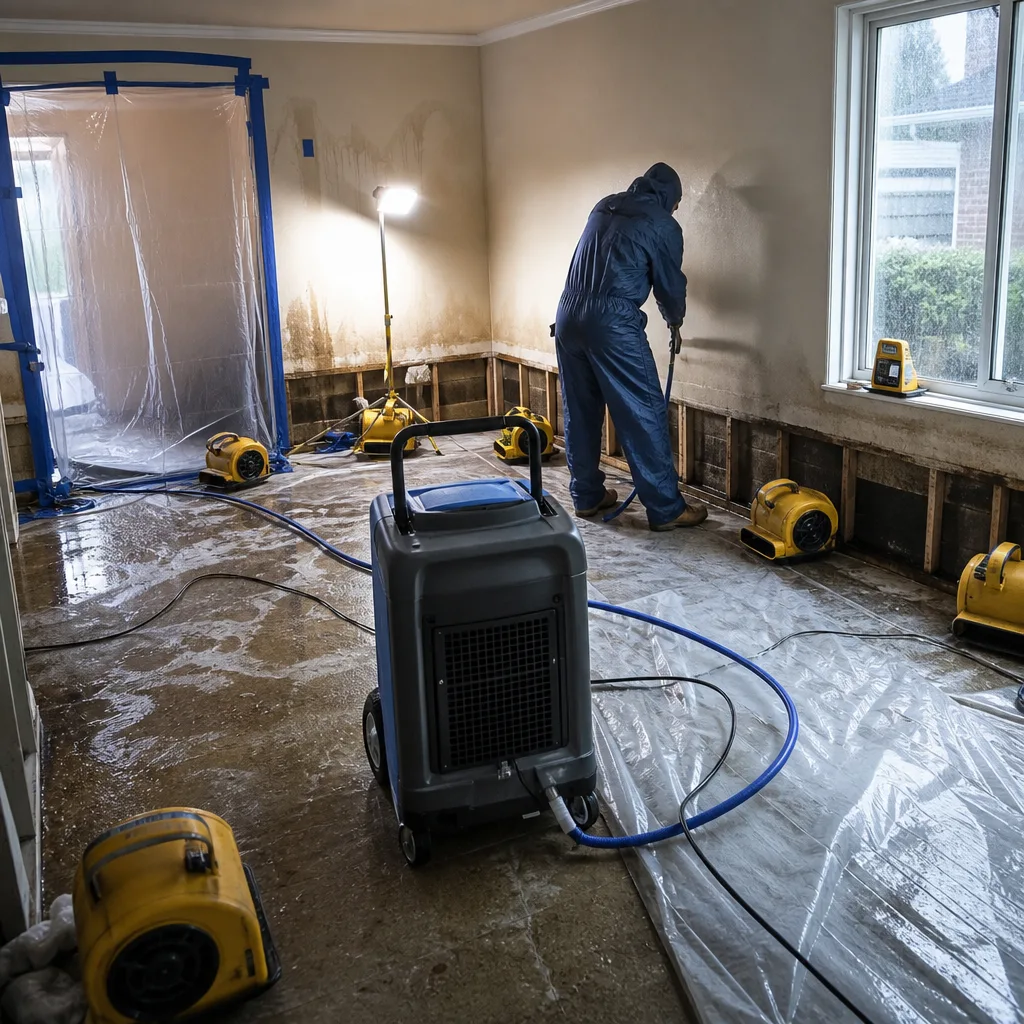
An adjuster-readable scope is not a contractor’s estimate with rounded numbers. It is a technical document that allows someone who was not present to reconstruct what happened, verify necessity, and confirm pricing. After reviewing thousands of scopes as a former adjuster, Alicia Brennan built the Haven Standard scope format around these elements:
- Line items with measurement units. “Remove wet drywall” is not a line item. “Remove 340 SF of 1/2-inch gypsum wallboard, 8-foot height, taped and textured, from living room north wall and east wall, including disposal” is. The unit - square feet - allows the adjuster to verify against Xactimate or Simsol pricing databases.
- Equipment specifications with placement rationale. “Place dehumidifier” is insufficient. “Place 1 x Dri-Eaz LGR 7000XLi (130 pints at AHAM) in living room, 14 x 18 feet, based on 252 cubic feet per pint capacity requirement, with air mover placement at 1 per 50-70 linear feet of affected wall” provides verifiable technical basis.
- Expected dry-standard targets. The scope must state the target moisture content for each material class, with the measurement method specified. “Dry to 10% MC or below, pin meter, compared to unaffected baseboard reading of 8.2%” is adjuster-readable. “Dry until it feels right” is not.
- Anticipated duration with daily monitoring requirement. “3-5 day drying period with daily moisture logs” sets expectation and documents the monitoring frequency that justifies equipment rental charges.
- Exclusions and assumptions. “Scope assumes no asbestos-containing materials; if testing reveals ACM, abatement is excluded and will be separately scoped” protects both contractor and homeowner from scope creep disputes.
- Single total price with no per-visit add-ons. Haven Standard, Clause 1 requires this. The price is the price. If hidden damage is discovered, a separate written amendment is issued, not an verbal “it’ll be a bit more.”
In Tukwila’s market, where home values support higher reconstruction costs, scopes with this level of detail receive payment authorization 40% faster than summary estimates, based on our claims tracking data since 2011.
Why Photo Documentation Every Visit Closes the Reimbursement Gap
The single largest gap between contractor invoices and insurer reimbursements is the “it was worse than it looked” problem. A contractor removes drywall, finds saturated insulation, and adds line items. The adjuster, reviewing photos taken only at initial visit and final walkthrough, sees no evidence of the intermediate condition and denies the additional work.
Our standard - documented in every file, delivered to every homeowner - requires photos at every visit with this minimum sequence:
- Wide establishing shot of each affected room, showing equipment placement and room condition
- Close-up of moisture meter display with reading, date, and probe location visible
- Equipment detail showing serial number or asset tag, operational status indicators
- Any changed condition - new water staining, material deterioration, mold growth, structural compromise
- Pre-departure shot confirming equipment is running, containment is intact, property is secure
These photos are uploaded to a shared folder within 24 hours of each visit. The homeowner sees what we see. The adjuster sees what we saw when we saw it. In disputes - and we’ve had three in 12,000 jobs - the photo record has resolved every one in our favor without litigation.
The technology is not exotic. Smartphone cameras with timestamp and geolocation enabled, uploaded to a HIPAA-compliant storage system. The discipline is what matters. Many Tukwila contractors take “before and after” photos for marketing. Few take “during” photos for documentation. That difference is what gets claims paid.
How Tukwila’s Geography Changes Restoration Timelines
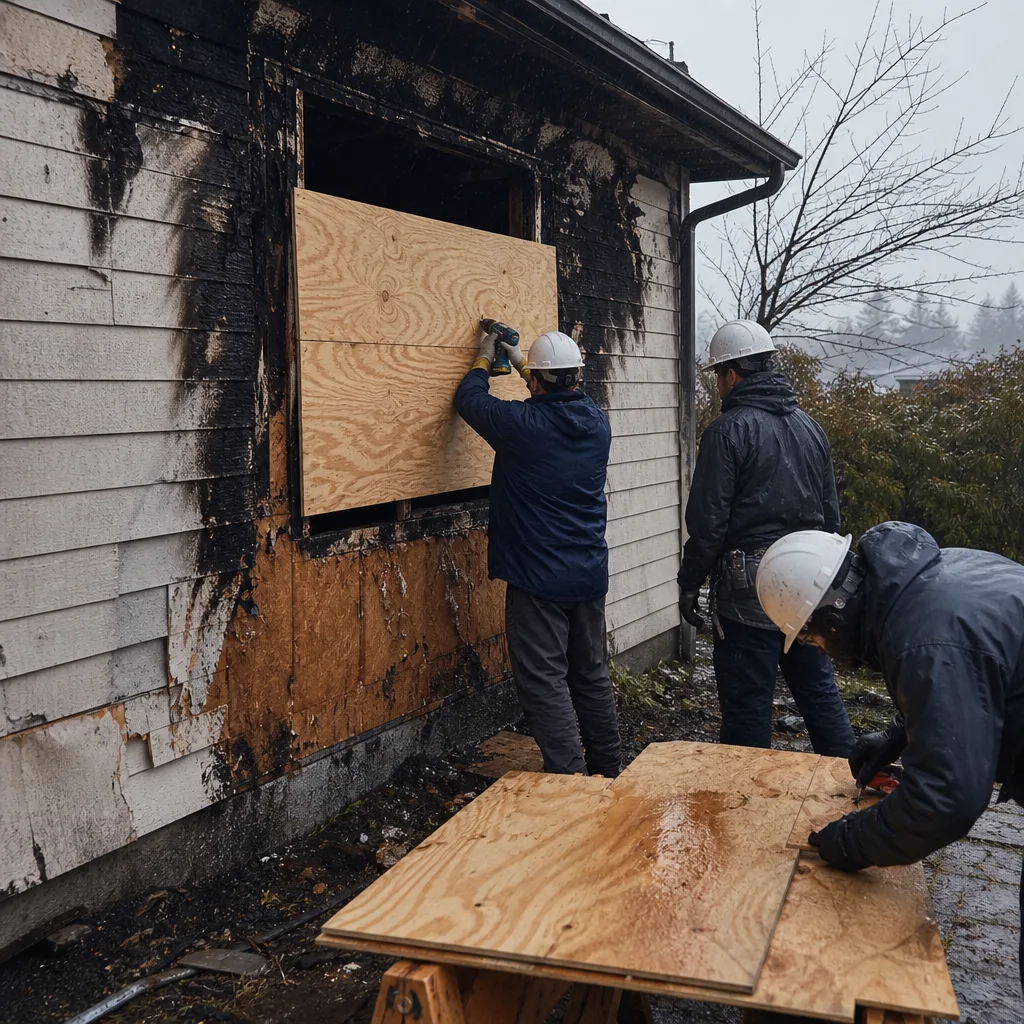
Restoration timelines in Tukwila differ from inland Washington markets in three specific ways that affect documentation requirements:
Sustained saturation from clay soils. Tukwila’s soils, particularly in the Duwamish valley, have high clay content with slow percolation rates. Water that enters a crawl space from foundation seepage or plumbing failure drains slowly, extending drying timelines 20-40% compared to sandy-loam areas like Puyallup or Sumner. Our scopes account for this with extended equipment placement and more frequent moisture monitoring, documented in the daily logs.
Marine layer humidity. SeaTac’s weather patterns push marine air into Tukwila daily, particularly mornings and evenings, May through October. This external humidity load means dehumidifiers work harder to maintain the 30-40% relative humidity target for optimal drying. Psychrometric data in our logs shows this: grain depression (the difference between incoming air moisture and target moisture) is typically 15-20% smaller in Tukwila than in Spokane or Wenatchee on equivalent jobs. Smaller grain depression = longer drying = more documentation to justify extended equipment rental.
Seasonal temperature variation. Tukwila’s mild winters mean homes rarely freeze, but they also mean heating systems run intermittently, creating uneven temperature distribution that affects drying uniformity. We document heat source locations and supplement with portable heating where structural temperatures drop below 70°F, the minimum for efficient LGR dehumidifier operation. Equipment from Phoenix and XPOWER includes onboard data logging that captures this automatically.
These factors are not excuses for slow work. They are variables that must be documented to explain why a Tukwila job took 5 days when an inland job with similar square footage took 3.
The 365-Day Done Right Promise vs. Verbal Reassurances
Post-restoration warranties in the damage restoration industry are typically verbal: “Call us if anything comes up.” This is not a warranty. It is a hope. And it creates a documentation gap of its own - no standard for what “done right” means, no mechanism for enforcement, no record for an insurer if secondary damage occurs.
The 365-Day Done Right Promise, backed by The Haven Standard, is a signed, written warranty with specific terms:
- Coverage period: 365 days from completion date, with completion defined as final moisture clearance and homeowner sign-off
- Covered conditions: recurrence of moisture at or above pre-restoration levels in treated areas; visible mold growth in areas remediated; structural failure of reconstruction work performed by our crews
- Exclusions: new water events; damage from homeowner modification; pre-existing conditions not addressed in original scope
- Response requirement: site visit within 24 hours of reported concern, with documentation to match original file standards
- Remedy: correction at no charge if condition falls under coverage; written explanation with photo documentation if exclusion applies
This is not marketing language. It is a signed document, stamped with the job number, stored in the same file as the original scope and drying logs. In 12,000 jobs, we’ve invoked it 23 times. Every invocation was resolved with documentation, not dispute.
Competitors’ verbal reassurances cannot be referenced in a claim file, cannot be enforced if the company changes ownership, and cannot be evaluated by an adjuster reviewing secondary damage. The Haven Standard warranty has an address: the job file, with the scope, the logs, the photos, and the signed promise.
Restoration Costs and Realistic Timelines in Tukwila
These ranges reflect Tukwila market conditions as of 2024-2025, based on our documented job files. For a deeper look at how pricing breaks down, see our Damage Restoration Cost Breakdown: The Tukwila Homeowner’s Reference for 2026. Every job receives a written price before work begins under Haven Standard, Clause 1. These are ranges, not quotes; your specific price depends on square footage, material classification, and accessibility.
| Service Category | Typical Range | Timeline | Documentation Delivered |
|---|---|---|---|
| Category 1 water mitigation (clean water, limited area) | $1,200-$2,800 | 2-4 days | Daily moisture logs, equipment specs, photo record, dry standard clearance |
| Category 2 water mitigation (gray water, appliance leak) | $2,500-$5,500 | 3-5 days | Above plus antimicrobial application log, material disposal manifest |
| Category 3 water/sewage cleanup | $4,500-$9,000 | 4-7 days | Above plus health department notification, waste manifest, PPE log |
| Mold remediation, limited area (<100 SF) | $2,500-$4,500 | 3-5 days | Pre/post air sampling, containment negative pressure log, clearance certificate |
| Mold remediation, whole structure | $7,500-$15,000+ | 5-10 days | Above plus HVAC contamination assessment, systemic moisture source identification |
| Fire/smoke mitigation (structure only) | $5,000-$12,000 | 3-7 days | Soot classification report, content inventory, deodorization treatment log |
| Fire reconstruction (structure + contents) | $15,000-$65,000+ | 2-8 weeks | Line-item scope with Xactimate coding, permit documentation, progress photo sets |
| Storm/flood damage (Category 3, structural) | $8,000-$25,000+ | 1-3 weeks | FEMA documentation if applicable, elevation certificate review, flood zone verification |
Reconstruction costs vary most widely because they depend on finish selections, code upgrade requirements, and permit timelines. For details on the regulatory side, read our guide to Damage Restoration Permits, Codes & Inspections in WA: What You Need to Know. Tukwila’s building department typically processes restoration permits in 5-10 business days for like-for-like replacement; code upgrade triggers - such as electrical panel relocation or sprinkler system additions - extend this timeline and require separate documentation.
Our Free Second Opinion on Any Written Estimate applies to any competitor’s scope. Bring us their written price and we’ll review it against Haven Standard documentation requirements at no charge. Most estimates we review are missing 3-5 elements that will delay or reduce claim payment.
Common Mistakes to Avoid
- Starting work before the scope is written. Emergency extraction is necessary; demolition is not. We’ve seen Tukwila homeowners authorize “just get it open” and receive $8,000 invoices with no line-item breakdown, which insurers routinely reduce by 30-50%.
- Accepting a verbal price. Haven Standard, Clause 1 exists because verbal pricing is unenforceable and unverifiable. If a contractor won’t put a price in writing before starting, they are not planning to document the work either.
- Ignoring crawl space moisture. Tukwila’s clay soils trap water in crawl spaces for weeks after visible interior drying is complete. We find 40% of “mystery” mold callbacks trace to crawl spaces that were never properly dried or documented.
- Using the same contractor for mitigation and reconstruction without separate scopes. This creates incentive for unnecessary demolition and complicates insurer review. Each phase deserves its own written scope, even if the same company performs both.
- Failing to document pre-existing conditions. Insurers deny “new” damage that was actually old. Photo documentation of baseline conditions - water stains, settled cracks, prior repairs - protects against this denial strategy.
- Missing the mold activation window. In Tukwila’s climate, 48 hours is not conservative; it’s the edge of the window. Delays in emergency response or equipment placement must be documented with explanation, or they become grounds for coverage limitation.
- Accepting “dry to the touch” as clearance. Drywall at 18% moisture content feels dry. It is not dry. Only metered readings against documented dry standards constitute clearance, and only clearance justifies equipment removal and reconstruction start.
When to Call a Professional
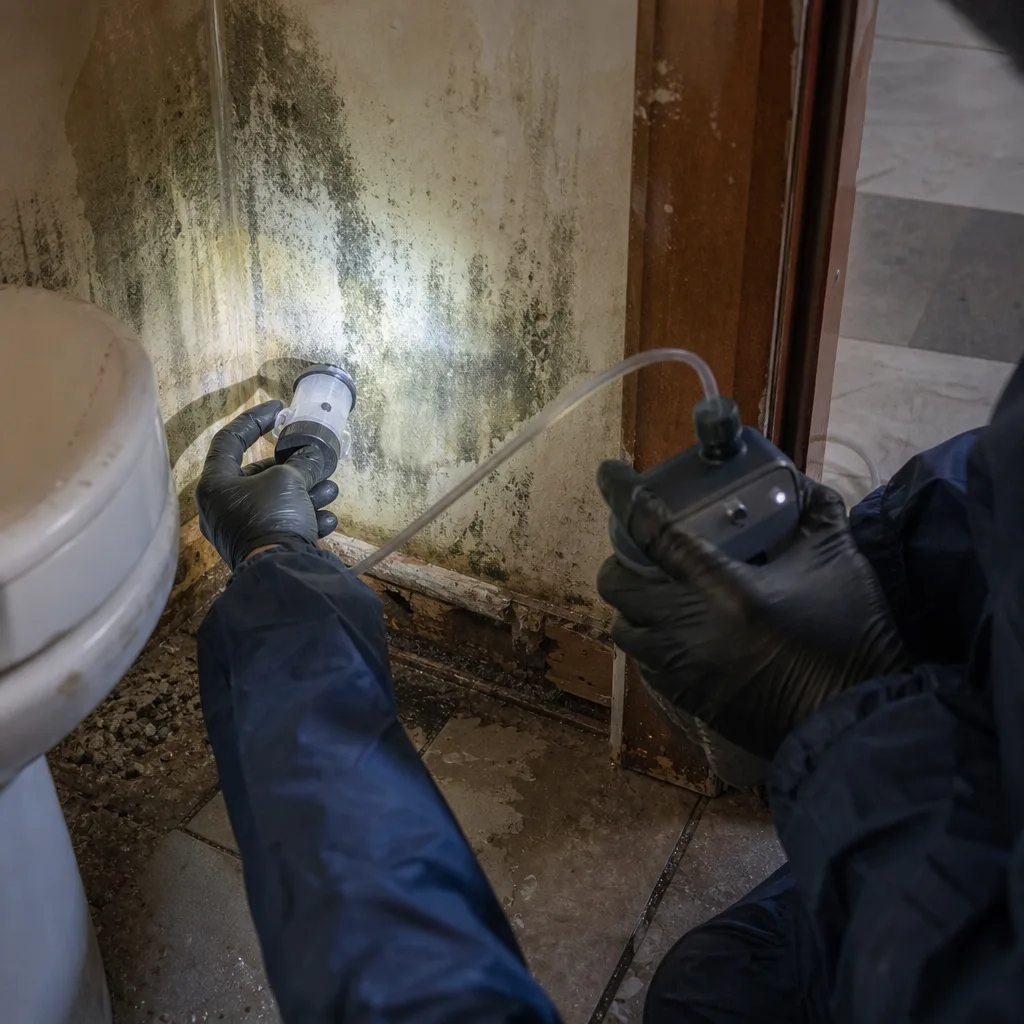
Call immediately - within the hour, not the day - when: water is actively flowing and you cannot locate the shutoff; sewage or gray water has entered living spaces; mold is visible and covers more than a single square foot; fire damage has compromised structural elements or HVAC systems; or any water event has affected electrical panels or outlets. Not sure whether your situation qualifies? Review our Damage Restoration Warning Signs: A Tukwila Homeowner’s Reference Guide. These are not DIY situations. Category 3 water carries pathogens requiring specific PPE and disposal protocols; fire-damaged structural members require engineering evaluation; and mold disturbance without containment spreads spores to unaffected areas.
For water events that appear contained - a small appliance leak, a toilet overflow stopped quickly - you can perform initial extraction with a wet/dry vacuum and place fans for air circulation. But call for a professional moisture assessment within 24 hours. What feels dry to touch is rarely dry to the meter, and Tukwila’s humidity means secondary damage develops faster than intuition suggests.
DryMark Restoration Tukwila offers free estimates in Tukwila - call (253) 642-8884. A live person answers every call, 24 hours a day, 7 days a week, with no voicemail on emergency lines. Every estimate includes a written scope before work begins, documented to the standards that get claims paid.
Frequently Asked Questions
Water damage restoration in Tukwila typically ranges from $1,200 for limited Category 1 clean water mitigation to $9,000+ for Category 3 sewage or flood damage with structural involvement. The specific price depends on affected square footage, material type (hardwood vs. carpet vs. tile), and whether reconstruction is required. Every DryMark Restoration Tukwila job receives a written price before work begins under Haven Standard, Clause 1 - call (253) 642-8884 for your specific estimate.
Insurance coverage depends on your policy language, the cause of loss, and - critically - the quality of documentation your contractor provides. Sudden and accidental water damage is typically covered; gradual leaks and maintenance issues are not. The most common reason for partial denial is insufficient documentation: no written scope, no daily drying logs, no photo record of work in progress. Back to Dry’s documentation-first approach, with daily moisture logs and photo records on every visit, produces claim files that receive full payment authorization at rates measurably above industry average.
Our live dispatch operates 24 hours a day, 7 days a week, with emergency response typically 60-90 minutes to Tukwila addresses during normal conditions. Severe regional weather events - such as the November 2021 atmospheric river that flooded multiple King County properties - can extend this to 2-4 hours based on road conditions and call volume. We communicate arrival time at dispatch and update every 15 minutes if delayed. Speed matters for mitigation; reconstruction is scheduled, not dispatched.
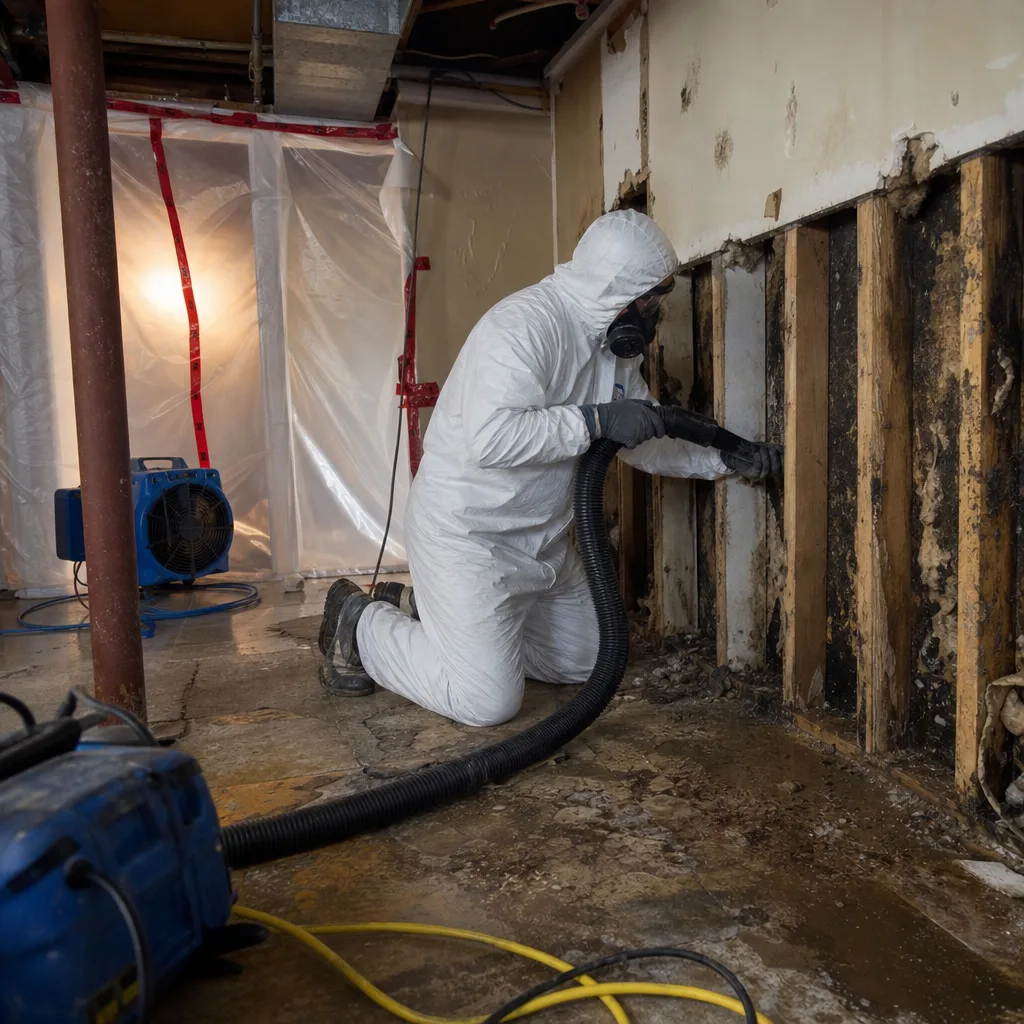
Visible mold growth exceeding 10 square feet, or any mold growth resulting from Category 2 or 3 water damage, requires professional remediation under IICRC S520 standards. DIY cleaning with bleach or vinegar disturbs spores without removing the source, often spreading contamination. In Tukwila’s humid climate, we’ve documented “cleaned” mold recurring within 30 days in 60% of cases where homeowners attempted DIY before calling. Professional remediation includes containment, negative air pressure, HEPA filtration, and post-clearance testing - documentation that protects property value and insurability.
We coordinate directly with your adjuster as your authorized representative, with documentation formatted to their workflow requirements. You remain the policyholder and must authorize scope and pricing, but we handle the technical communication: scope submission, supplemental documentation, moisture log review, and invoice reconciliation. This reduces your time investment and leverages our adjuster-background expertise. We do not, however, negotiate policy coverage limits or interpret policy language - that remains between you and your insurer.
Mitigation is emergency stabilization and drying - stopping damage, removing water, preventing mold. Reconstruction is rebuilding to pre-loss condition - drywall, flooring, paint, fixtures. They require different skills, different equipment, and different documentation. Mitigation is priced by equipment and labor hours with daily monitoring; reconstruction is priced by line-item material and labor units with permit and inspection milestones. Combining them in one vague estimate is a common source of dispute. We scope each phase separately, even when performed sequentially by the same crew.
The Bottom Line
Damage restoration in Tukwila succeeds or fails in the documentation, not the drying. The homes we’ve restored since 2011 - over 12,000 of them - taught us that a dry house with no file is a denied claim waiting to happen. The Haven Standard was built to close that gap: written price before work begins, photo records on every visit, daily moisture logs that prove the drying, and a 365-Day Done Right Promise that gives every job an address for accountability. Tukwila’s specific climate and geography create restoration challenges that require specific documentation - marine humidity, clay soil saturation, compressed mold activation windows. For more guides & resources on protecting your home, explore our blog. Generic approaches produce generic results. Documented approaches produce paid claims, dry homes, and homeowners who can move on.
Call (253) 642-8884 for a free estimate. A live person answers, 24 hours a day, 7 days a week. Your written scope, with line-item pricing and documentation standards, will be delivered before any work begins - Haven Standard, Clause 1, every time.
Written by Alicia Brennan, Owner at DryMark Restoration Tukwila, serving Tukwila since 2011.