
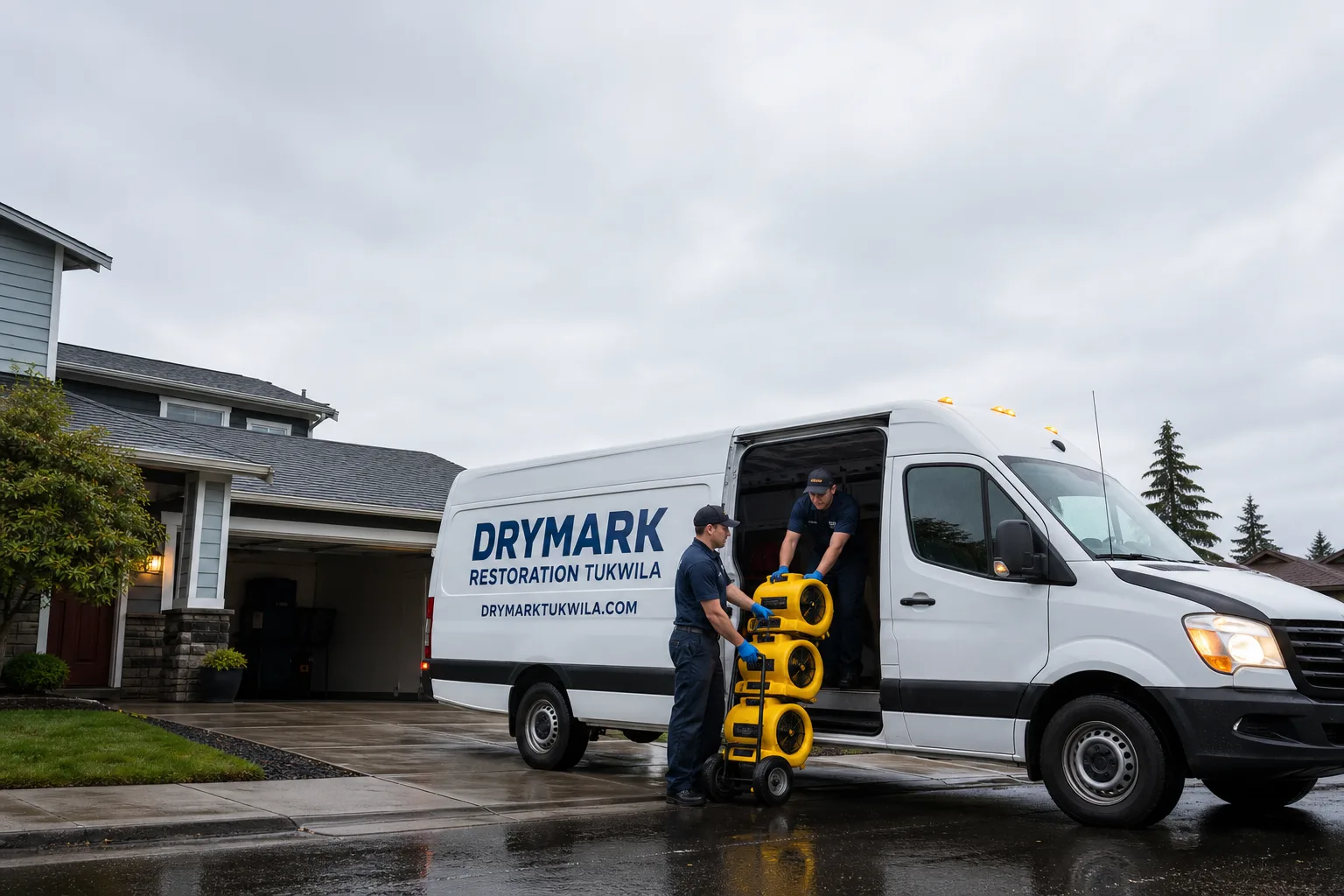
Free visual inspection and a written scope of work before any mitigation begins - photos, moisture readings, and drying logs go in your claim file
The scope we write is the scope we bill. Anything new gets shown to you, in writing, before we touch it.
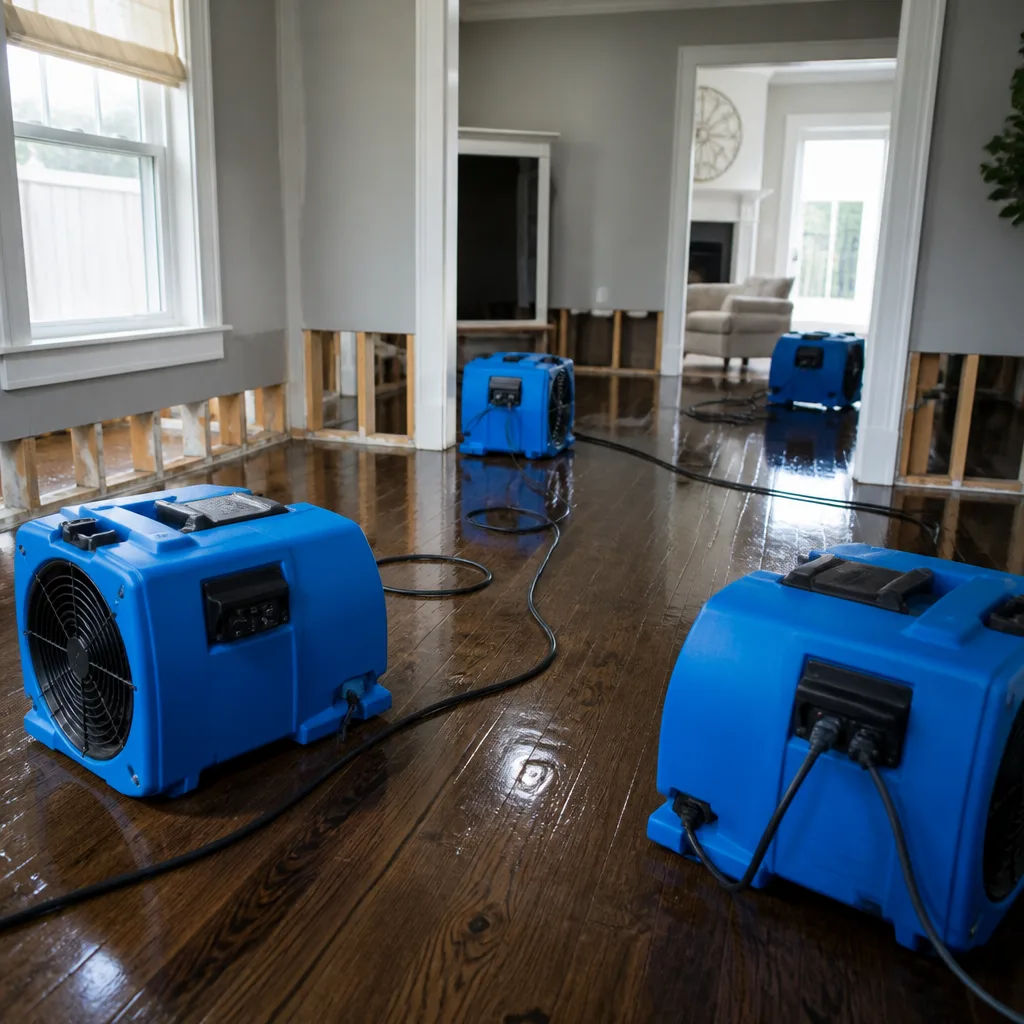
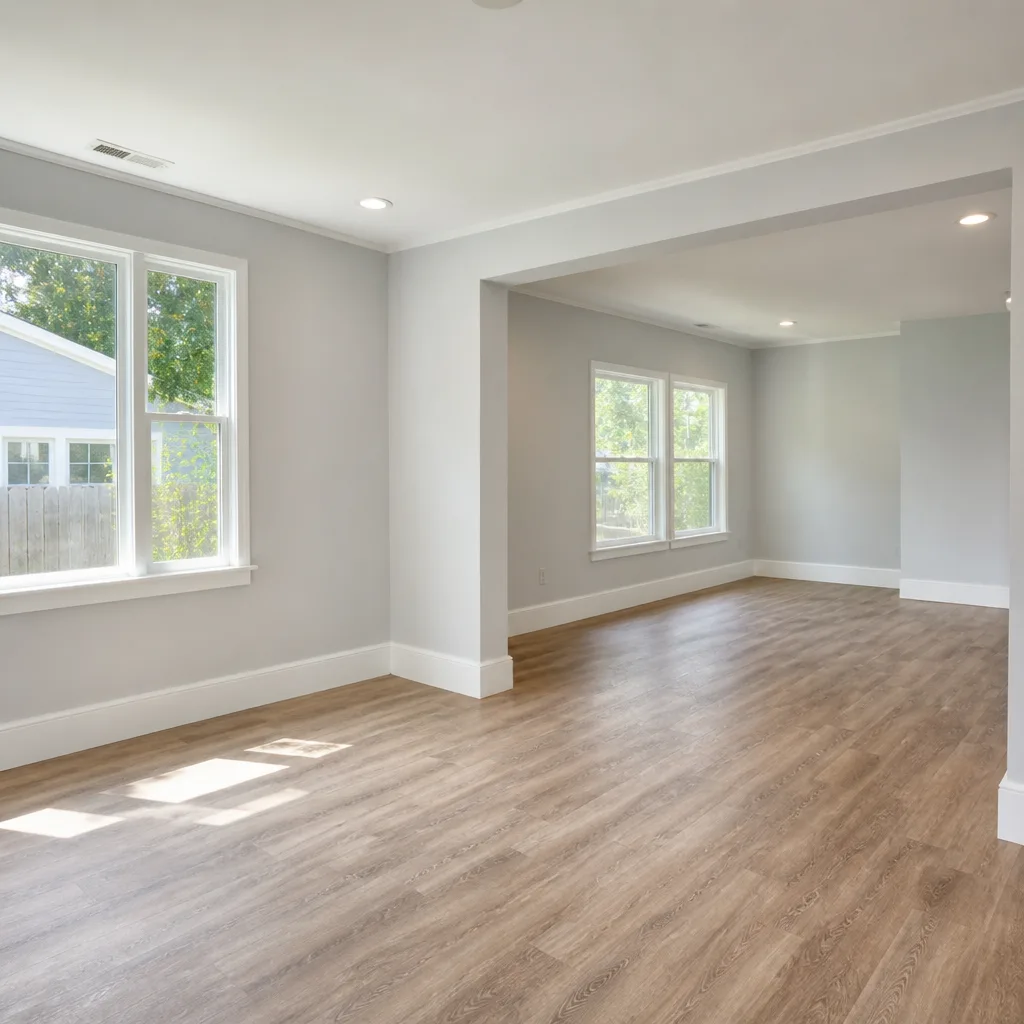
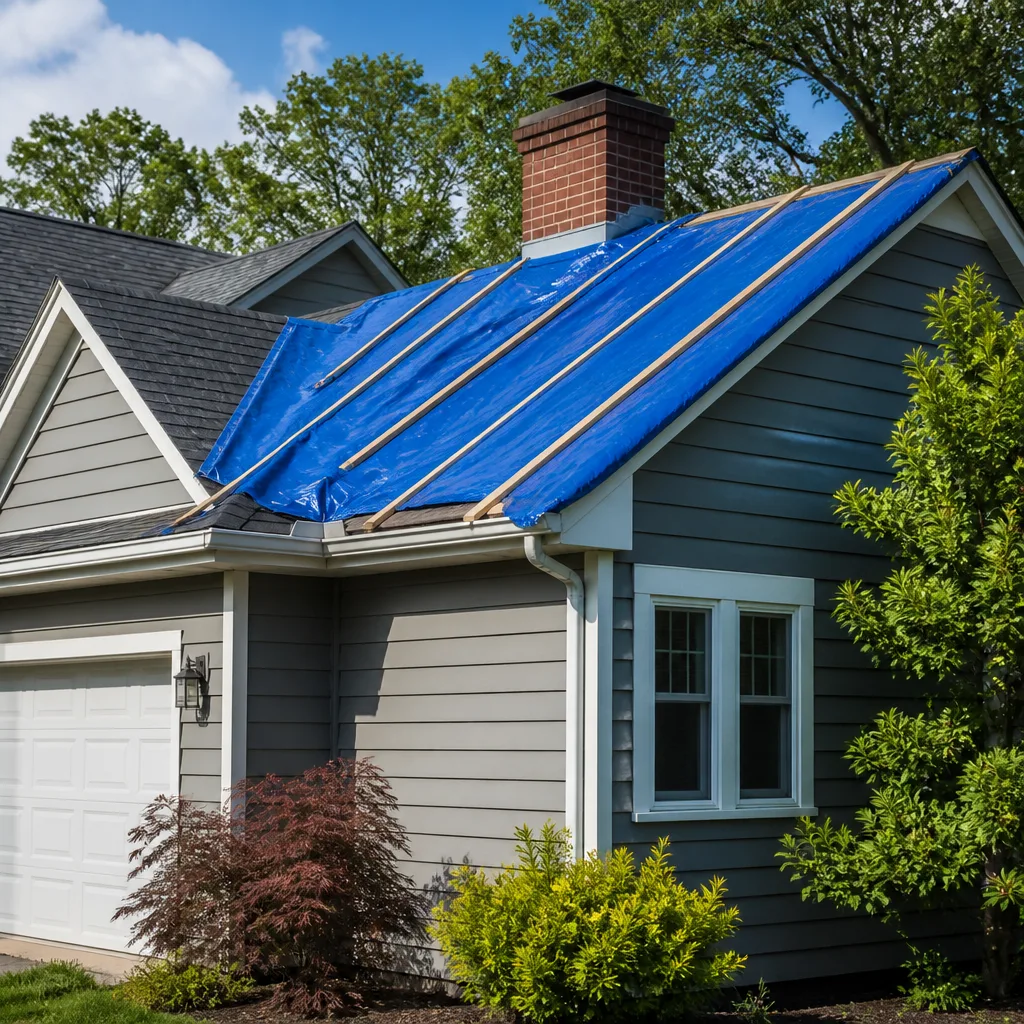
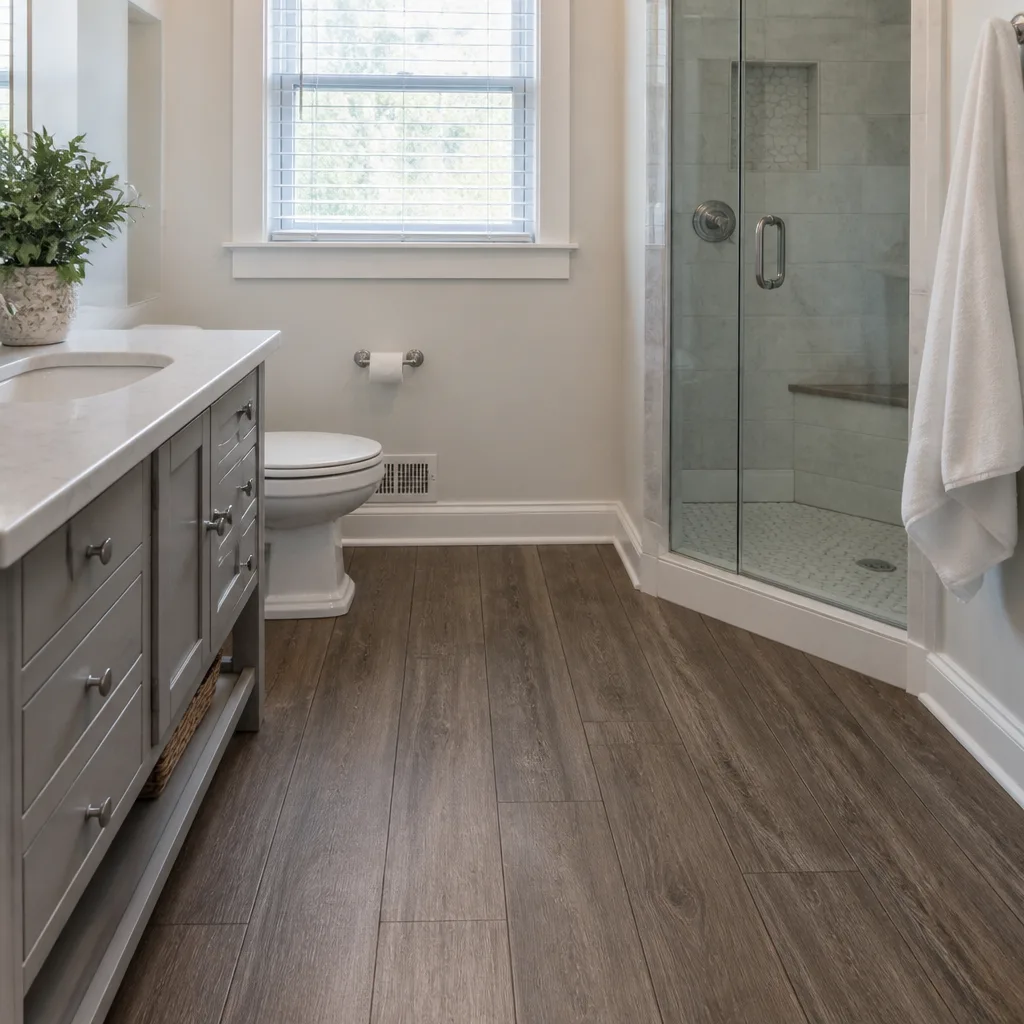
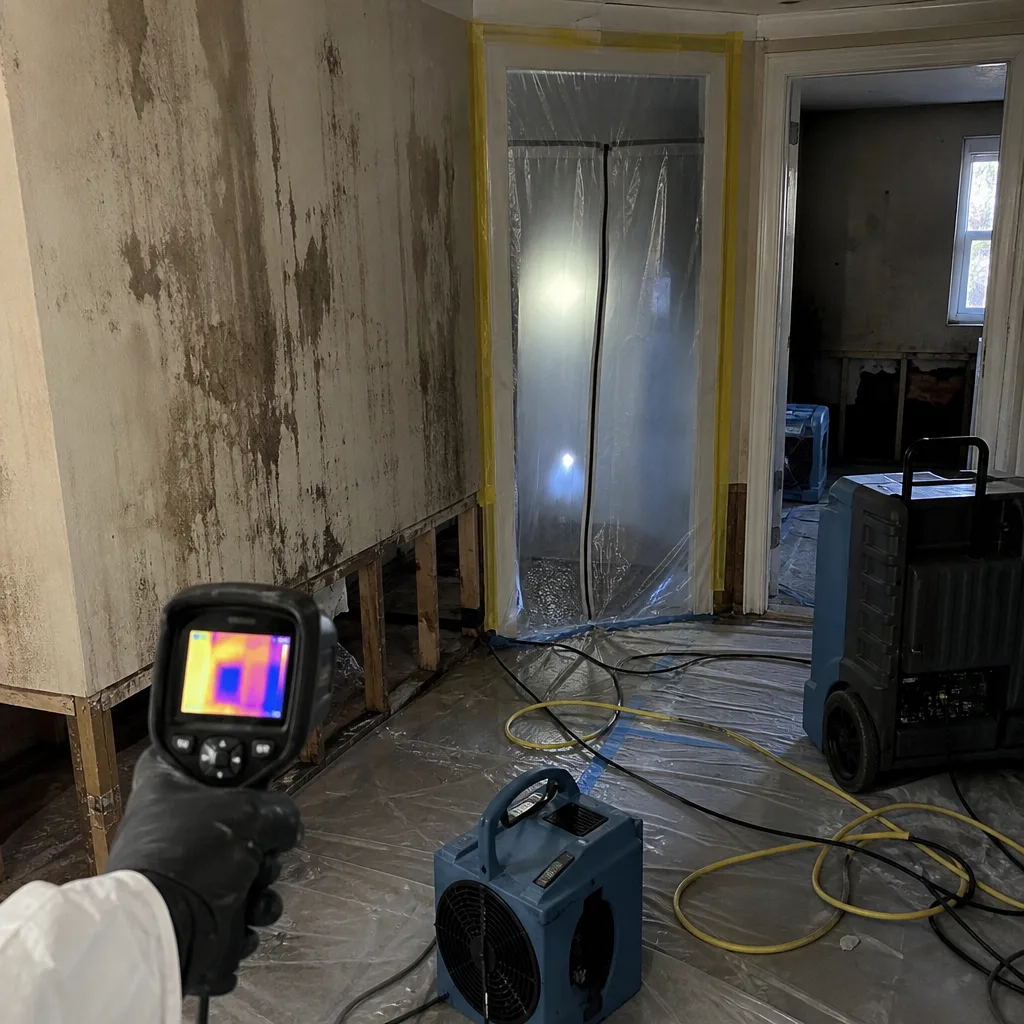 Before
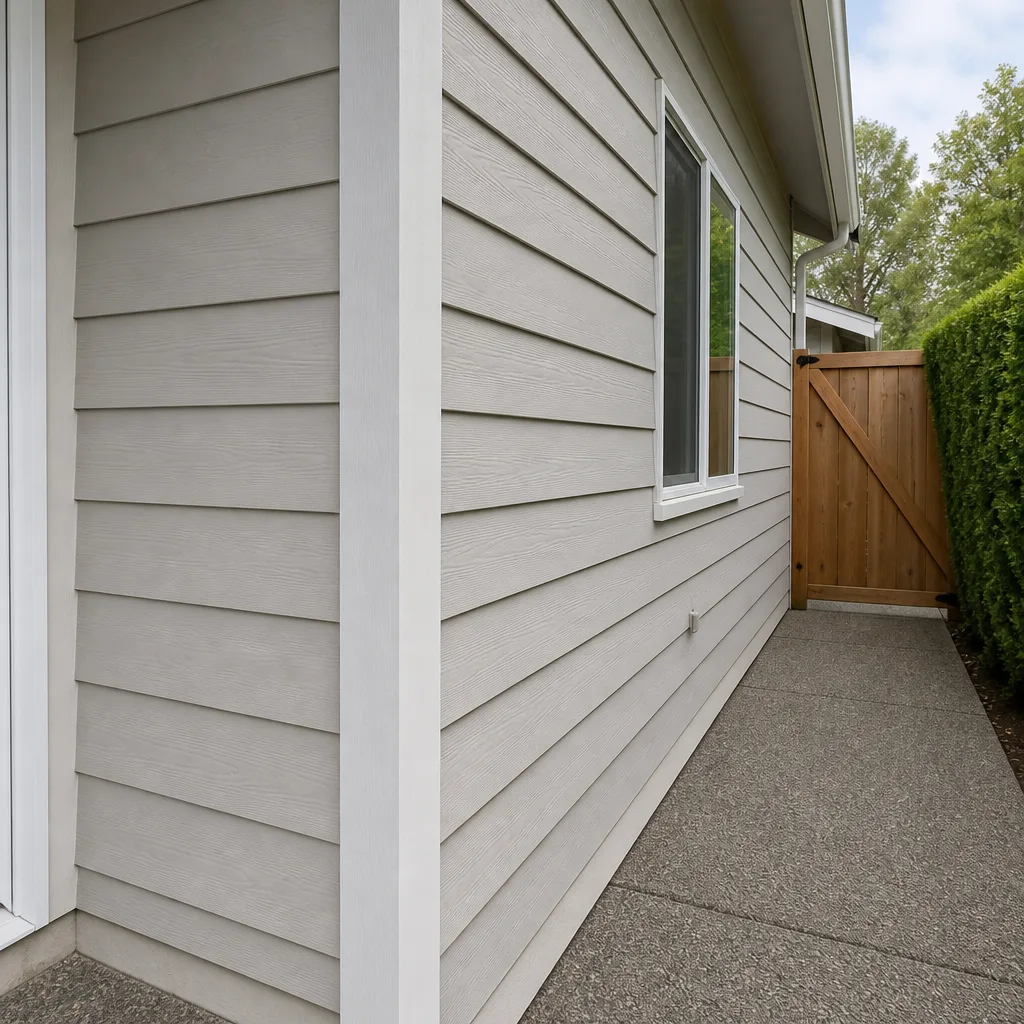 After
After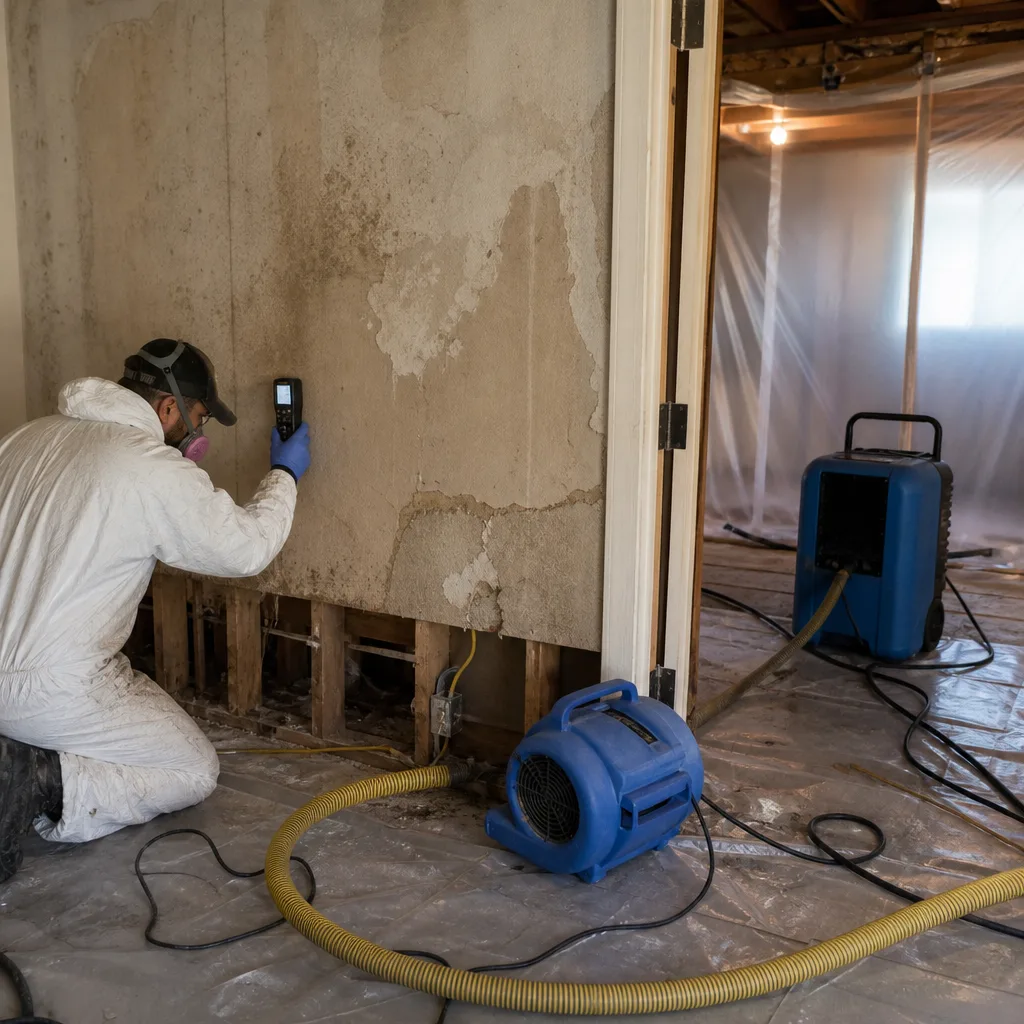 Before
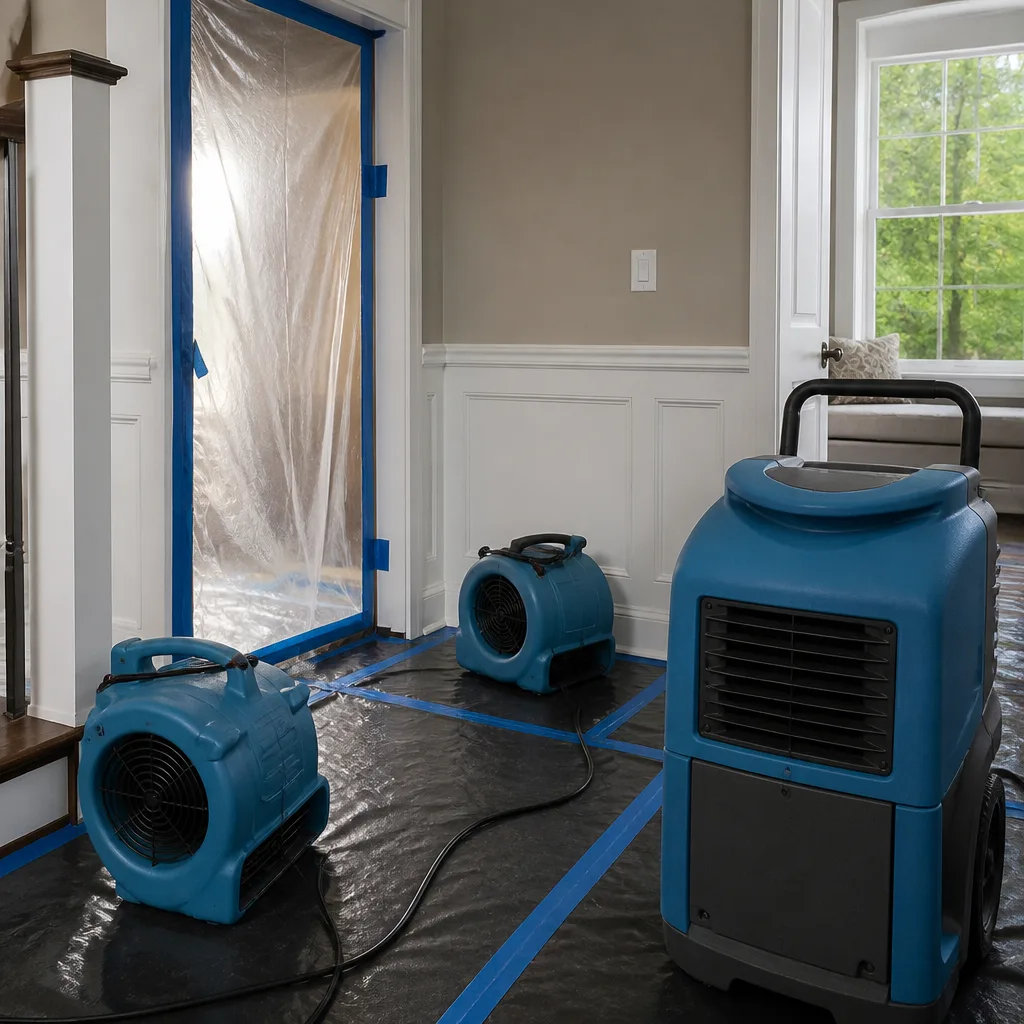 After
After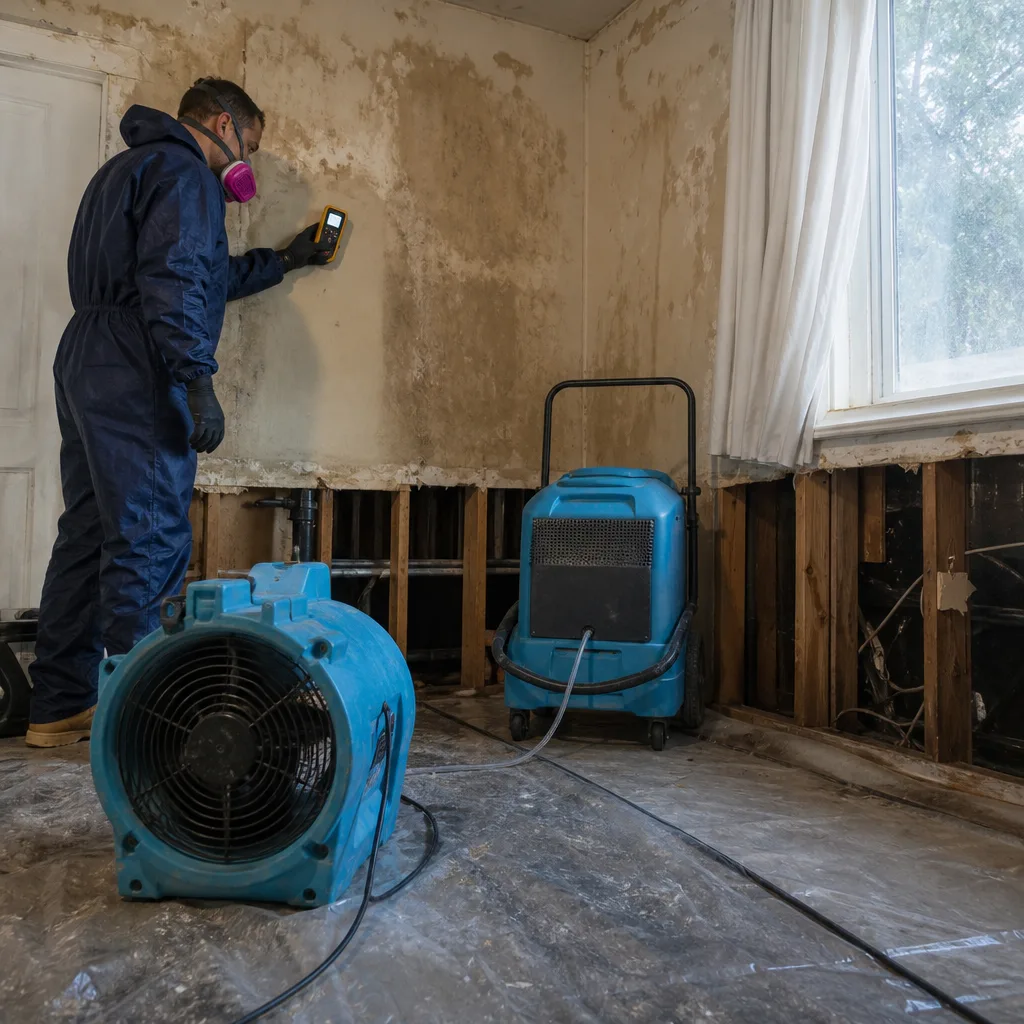 Before
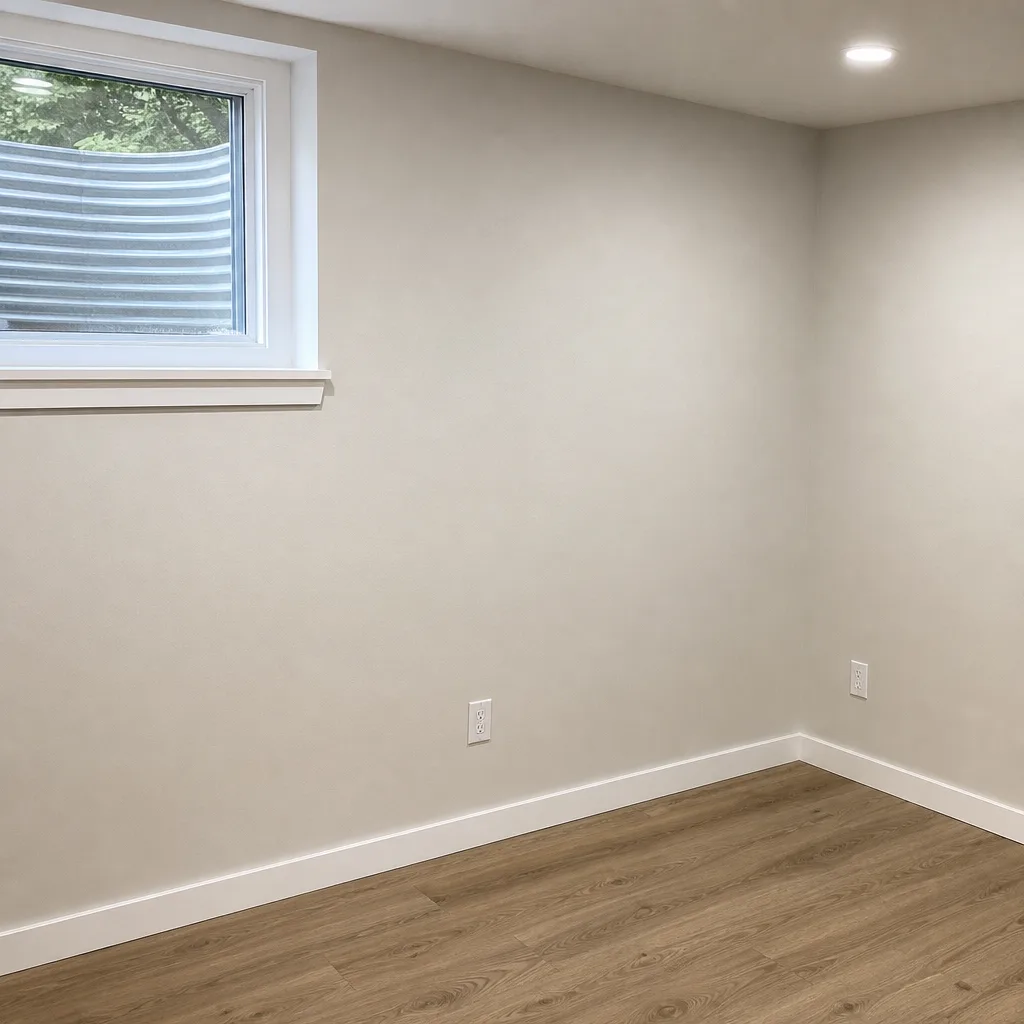 After
AfterFast, Reliable Mold Remediation Across SeaTac
Mold remediation in SeaTac typically runs $1,200-$4,500 for residential jobs, with most inspections scheduled within 24 hours and containment starting same-day once a written scope is signed. SeaTac’s unique position under the Sea-Tac Airport flight path created a housing stock full of sound-retrofit insulation that traps moisture in wall cavities, making hidden mold a recurring problem our crews know how to find and fix properly.
We serve SeaTac from our Seattle office, with crews dispatched daily to neighborhoods from Angle Lake to McMicken Heights to the residential blocks along South 176th Street. Whether you own a 1950s ranch near the airport’s 65-dB DNL noise contour or manage apartments along the SR-99 corridor, we document every moisture reading and deliver a written price before any work begins. Call (253) 642-8884 for a free estimate.
Why DryMark Restoration Tukwila Is SeaTac’s Preferred Mold Remediation Company
Back to Dry Restoration has handled mold remediation in SeaTac since 2011, and our familiarity with the city’s airport-adjacent housing stock shows in our containment strategies and drying protocols. We’ve restored more than 12,000 homes since Alicia Brennan founded the company, and a measurable share of those jobs involved SeaTac properties where Port of Seattle sound-retrofit insulation had failed.
Our response time to SeaTac averages under 90 minutes for active mold emergencies, with live phone coverage 24 hours a day, 7 days a week. No voicemail trees. No next-business-day callbacks while spore counts rise.
SeaTac customers consistently note our documentation in reviews. We hear it often: the photo record on every visit, the room-by-room moisture log, the written scope signed before work starts. These aren’t extras. They’re Haven Standard, Clause 1, and they exist because Alicia Brennan built this company after seeing how sloppy documentation costs homeowners their insurance claims.
We also offer a Free Second Opinion on any competitor’s written estimate. Bring us another company’s scope for your SeaTac property and we’ll review it at no charge.
Our Mold Remediation Services in SeaTac
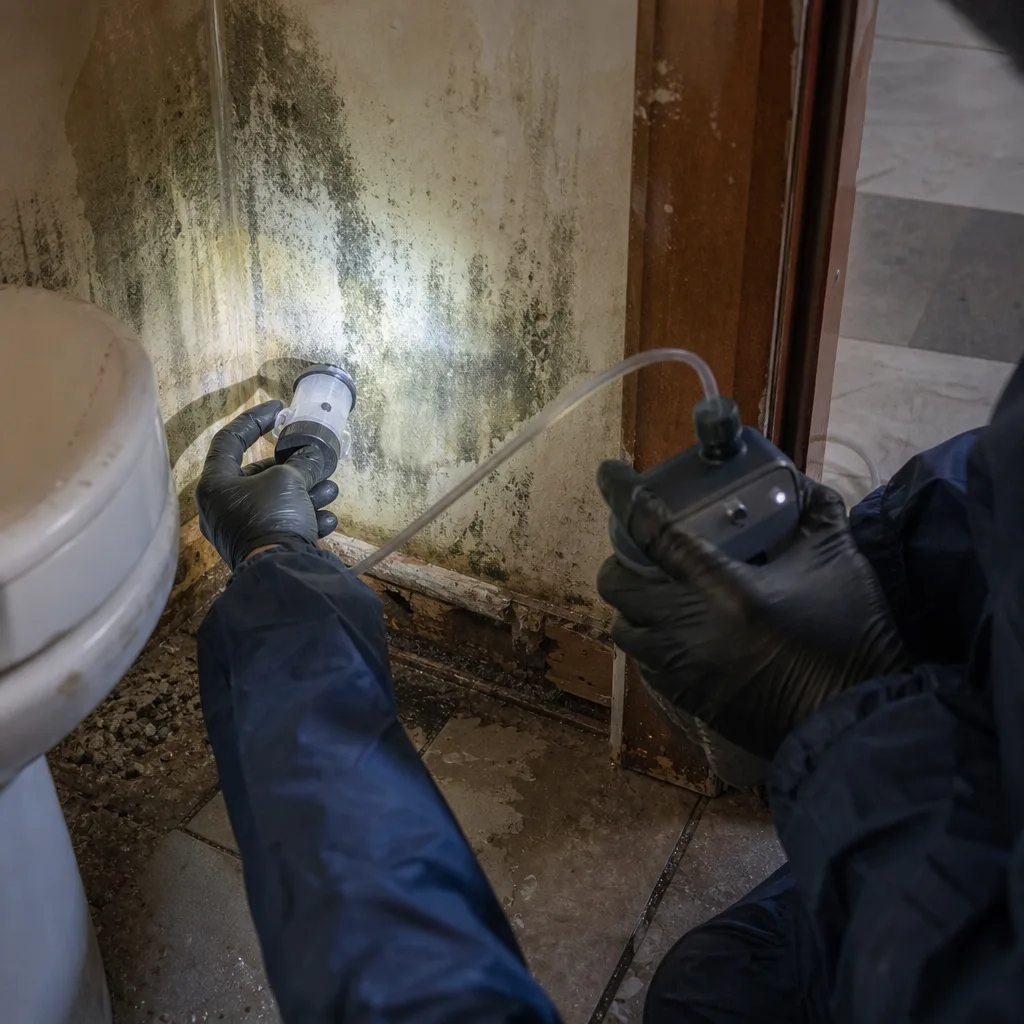
Mold Inspection & Testing in SeaTac
Our SeaTac mold inspections start with moisture mapping, not guesswork. We use professional-grade meters to check every wall cavity, crawl space, and attic in properties near the airport’s noise contour, where missing vapor retarders behind sound-retrofit insulation create hidden reservoirs. Air and surface samples are sent to independent labs for speciation. You’ll receive a written report with moisture readings, affected square footage, and material classifications by trade name, plus a photo record of every finding. Typical SeaTac inspection cost: $350-$650.
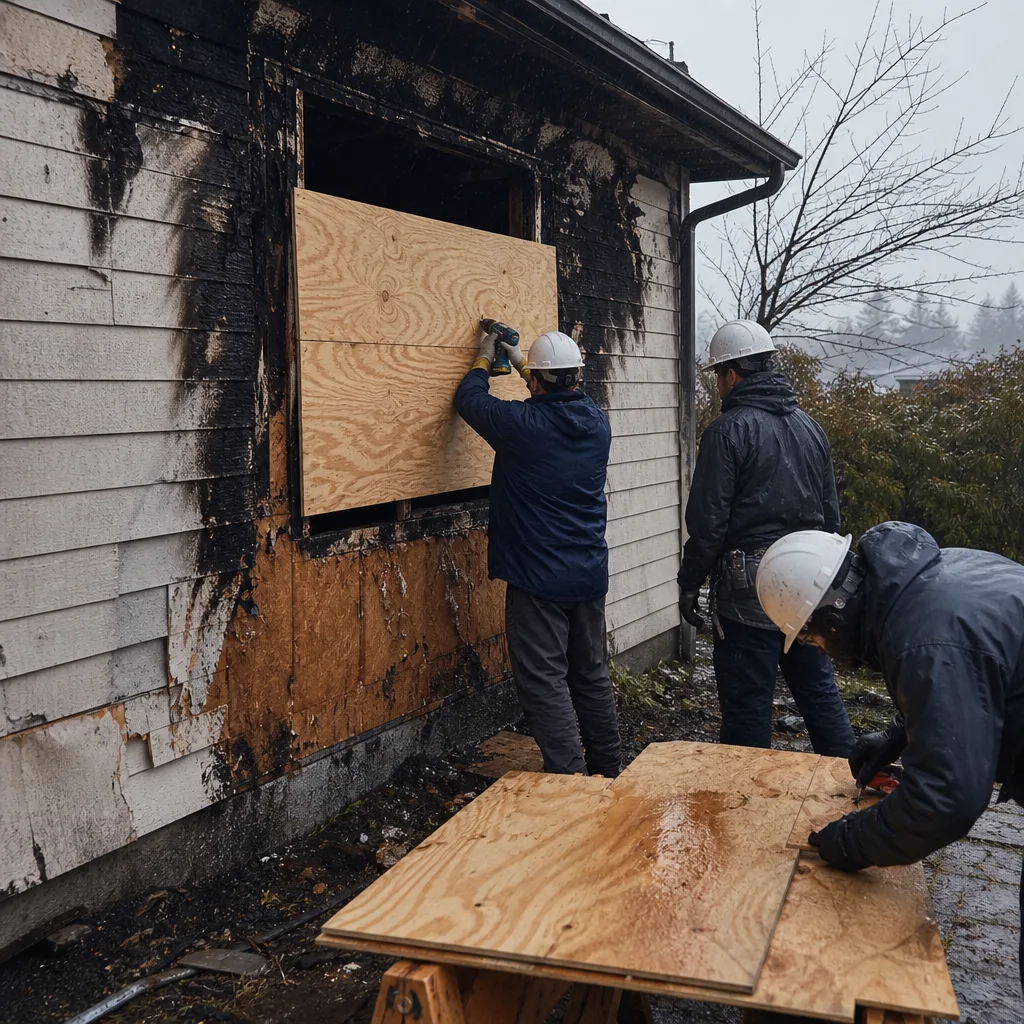
Mold Removal for SeaTac Homes
Containment comes first. We seal affected zones with polyethylene barriers and negative air machines before removing contaminated drywall, insulation, or framing. In SeaTac’s post-WWII ranch homes, this often means accessing unlined crawl spaces or cutting into walls where 1990s-era batt insulation was stapled directly over drywall. Antimicrobial treatment follows removal, with HEPA vacuuming and air scrubbing before clearance testing. Most SeaTac residential removals fall between $1,500 and $3,800 depending on affected area and material type.
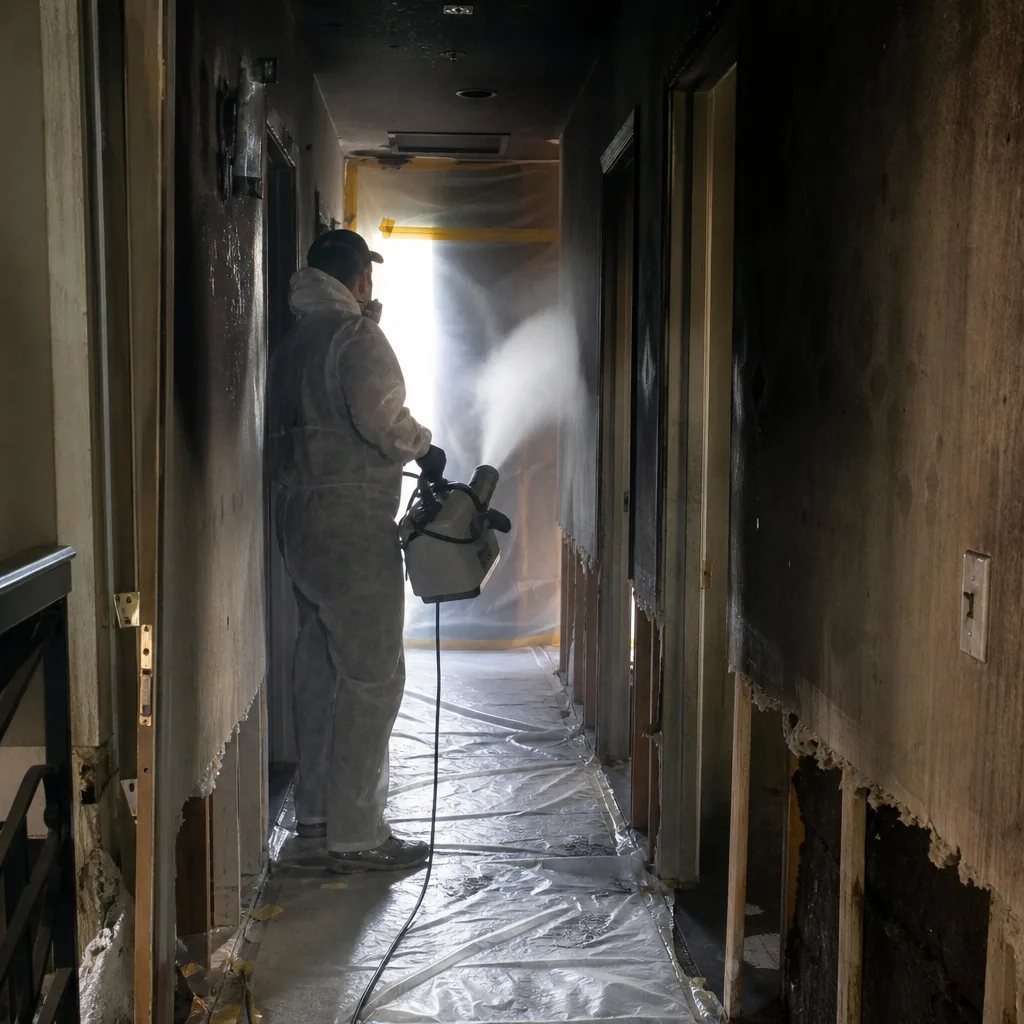
Black Mold Remediation
Stachybotrys and other toxigenic species require stricter containment and longer drying cycles. Our crews are trained to IICRC standards for Category 3 microbial remediation, with full PPE and documented decontamination protocols. In SeaTac’s SR-99 corridor apartments, where slow drying after water intrusion is common, we treat black mold as a signal of deeper moisture problems, not just a surface issue. We locate the source, fix it, and prove the structure is dry with psychrometric data, vapor pressure differential readings, and daily drying logs.
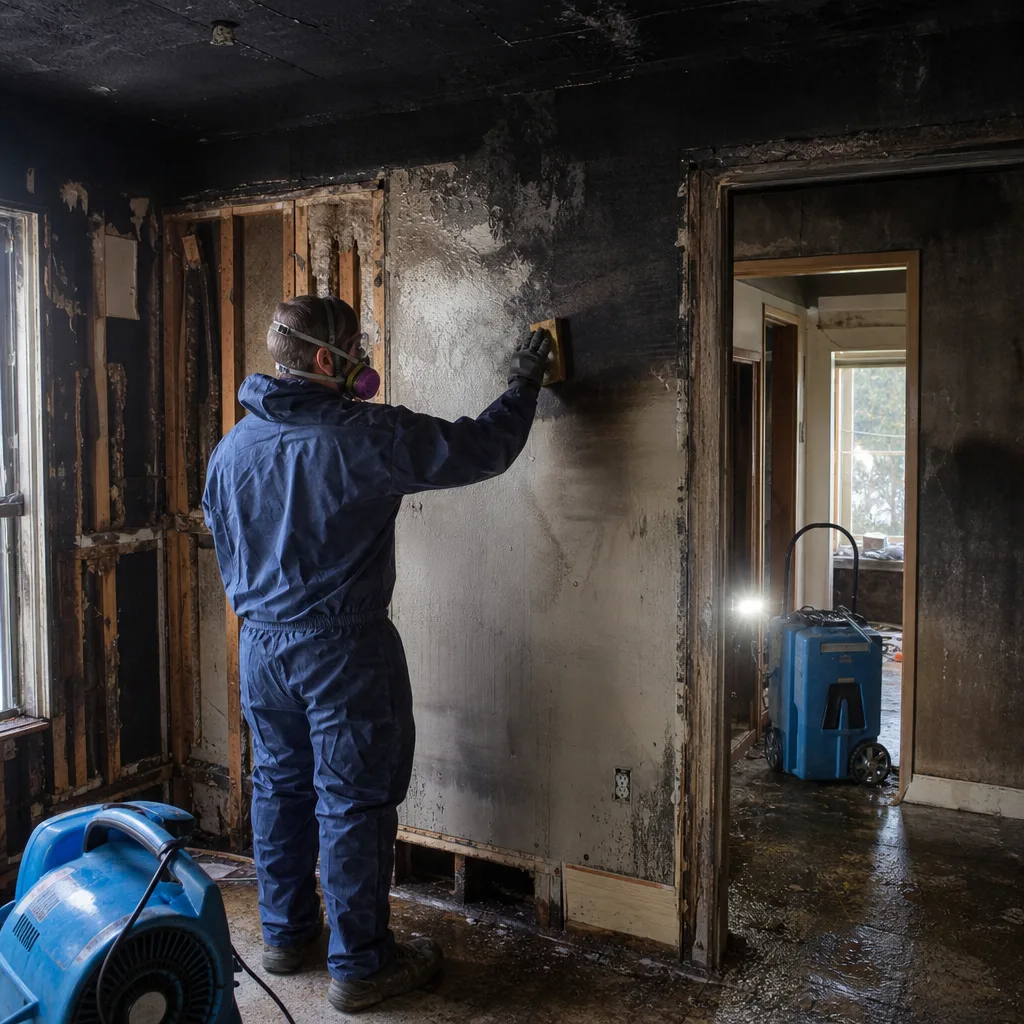
Air Quality Restoration
After remediation, we don’t assume the air is clean. We measure it. Our SeaTac air quality restoration includes pre- and post-remediation air sampling, HEPA filtration during work, and final clearance testing against industry benchmarks. For properties near Sea-Tac Airport with forced-air systems that may have circulated spores, we inspect ductwork and recommend cleaning when visual or sampling evidence supports it. This matters in SeaTac’s dense housing, where shared walls and HVAC systems can move contaminants between units.
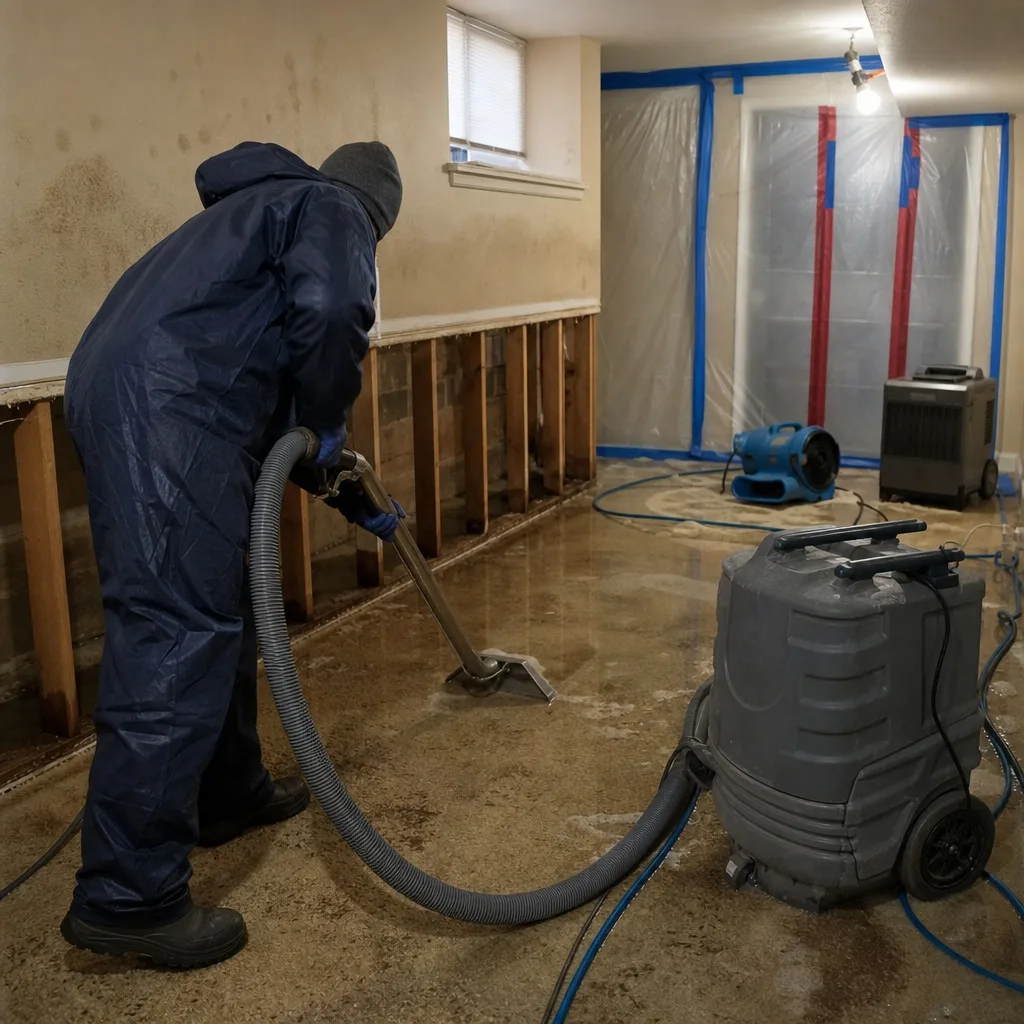
Crawl Space Treatment
SeaTac’s post-WWII ranch homes sit on unlined crawl spaces that pull moisture from the region’s 38 inches of annual rainfall and near-constant overcast humidity from October through May. We install vapor barriers, dehumidify to specification, and treat structural members with EPA-registered antimicrobials. Our crews document before-and-after moisture content in floor joists and rim boards, producing the drying logs that turn restoration invoices into payable claims.
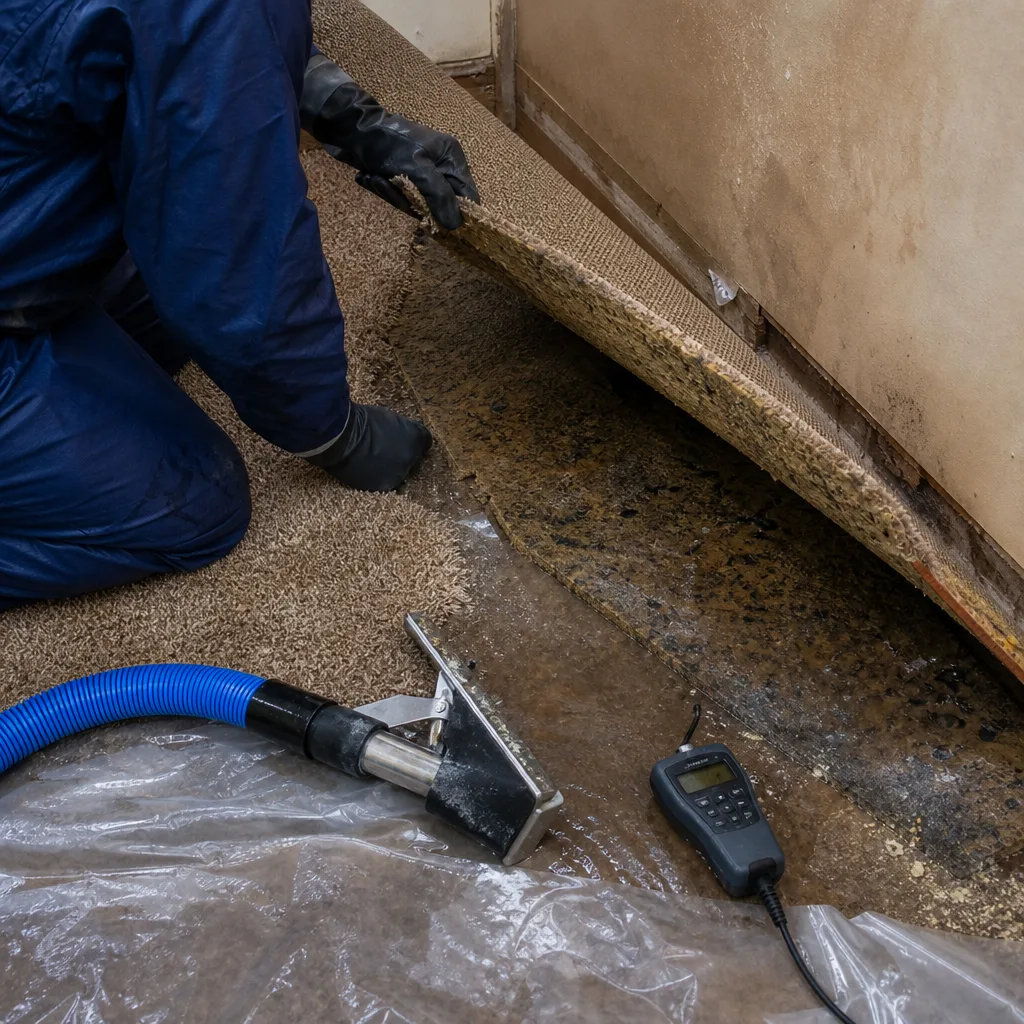
Moisture & Humidity Control
Without controlling moisture, mold returns. Our SeaTac humidity control services include permanent dehumidification systems, drainage improvements, and vapor management retrofits. For homes inside the airport noise contour, we install proper vapor retarders when replacing sound-retrofit insulation, correcting the original installation error that caused the mold in the first place. This is prevention with an address, not a generic promise.
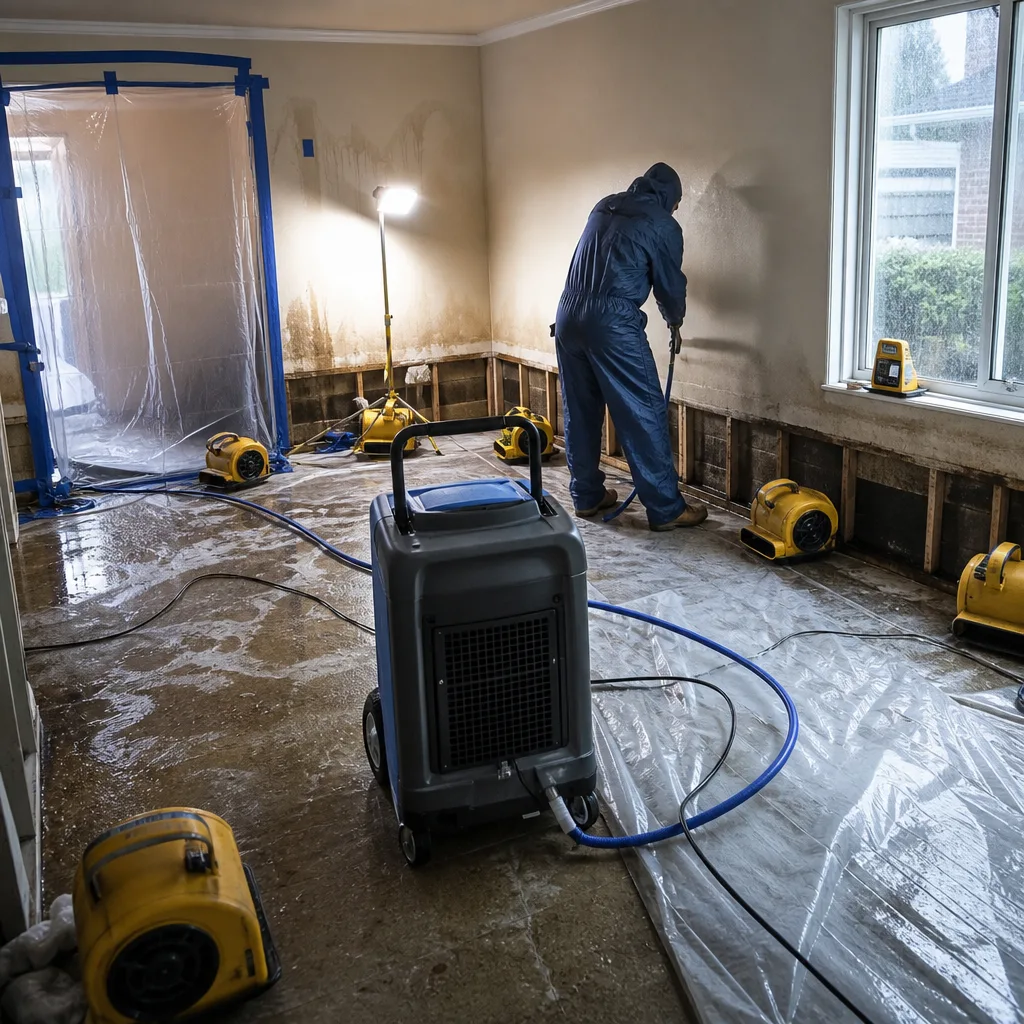
What happens when you call
- 1
A real person answersNo phone trees - you reach a local pro.
- 2
You get an upfront price rangeHonest numbers before anyone is dispatched.
- 3
A background-checked tech heads outLicensed & insured, dispatched right away.
- 4
You approve before work beginsNothing starts until you say go.
 Before
 After
AfterTrusted Brands We Service in SeaTac
Our equipment fleet includes professional-grade drying systems from B-Air and Injectidry, documented to IICRC, RIA, and IFA standards. The Injectidry systems are particularly valuable in SeaTac’s tight residential spaces, where wall cavities behind sound-retrofit insulation require targeted drying without demolishing entire rooms. We stock replacement components locally for rapid turnaround, and every machine’s output is logged daily to prove the structure returned to pre-loss condition. This documentation is included as a standard deliverable, never an upsell.
Common Mold Remediation Problems We See in SeaTac Homes
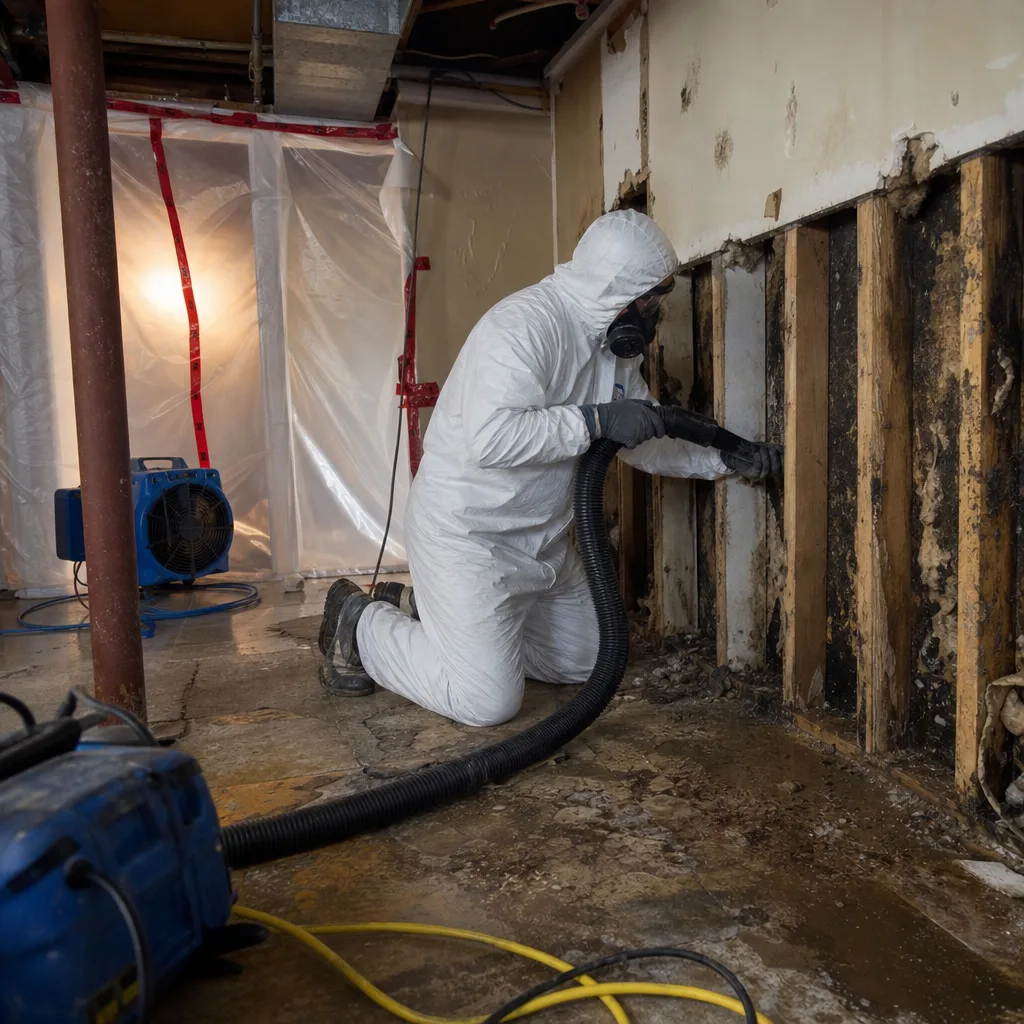
- Hidden mold behind Part 150 sound-retrofit insulation. Homeowners near South 176th Street and throughout the 65-dB DNL noise contour mistake musty odors for seasonal dampness. The missing vapor retarder in original retrofits traps condensation against cold exterior sheathing for decades, and mold doesn’t surface until the cavity is fully saturated.
- Recurring mold after contractor rebuilds without vapor retarders. We see this in SeaTac repeatedly. A contractor replaces drywall and insulation but skips the vapor barrier. One rainy season later, moisture is trapped again and mold returns. Our written scopes specify proper vapor retarder installation to break this cycle.
- Rapid colonization in SR-99 corridor apartments after slow leaks. Dense multi-family housing along International Boulevard often lacks modern waterproofing. Category 2 or 3 water intrusion that isn’t dried within 24-48 hours allows mold to colonize wet drywall before remediation even begins.
- Crawl space mold in 1950s-1970s ranch homes. SeaTac’s original airport-worker housing features unlined crawl spaces with original plumbing. Atmospheric river events overwhelm aging storm drains, and flat grades push water toward slab foundations where humidity rises unchecked year-round.
Pricing for Mold Remediation in SeaTac, WA
Mold inspection and testing in SeaTac runs $350-$650. Contained mold removal in a single room typically costs $1,200-$2,800. Whole-home remediation involving multiple affected areas, HVAC contamination, or structural drying falls between $3,500 and $7,500. Black mold or toxigenic species requiring enhanced containment and longer cycles add 20-35% to base removal costs. Crawl space treatment with vapor barrier installation ranges $2,500-$5,000 depending on square footage and access conditions.
What affects your price: affected square footage, material type (drywall vs. plaster vs. structural framing), whether sound-retrofit insulation must be removed and properly reinstalled with vapor retarder, and whether air quality testing is required for insurance documentation. Every job is quoted in writing before work begins, with no scope-creep additions once the crew is inside. Haven Standard, Clause 1. Call (253) 642-8884 for your written estimate.
We Also Serve Cities Near SeaTac
Our crews work throughout the south Puget Sound metro, including SeaTac and neighboring Tukwila, Renton, Kent, and Bellevue. Dispatch and scheduling are coordinated from our Seattle office. If you need Mold Remediation anywhere in this corridor, the same documentation standards and written pricing apply.
Serving SeaTac, WA - Our Local Coverage Area
We’re based in the SeaTac area and know this community well. Use the map below to see our service coverage - if you’re nearby, we can almost certainly help.
FAQs - Mold Remediation in SeaTac
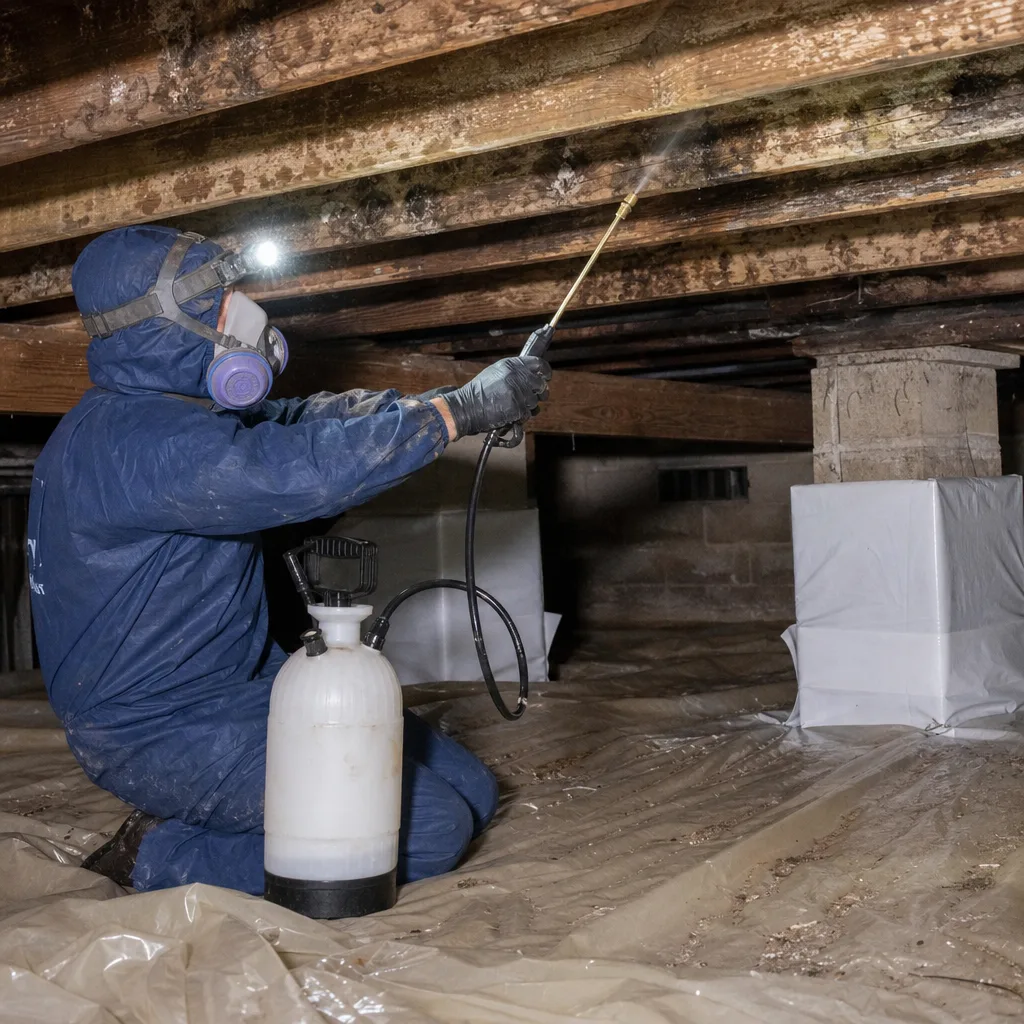
Homes inside the 65-dB DNL noise contour often contain Port of Seattle Part 150 sound-retrofit insulation installed without vapor retarders, which traps condensation against exterior sheathing and creates hidden mold that standard inspections miss. Our crews specifically check for this failure pattern by probing wall cavities in affected bedrooms and living areas, then install proper vapor barriers during remediation to prevent recurrence. Call (253) 642-8884 if your home is in the noise contour and you smell mustiness.
These homes were built quickly for airport workers in the 1950s-1970s with unlined crawl spaces, original plumbing near end of life, and minimal vapor management details. SeaTac’s 38 inches of annual rainfall and year-round humidity from October through May means moisture intrusion has no dry season to reverse naturally. Our crawl space treatments address the root conditions with vapor barriers, dehumidification, and documented moisture readings.
Mold colonization begins on wet drywall within 24-48 hours in SeaTac’s climate, and the dense SR-99 corridor apartments often lack the ventilation or rapid response protocols to prevent it. Slow drying after a leak, especially in buildings without modern waterproofing, means we frequently find active growth when we’re called for what the owner thought was just a water cleanup. Speed matters on mitigation. Call (253) 642-8884 for same-day assessment.
We start with non-invasive moisture mapping to locate the wet cavity, then cut a small inspection opening to visually confirm mold growth and check for the missing vapor retarder. Containment goes up before any material is disturbed, and we photo-document every stage for your insurance file. A homeowner near South 176th Street in SeaTac called us after noticing a musty odor in a bedroom; when our crew opened the exterior wall behind the sound-retrofit insulation, we found black mold on the original drywall due to missing vapor retarder. We set up containment, performed moisture mapping, applied antimicrobial treatment to the affected framing, and used Injectidry drying mats to dry the wall cavity, then installed a proper vapor barrier before reinstalling insulation. The homeowner was relieved, and we left drying logs showing the structure returned to pre-loss condition within four days.
Yes. SeaTac’s near-constant overcast humidity from October through May and flat residential grades that trap water near foundations require permanent dehumidification solutions, not just spot drying. We install vapor barriers sealed to foundation walls, size dehumidifiers to the actual cubic footage and ventilation rate, and monitor wood moisture content until floor joists read below 16% - the threshold where mold cannot sustain growth. Daily drying logs track every reading.
Written by Alicia Brennan, Owner at Back to Dry Restoration, serving SeaTac since 2011.