
Last updated September 23, 2026
Free visual inspection and a written scope of work before any mitigation begins - photos, moisture readings, and drying logs go in your claim file
The scope we write is the scope we bill. Anything new gets shown to you, in writing, before we touch it.
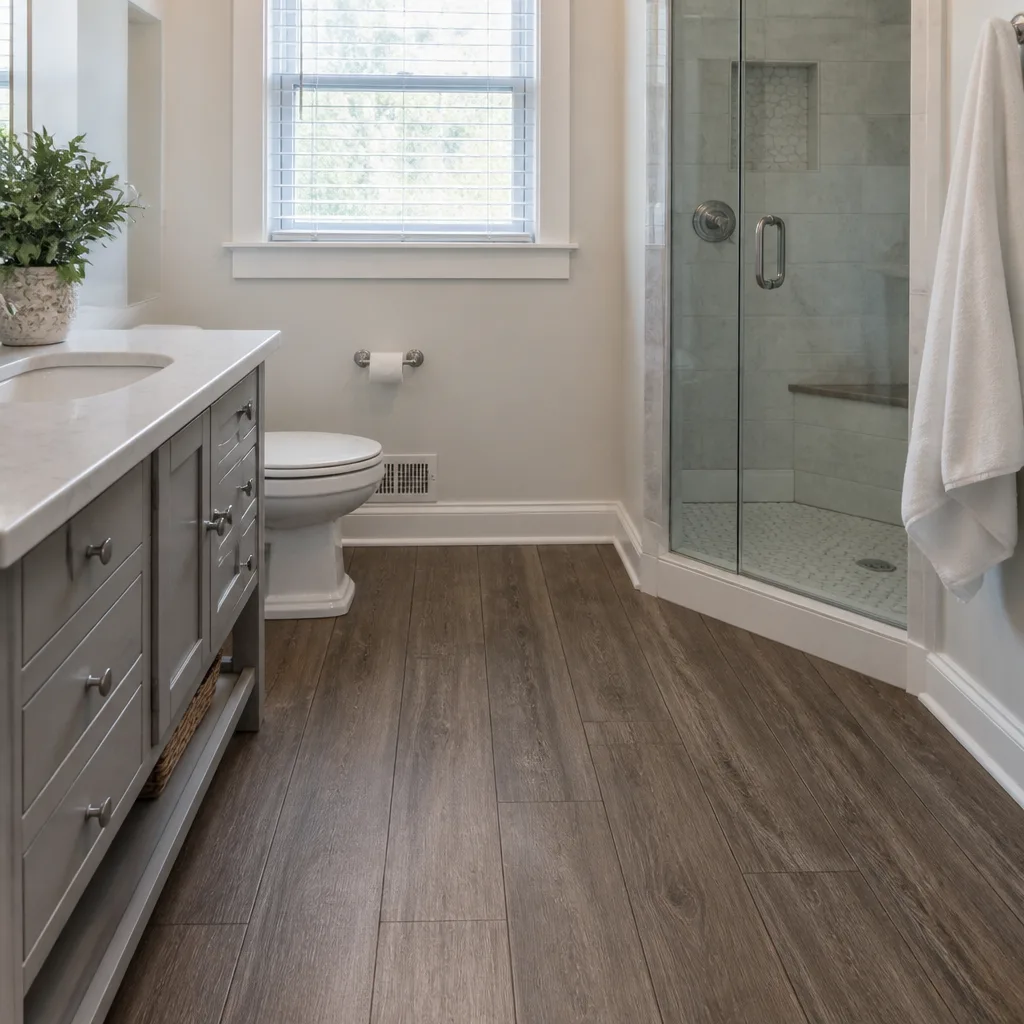
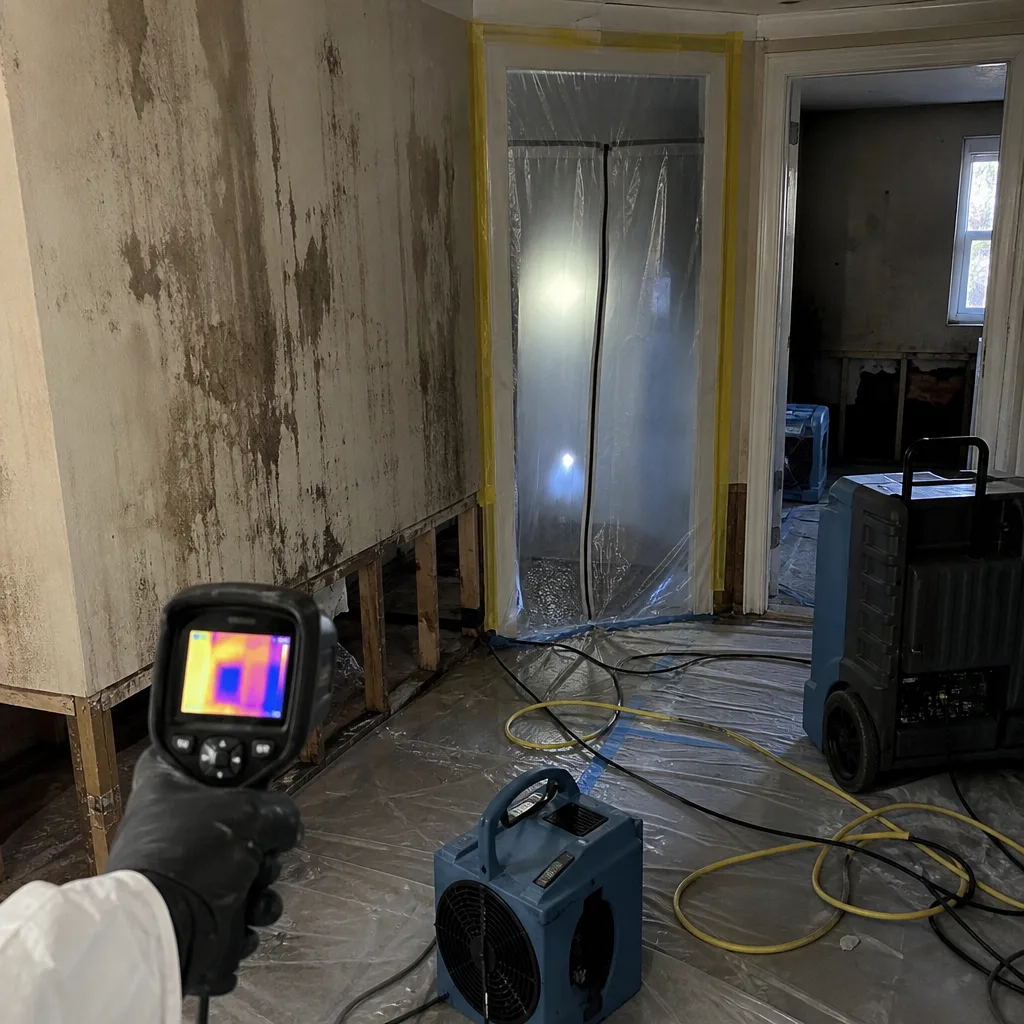 Before
 After
After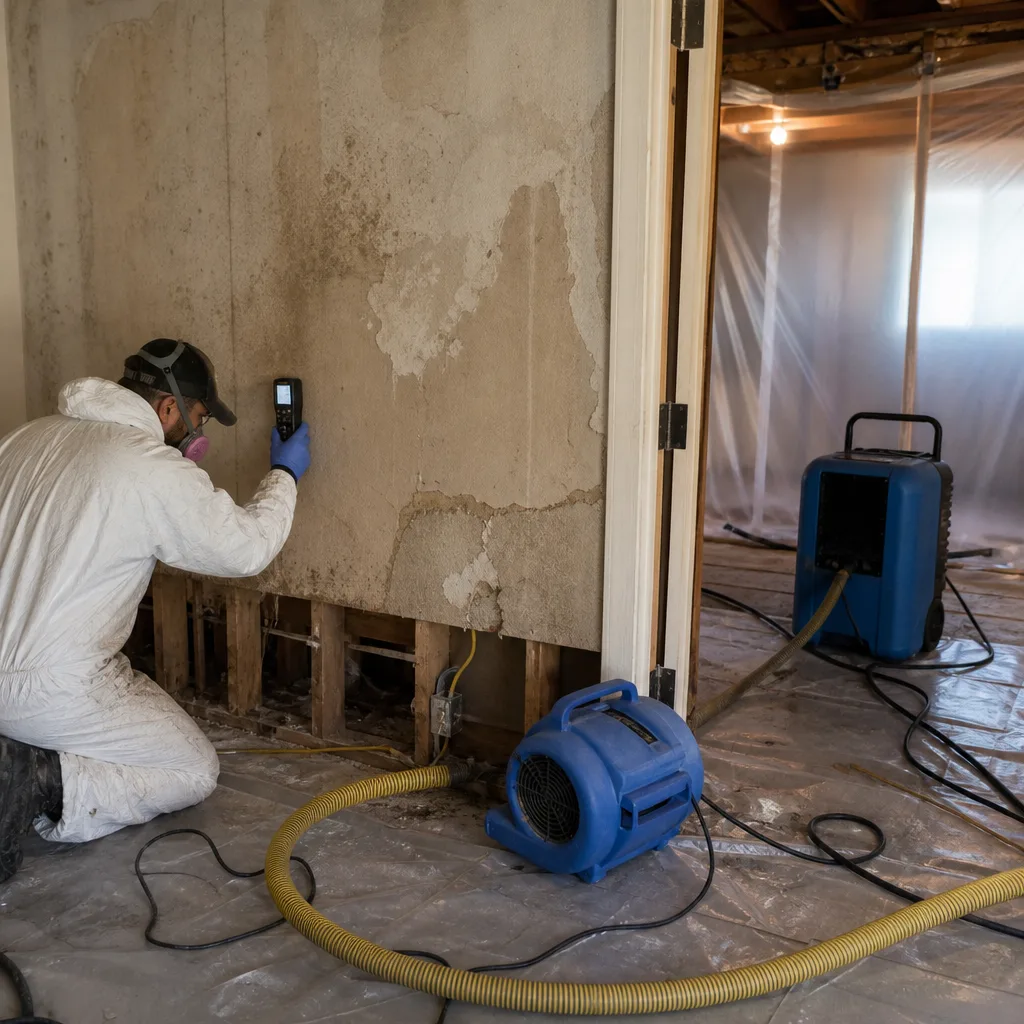 Before
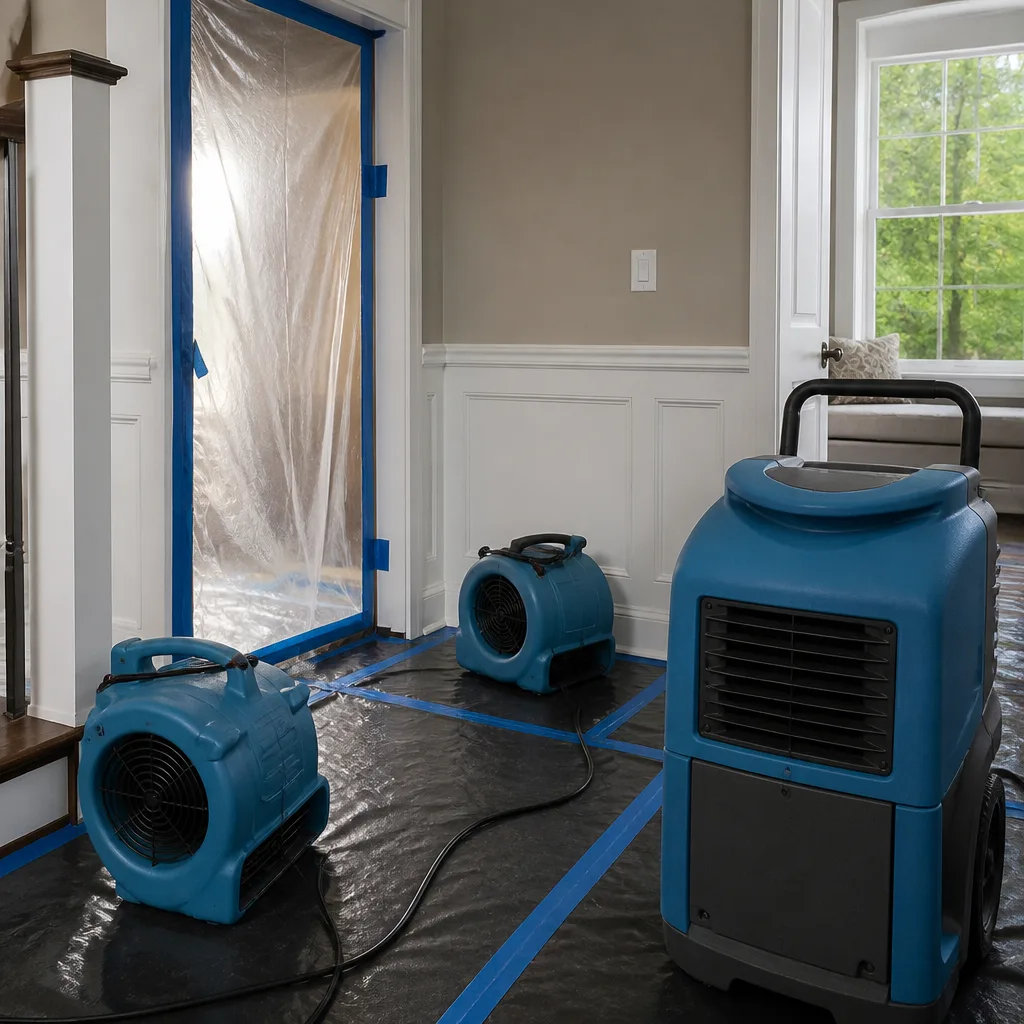 After
After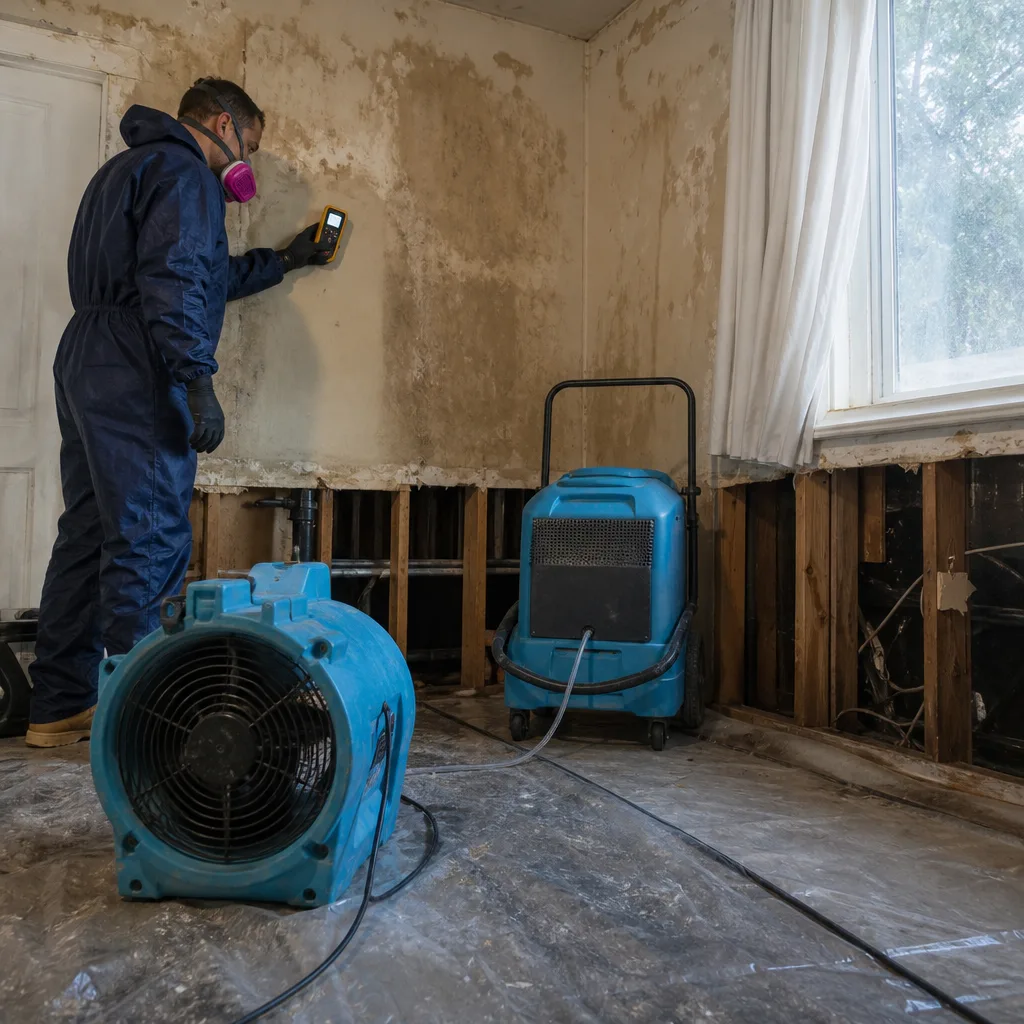 Before
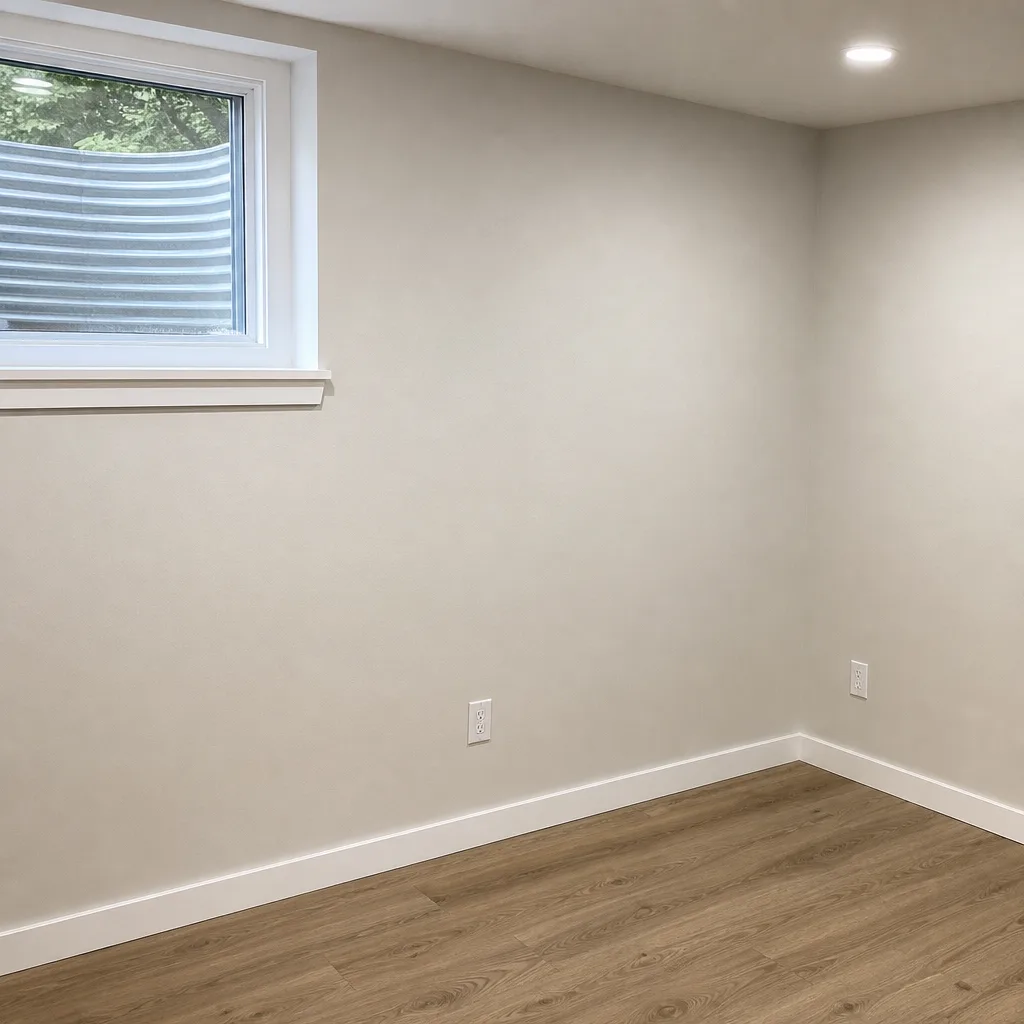 After
AfterDIY vs Professional Damage Restoration: The Tukwila Homeowner’s Decision Guide
Washington homeowners who attempt self-performed drying without psychrometric documentation forfeit the labor and equipment reimbursement on their claim - not because they did the work wrong, but because they have no evidence it was done to standard. In Tukwila’s climate, where winter humidity hovers near 80% and summer marine layers slow evaporation, this documentation gap turns a manageable water loss into an out-of-pocket rebuild. This guide explains when DIY drying is legally and financially sound, when it destroys your insurance position, and what documentation you need to preserve either path. For more guides & resources, see our blog.
Quick Answer
DIY damage restoration is appropriate only for Category 1 water losses under 10 square feet with no structural penetration, using equipment you already own, and only if you document moisture readings daily. For every other scenario in Tukwila - including any loss touching subfloor, wall cavities, or involving Category 2 or 3 water - professional restoration is required to produce the drying logs, equipment placement records, and grain depression readings your insurer needs to reimburse the work. The cost difference between rental fans and professional service often disappears once you account for extended drying time, forfeited insurance reimbursement, and secondary damage.
Table of Contents
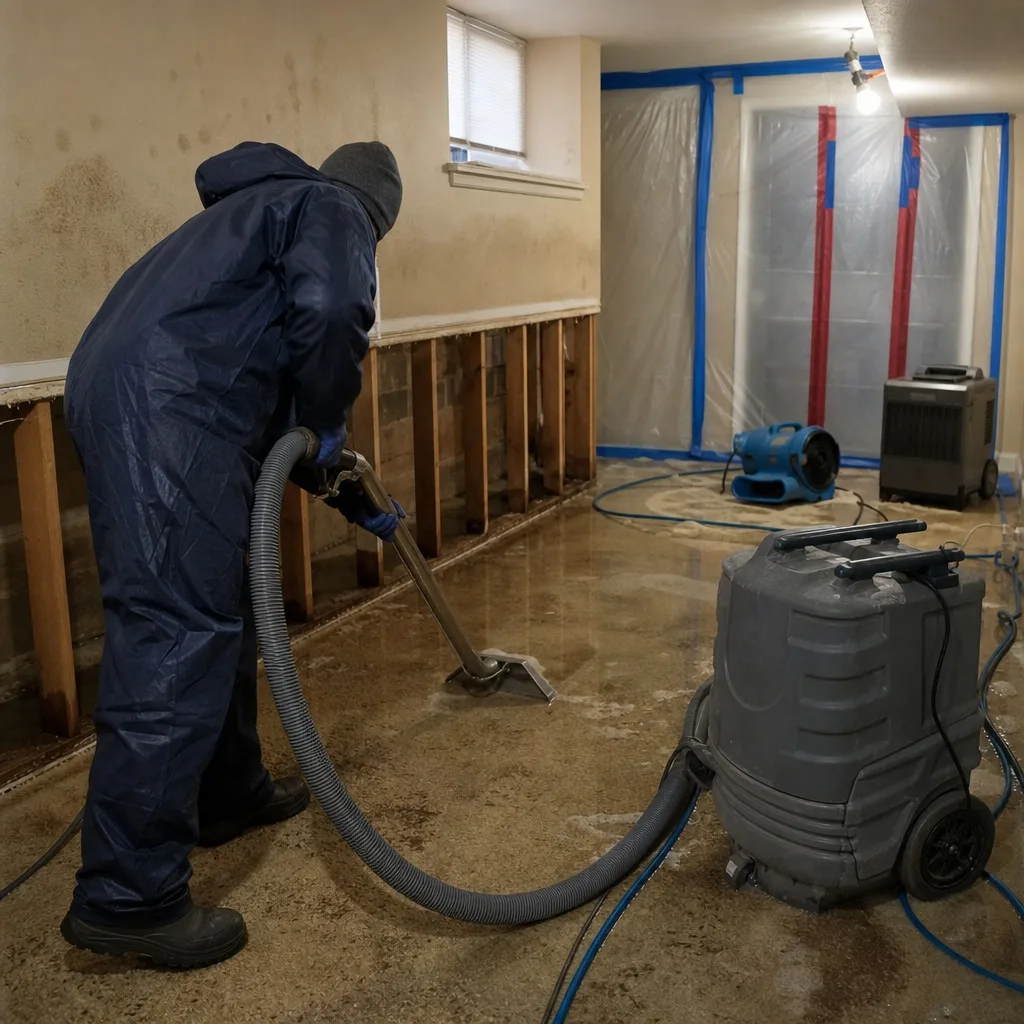
- What Insurers Actually Require to Reimburse Restoration Work
- Three Scenarios Where DIY Works - and Where It Fails
- Washington Mold Disclosure Laws: The Hidden Cost of DIY Drying
- Real Cost Comparison: DIY Equipment Rental vs. Professional Service in Tukwila
- What to Do in the First 24 Hours to Preserve Both Options
- The Equipment and Documentation Gap: Why Rental Fans Don’t Qualify
- Common Mistakes to Avoid
- When to Call a Professional
- Frequently Asked Questions
 Before
 After
AfterWhat Insurers Actually Require to Reimburse Restoration Work
Insurance adjusters do not pay for “dry.” They pay for documented drying. This distinction drives every decision in our work at DryMark Restoration Tukwila home.
When we submit a restoration invoice for payment, the carrier reviews four documentation elements. Each must be present, and each must trace back to industry-standard methodology:
- Daily drying logs - moisture content readings for every affected material, taken with calibrated penetrating and non-penetrating meters, recorded by time and location. These show the drying curve: the rate at which materials are losing moisture to the air.
- Equipment placement records - which dehumidifier, air mover, or specialty drying system was placed in which room, at what capacity, for how many hours. This justifies the equipment line items on the invoice.
- Psychrometric data - temperature, relative humidity, and specific humidity readings taken at the dehumidifier intake and exhaust, plus grain depression calculations. Grain depression is the measurable difference between moisture in the air entering the dehumidifier and moisture in the air exiting it; it proves the equipment is actually removing water, not just circulating it.
- Material classification and salvageability assessment - whether drywall is Class 1, 2, 3, or 4 wet, whether subfloor is plywood or OSB, whether insulation is fiberglass batts or spray foam. Each classification triggers different drying protocols and time expectations under IICRC S500 standards.
Without these four elements, an adjuster cannot distinguish legitimate drying from invoiced guesswork. The claim is either denied or reduced to “cleaning” rates, which typically pay 60-70% less than restoration rates.
Homeowners using consumer-grade equipment from hardware stores cannot produce this documentation. The rental fan has no hour meter. The box-store dehumidifier displays no grain depression data. The homeowner owns no calibrated moisture meter, and even if they purchased one, they lack the training to interpret readings against IICRC drying goals. The work may be competent. It is not provable.
We have reviewed claims where Tukwila homeowners spent $400 on rental equipment, spent two weeks moving fans between rooms, and submitted receipts to their carrier. The adjuster paid zero for drying labor and equipment. The homeowner’s “savings” became a $400 loss, plus the cost of mold remediation when secondary growth appeared six weeks later. See our Water Damage Restoration Maintenance Checklist for Tukwila Homeowners for steps to prevent this outcome.
Three Scenarios Where DIY Works - and Where It Fails
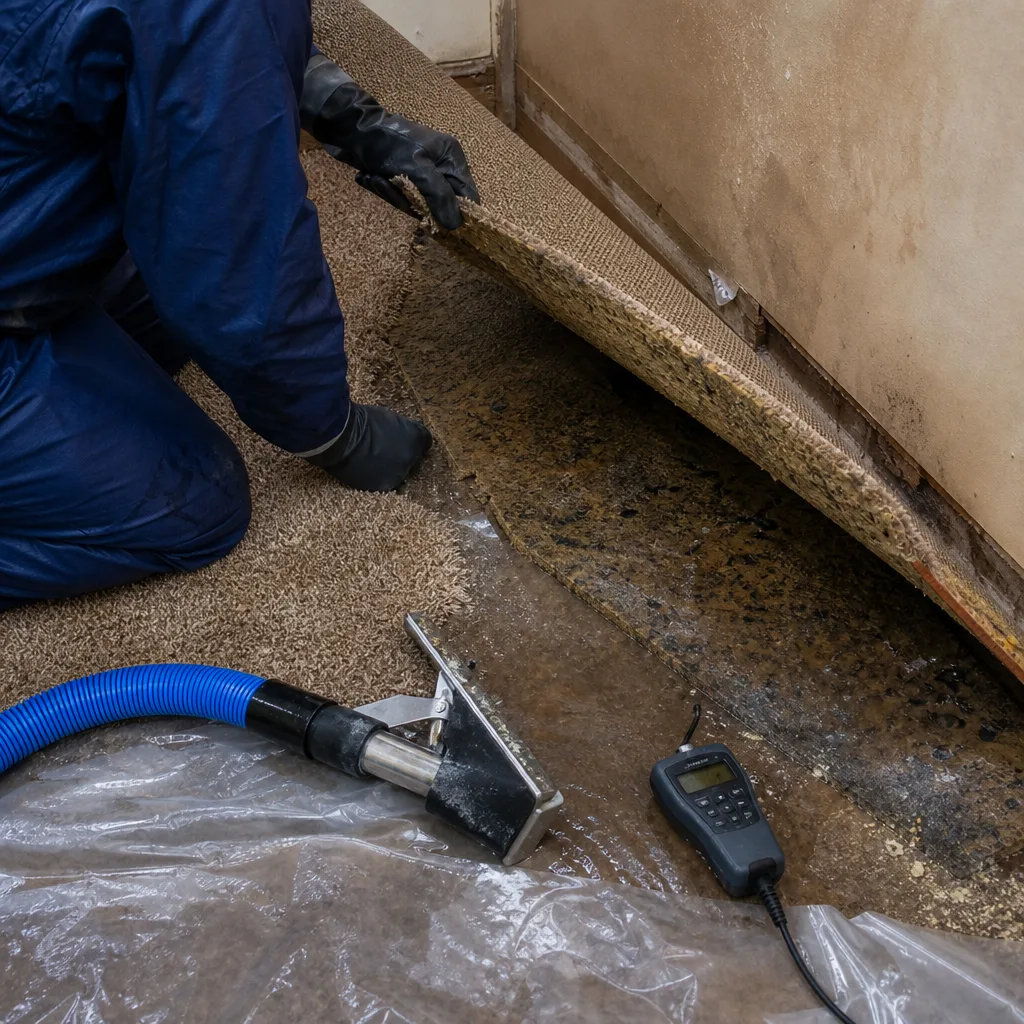
Not every water loss requires professional intervention. The IICRC S500 standard defines three categories of water and four classes of loss. Understanding both determines whether DIY is appropriate.
Scenario 1: DIY Is Genuinely Appropriate
Category 1 water, Class 1 loss, under 10 square feet, no structural penetration.
This means clean water from a supply line or sink overflow, affecting only a small area of flooring or wall surface, with no water reaching subfloor, wall cavities, or insulation. In a Tukwila rambler with slab-on-grade construction, this might mean a bathroom floor with vinyl or tile that water sat on briefly. The homeowner can extract standing water, place their own fans and dehumidifier, and monitor with a $30 moisture meter from a hardware store.
Even here, documentation matters. Photograph the loss before touching anything. Record moisture readings daily. If the meter shows rising moisture after 48 hours, the loss is deeper than it appeared. Call a professional before mold colonizes.
Scenario 2: DIY Creates Hidden Liability
Category 1 water that appears contained but reaches subfloor or wall cavities.
This is the most common DIY failure we see in Tukwila’s 1960s-1980s construction. Water migrates horizontally under vinyl flooring, wicks up drywall through the baseboard gap, or seeps into wall cavities through electrical outlets. The surface looks dry. The structure is not.
Without thermal imaging and penetrating moisture meters, a homeowner cannot detect this migration. They stop when the surface feels dry. Two weeks later, we are called for mold remediation that costs 3-4 times what proper drying would have cost.
Scenario 3: DIY Is Legally and Financially Prohibited
Any Category 2 or 3 loss; any loss exceeding 10 square feet with structural penetration; any loss in Tukwila’s flood-prone zones near the Green River. For year-round protection strategies, read our Seasonal Damage Restoration Care for Tukwila: Year-Round Homeowner’s Guide.
Category 2 water contains significant contamination - dishwasher discharge, washing machine overflow, sump pump failures. Category 3 water is grossly contaminated - sewage, seawater, rising ground water. Both require antimicrobial treatment, specialized PPE, and disposal protocols that homeowners cannot execute safely or document for insurance.
Category 3 losses also trigger specific policy exclusions if not handled by IICRC-certified technicians. Many Washington homeowners policies contain language voiding coverage for “improperly performed remediation” of sewage or flood water. DIY here does not merely forfeit reimbursement. It voids the claim entirely.
Washington Mold Disclosure Laws: The Hidden Cost of DIY Drying
Washington State law creates a specific, lasting penalty for improper DIY drying that competitors rarely discuss.
Under RCW 64.06.020, sellers of residential property must disclose material facts affecting the property’s value or desirability. This includes water damage and mold. The disclosure form, required on every sale, asks directly: “Are you aware of any water intrusion, water damage, or mold?”
Improper DIY drying that results in mold growth creates a documented disclosure obligation that follows the property title. Here’s how this plays out in practice:
- A homeowner in Tukwila’s Allentown neighborhood attempts DIY drying after a washing machine hose failure in 2019.
- The drying stalls. Mold colonizes the wall cavity behind the laundry room.
- The homeowner cleans visible mold with bleach, believes the problem is solved, and sells the home in 2022, answering “no” to the mold disclosure or “yes” with an explanation that seems resolved.
- The buyer discovers concealed mold in 2024, traces it to the 2019 event, and sues for nondisclosure.
- The seller’s insurance denies coverage because the original drying was not documented to professional standard, and the policy’s mold exclusion applies to “conditions resulting from unprofessional remediation.”
We have been called to document mold conditions for litigation where the root cause was DIY drying three owners prior. The liability chain extends for years.
Professional restoration with documented drying logs, photo records, and a signed completion certificate closes this liability. The documentation becomes part of the property’s permanent record. Future sellers can demonstrate that water damage was properly remediated, by whom, and to what standard.
Mold Remediation in Tukwila requires this documentation from the outset. Our process includes air and surface sampling with chain-of-custody documentation, remediation protocols written before work begins, and post-remediation verification that satisfies both insurers and future buyers.
Real Cost Comparison: DIY Equipment Rental vs. Professional Service in Tukwila
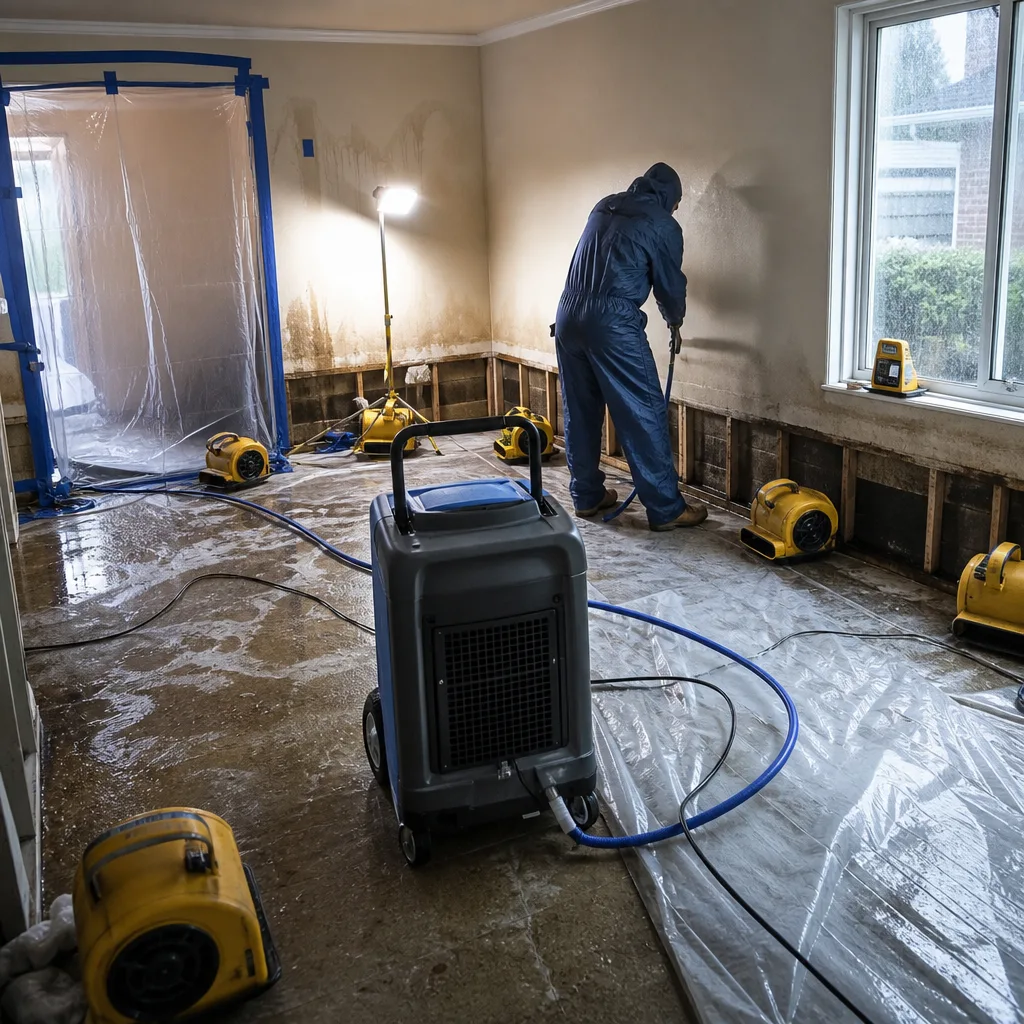
Homeowners evaluating DIY often compare rental equipment fees to professional service invoices without accounting for the full cost structure. Here is the actual math for a typical Tukwila water loss.
DIY Equipment Rental Scenario
| Item | Cost | Notes |
|---|---|---|
| Commercial dehumidifier rental (14 days) | $280-$420 | Box-store unit, 70-100 pints/day capacity |
| Air mover rental (3 units, 14 days) | $210-$294 | Consumer-grade, no hour meter |
| Wet/dry vacuum rental | $45-$65 | Single day |
| Moisture meter (purchase) | $35-$80 | Consumer model, non-calibrated |
| Antimicrobial spray | $25-$40 | No application log |
| Subtotal DIY | $595-$899 | |
| Extended drying time (under-powered equipment) | +7-14 days | Additional rental fees or purchase of more equipment |
| Secondary mold remediation (if drying stalls) | $2,500-$6,000 | Typical for Tukwila single-family wall cavity mold |
| Forfeited insurance reimbursement for drying | $1,800-$4,500 | Professional drying rates for comparable loss |
| Total DIY Risk-Adjusted Cost | $4,895-$11,399+ |
Professional Service Scenario
| Item | Cost | Notes |
|---|---|---|
| Professional drying service (typical Class 2 loss, 3-5 days) | $1,800-$3,200 | Includes all equipment, monitoring, documentation |
| Insurance reimbursement rate | 80-100% | With proper documentation, most carriers pay at policy limits |
| Homeowner out-of-pocket (typical deductible) | $500-$1,500 | Varies by policy |
| Documentation package for future sale | Included | Drying logs, photo record, completion certificate |
| Total Professional Net Cost | $500-$1,500 | After insurance reimbursement |
The professional route costs less out-of-pocket in nearly every scenario where insurance applies. The gap widens further when secondary damage occurs, which it does in approximately 40% of DIY drying attempts we are called to assess after the fact.
Our Water Damage Restoration in Tukwila includes the full documentation package as standard. Every job receives daily moisture logs, equipment placement records, and grain depression calculations. The invoice is structured for direct adjuster review, and we coordinate documentation directly with your carrier when requested.
What to Do in the First 24 Hours to Preserve Both Options
The first day after water intrusion determines whether you can self-remediate or whether the loss has escaped containment. These steps preserve your position for either path.
- Stop the water source. Shut off the supply line, appliance valve, or main water service. Document the shutoff with a timestamped photograph.
- Photograph everything before moving anything. Wide shots of each room, close-ups of water lines on walls or furniture, the source of the water. These images establish the pre-loss condition and the extent of initial migration.
- Remove standing water you can safely reach. Use a wet/dry vacuum or towels for small volumes. Do not enter standing water that contacts electrical outlets, appliances, or your home’s electrical panel.
- Move sensitive items to dry areas. Documents, electronics, artwork. Photograph their condition before and after moving.
- Take initial moisture readings if you own a meter. Record the location, material, and reading. Baseline data lets you measure progress or prove the loss was deeper than visible.
- Call your insurance company to report the loss. Request a claim number and ask whether they require pre-approval for professional services. Most policies require “reasonable and necessary” mitigation; delaying professional call-out beyond 24-48 hours can trigger coverage disputes.
- Assess migration within 6 hours. Check if water has reached baseboards, seeped under flooring, or wicked up drywall. Lift a corner of carpet if safe. If you find wet pad, wet subfloor, or water in wall cavities, the loss is beyond DIY scope.
- Document your decision. If proceeding with DIY, start a written log: date, time, actions taken, equipment deployed, moisture readings. If calling a professional, this log becomes evidence of prompt mitigation effort.
Tukwila’s soil composition - dense glacial till with slow drainage - means water that reaches crawl spaces or slab perimeters lingers longer than in areas with sandy soils. Homes near the Duwamish River or in the Southcenter floodplain face additional groundwater pressure. These geographic factors accelerate mold colonization and extend drying time, making early professional assessment more critical.
The Equipment and Documentation Gap: Why Rental Fans Don’t Qualify
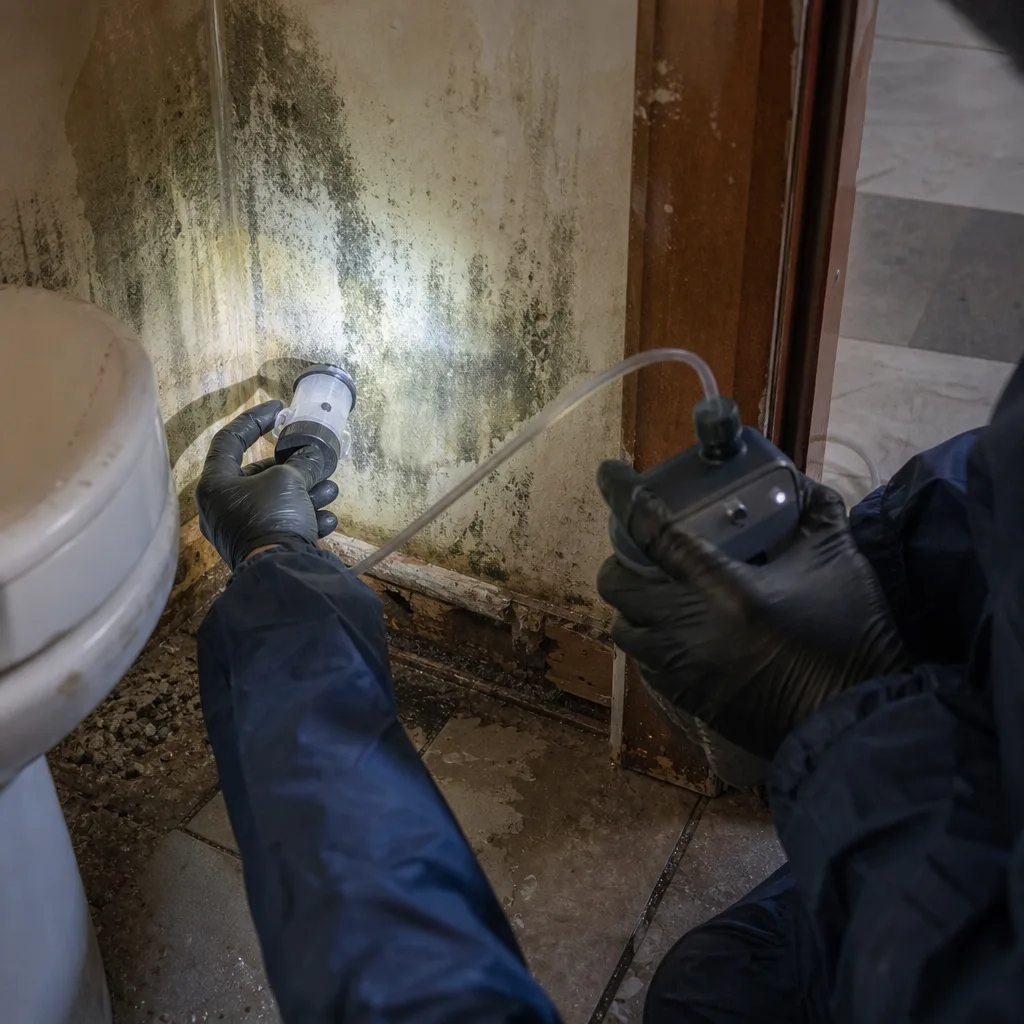
The equipment deployed in professional restoration is not simply “more powerful” than consumer rentals. It is instrumented, networked, and designed to produce the documentation insurers require.
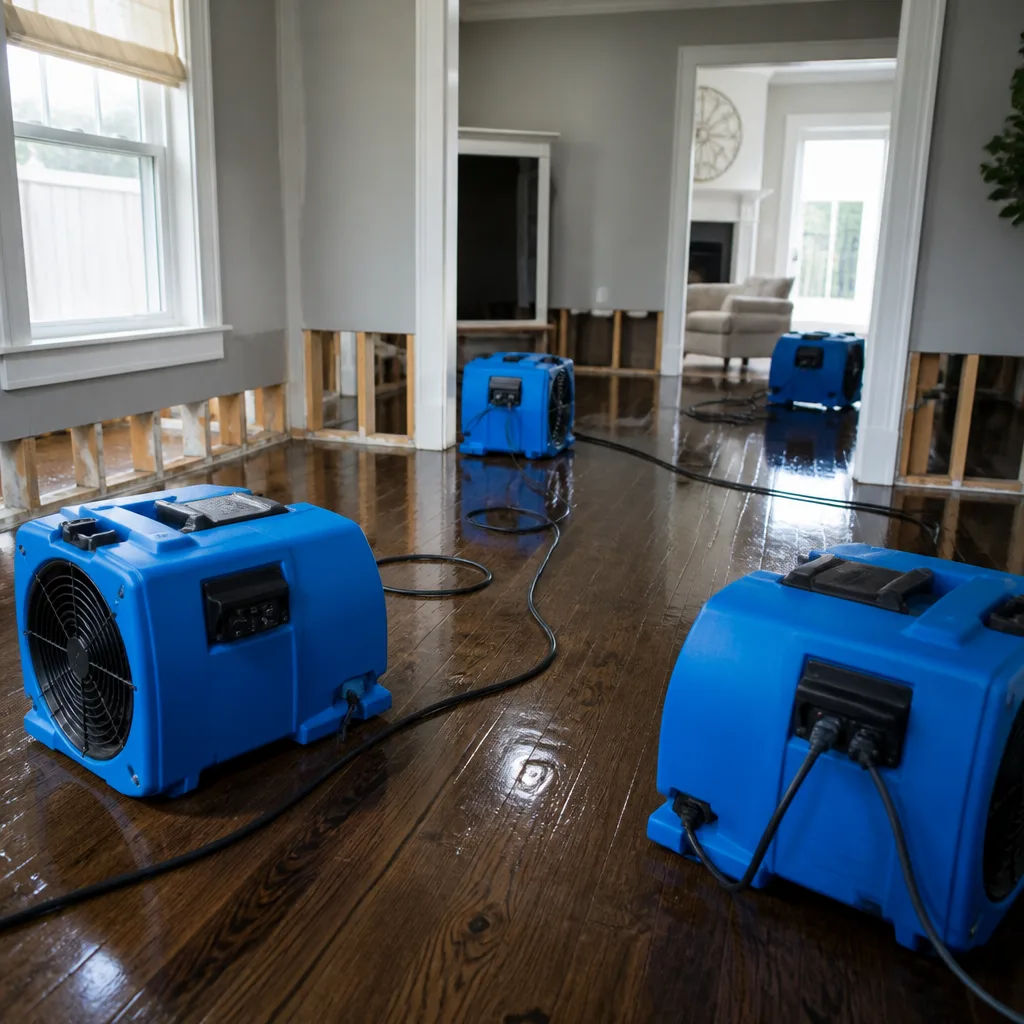
Our drying systems include low-grain refrigerant dehumidifiers from Dri-Eaz and Phoenix that maintain specific humidity low enough to pull moisture from Class 4 materials like hardwood and plaster. XPOWER and B-Air air movers are positioned using computational fluid dynamics principles to create laminar airflow across wet surfaces, not random circulation. Injectidry systems deliver directed drying into wall cavities and subfloor spaces without demolition.
More critically, each piece of equipment contributes to the documentation package:
- Hour meters on every dehumidifier and air mover, recording runtime for equipment billing
- Data loggers recording temperature and relative humidity at 15-minute intervals, producing the psychrometric charts that prove drying progress
- Calibrated moisture meters with certification dates, ensuring readings are admissible in coverage disputes
- Thermal imaging cameras detecting moisture migration invisible to surface inspection
Consumer rental equipment has none of these features. The dehumidifier displays a tank-full light. The air mover has a speed switch. There is no runtime record, no humidity data, no calibration certificate. The homeowner cannot prove what was done, when, or to what effect.
This documentation gap is not a technicality. It is the core reason insurers deny DIY drying claims. The policyholder bears the burden of proving their loss and their mitigation were reasonable and necessary. Without equipment-generated records, that burden is unmet.
Our Fire & Smoke Damage Restoration in Tukwila extends this documentation approach to soot and odor mitigation, where particulate counters and hydroxyl generator runtime logs serve the same evidentiary function.
Common Mistakes to Avoid
- Using bleach on mold. Bleach does not penetrate porous materials where mold roots live. It bleaches color while leaving viable hyphae. In Tukwila’s humid climate, regrowth within 30 days is typical. Proper remediation requires HEPA containment, negative air pressure, and antimicrobial application with documented contact time.
- Stopping when carpet feels dry. Carpet is a vapor barrier. Dry surface carpet conceals wet pad, wet tack strip, and wet subfloor. We use penetrating meters at the tack strip and thermal imaging of the pad to determine actual dryness.
- Running a dehumidifier without air movers. Dehumidifiers remove moisture from air, not from materials. Air movers create the evaporation at the material surface that feeds the dehumidifier. One without the other extends drying time by 200-400%.
- Failing to document the source category. A homeowner who cleans up a toilet overflow without photographing the source may find their carrier classifying the loss as Category 3 while they claimed Category 1. The documentation gap becomes a coverage gap.
- Ignoring Tukwila’s permit requirements for reconstruction. The City of Tukwila requires permits for electrical, plumbing, and structural repairs following significant water damage. Unpermitted DIY reconstruction discovered at sale triggers re-inspection, potential disclosure issues, and insurer refusal to cover future related losses.
- Delaying professional assessment to “see if DIY works.” Every hour of active water intrusion expands the affected area. By hour 24, mold colonization begins. By hour 48, it is established. The “wait and see” approach that saves a service call often doubles the restoration scope.
When to Call a Professional
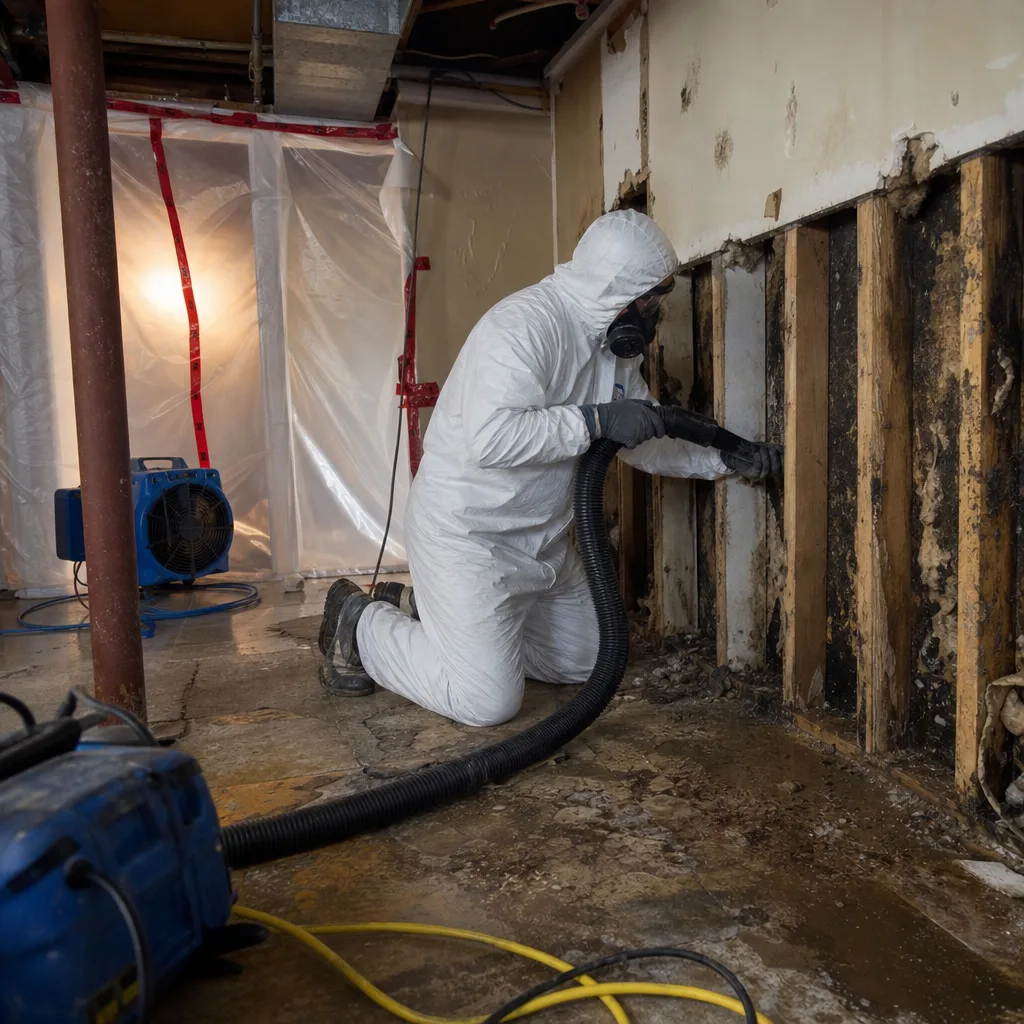
Call a professional immediately when: water has reached subfloor, wall cavities, or insulation; the source is Category 2 or 3; the affected area exceeds 10 square feet; electrical outlets, panels, or appliances are involved; the loss occurred more than 24 hours ago; or you need the work documented for insurance reimbursement. Not sure where to start? Read How to Hire a Damage Restoration Contractor in Tukwila: A Step-by-Step Guide.
In Tukwila, where winter humidity and slow-draining soils compound drying challenges, professional assessment is the conservative choice for any loss beyond the most minor surface spill.
DryMark Restoration Tukwila offers free estimates in Tukwila - call (253) 642-8884. Every estimate includes a written scope and price before any work begins, documented photo record on every visit, and the 365-Day Done Right Promise under The Haven Standard. We also provide free second opinions on any competitor’s written estimate.
Frequently Asked Questions
Typical residential drying services in Tukwila range from $1,800 to $4,500 depending on the water category, affected square footage, and whether structural materials require specialty drying. Most homeowners pay only their deductible after insurance reimbursement. Call (253) 642-8884 for a written estimate - estimates are free and include no obligation.
Most carriers reimburse equipment rental only when accompanied by professional documentation of the drying process. Without daily moisture logs, equipment placement records, and psychrometric data, rental receipts are typically classified as “cleaning” or denied entirely. The reimbursement rate for undocumented DIY is 0-30% of professional drying rates.
Our live dispatch answers every call 24 hours a day, 7 days a week with no voicemail. Emergency response crews are typically on-site within 60-90 minutes for active water losses in Tukwila and surrounding King County areas. For non-emergency assessments, same-day or next-day appointments are standard.
Visible mold on a surface typically indicates 3-10 times more mold mass in the cavity behind it. Surface cleaning without containment spreads spores to unaffected areas and does not address the moisture source. Professional remediation includes moisture source elimination, containment, HEPA filtration, and post-remediation verification - documentation required for insurance and property disclosure.
Either or both. We document every job to IICRC, RIA, and IFA standards specifically so our invoices require minimal adjuster negotiation. We provide direct adjuster coordination when requested, including photo documentation, drying logs, and written scope review. Many Tukwila homeowners prefer to remain involved in coverage discussions; we support either approach with full documentation transparency.
The homeowner bears liability for consequential damage from improper mitigation. Under Washington’s comparative fault framework, insurers may reduce or deny coverage for mold resulting from unprofessional drying. The homeowner then faces out-of-pocket remediation costs plus potential RCW 64.06 disclosure obligations that affect future sale. Professional drying with documented completion closes this liability chain.
The Bottom Line
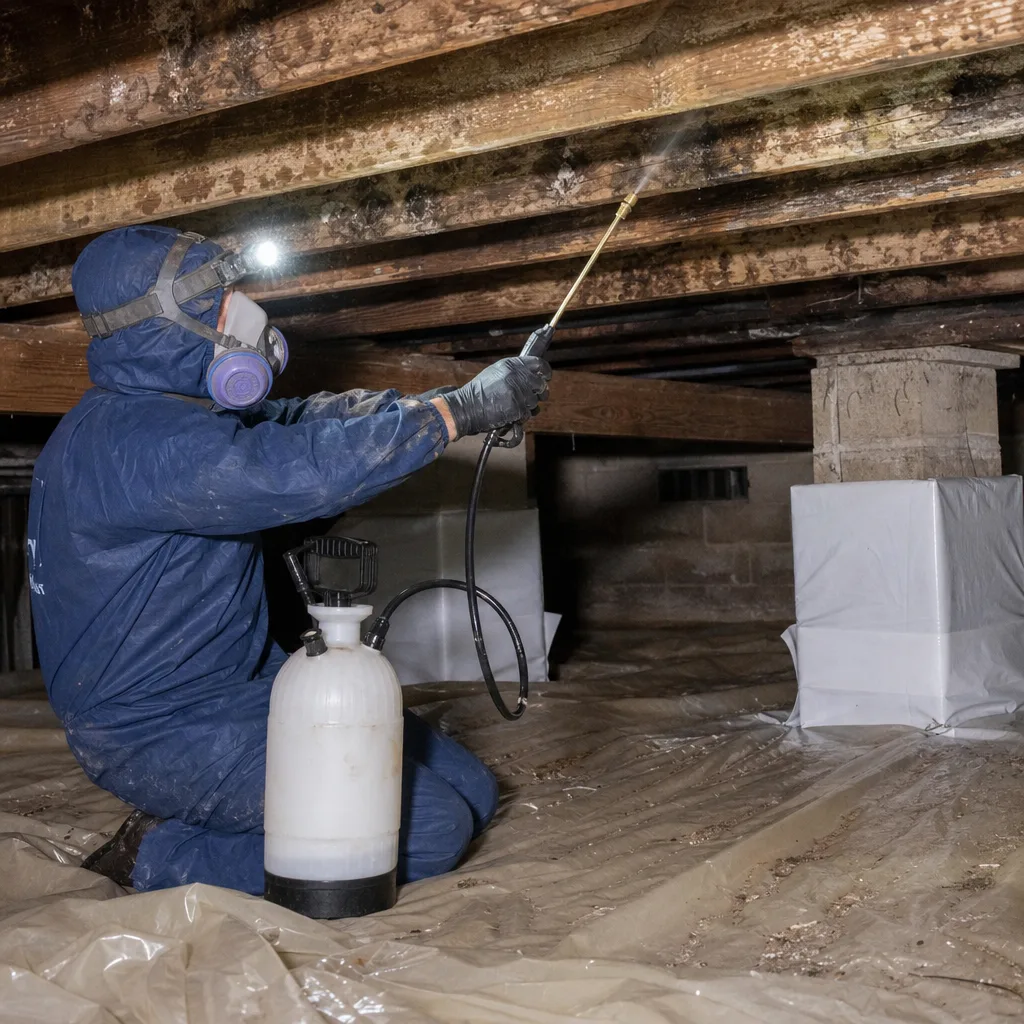
The DIY-versus-professional question in restoration is not about capability. It is about evidence. A Tukwila homeowner can legally dry their own structure. They cannot produce the moisture logs, drying curves, and psychrometric records that transform restoration costs into reimbursable claims. For losses beyond 10 square feet of Category 1 water with no structural penetration, professional service costs less out-of-pocket, eliminates liability for secondary damage, and creates documentation that protects the property’s value for future sale. The Haven Standard exists because we have seen what the documentation gap costs homeowners - and because Alicia Brennan built this company to close it.
Written by Alicia Brennan, Owner at DryMark Restoration Tukwila, serving Tukwila since 2011.