
Last updated September 23, 2026
Free visual inspection and a written scope of work before any mitigation begins - photos, moisture readings, and drying logs go in your claim file
The scope we write is the scope we bill. Anything new gets shown to you, in writing, before we touch it.
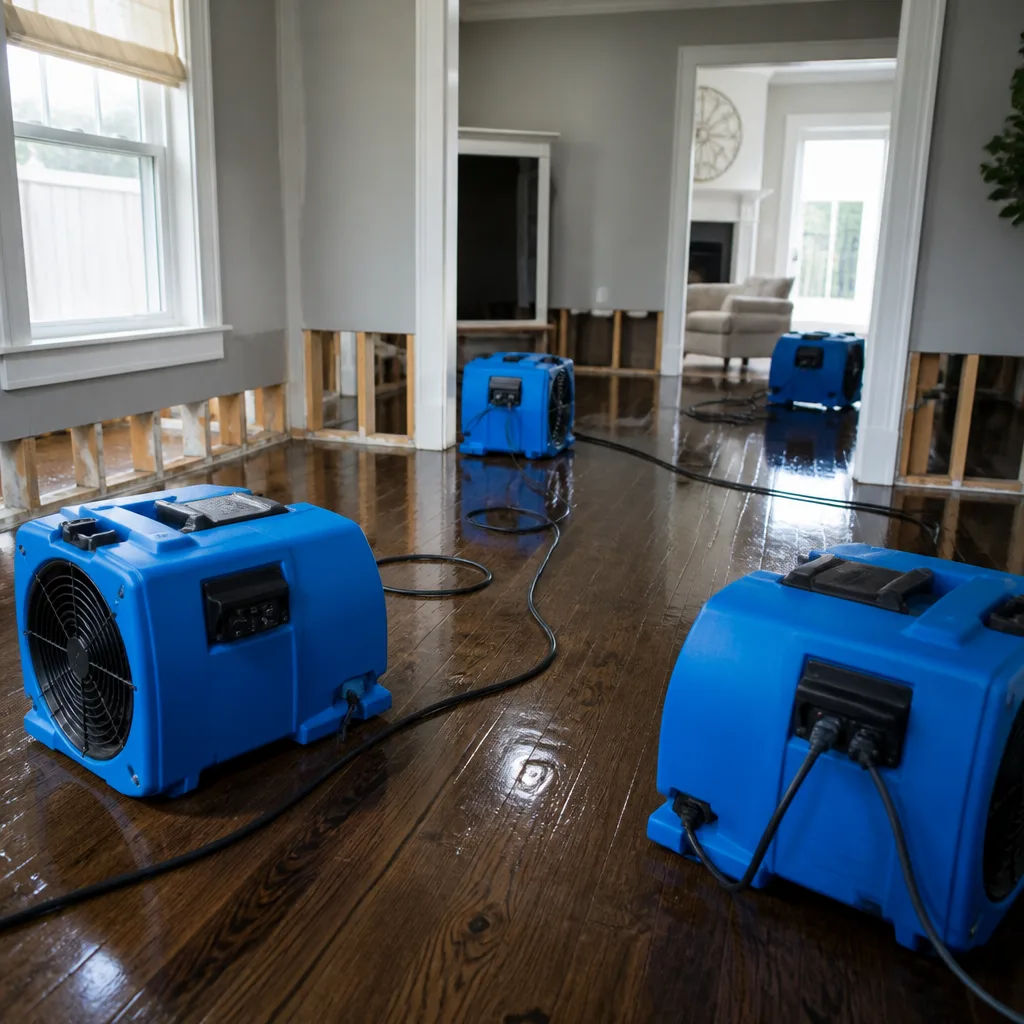
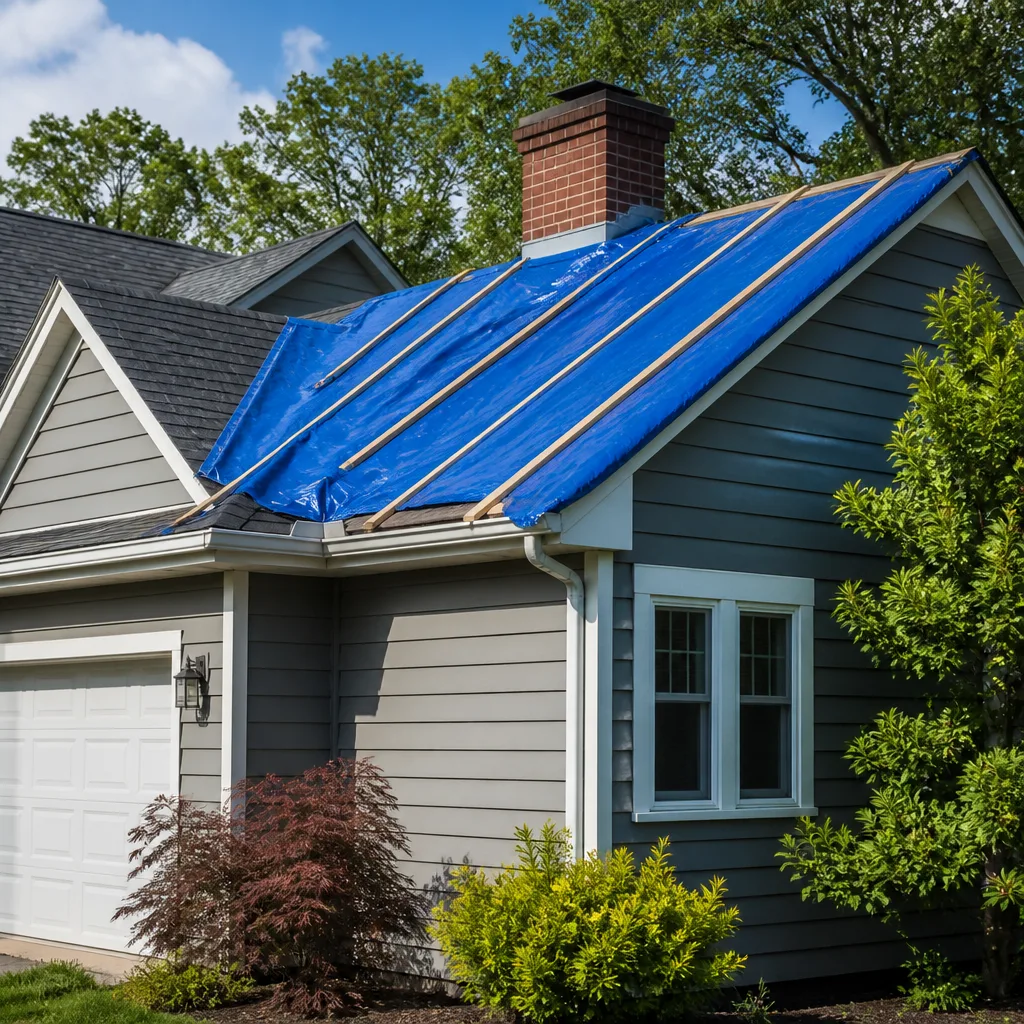
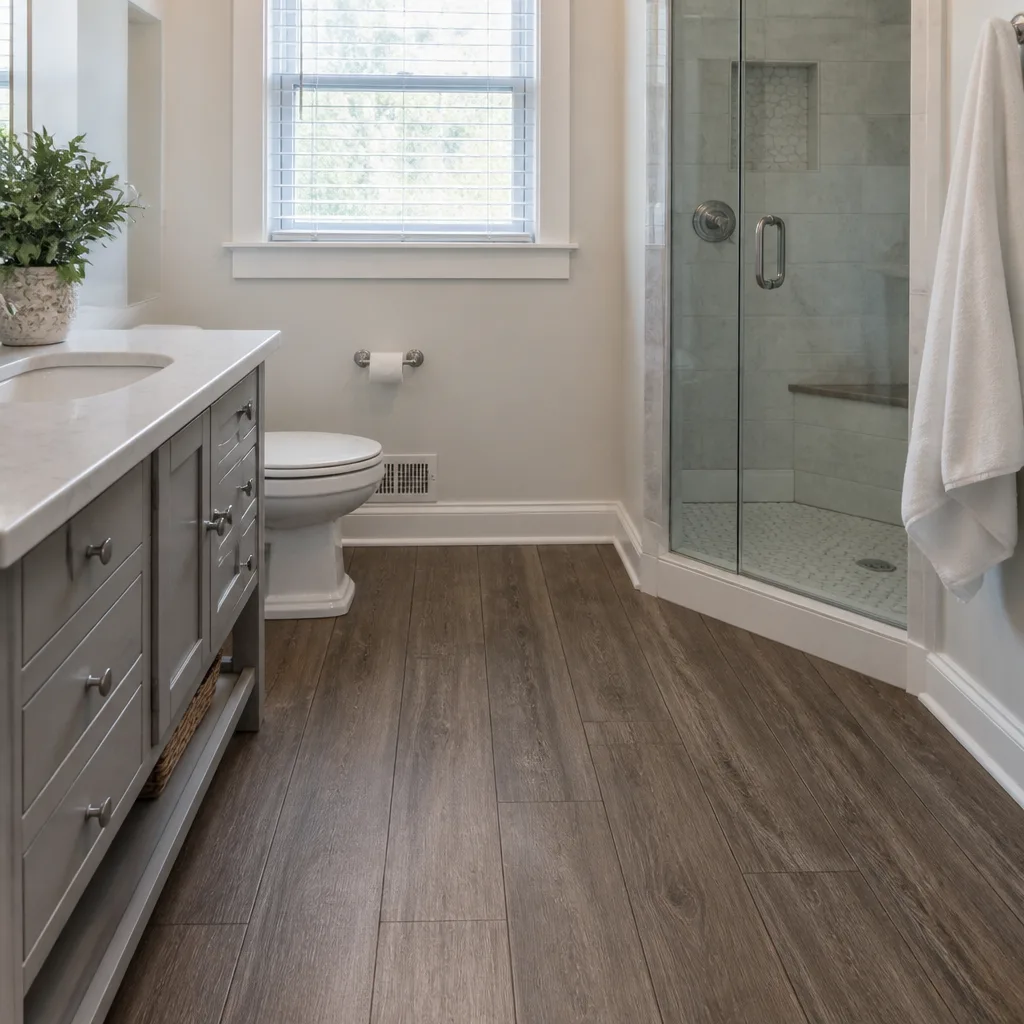
 Before
 After
After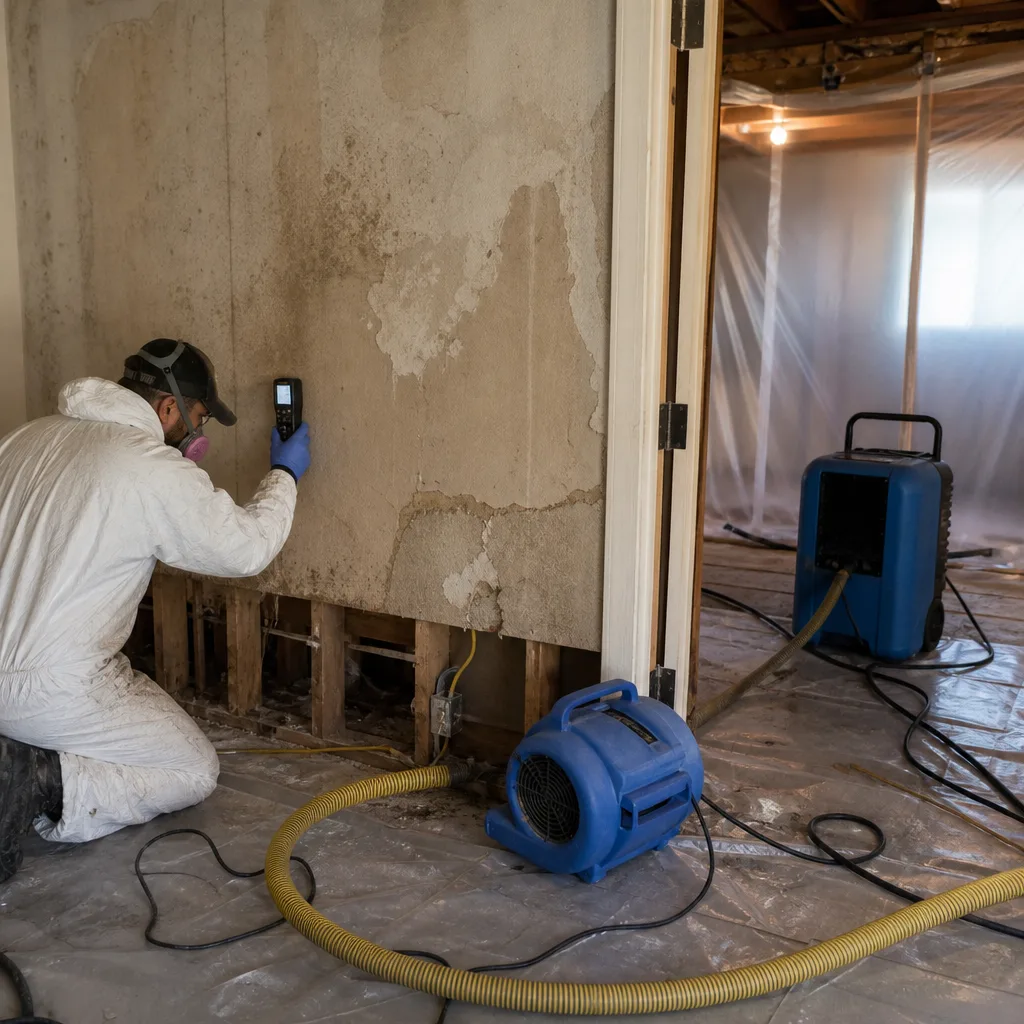 Before
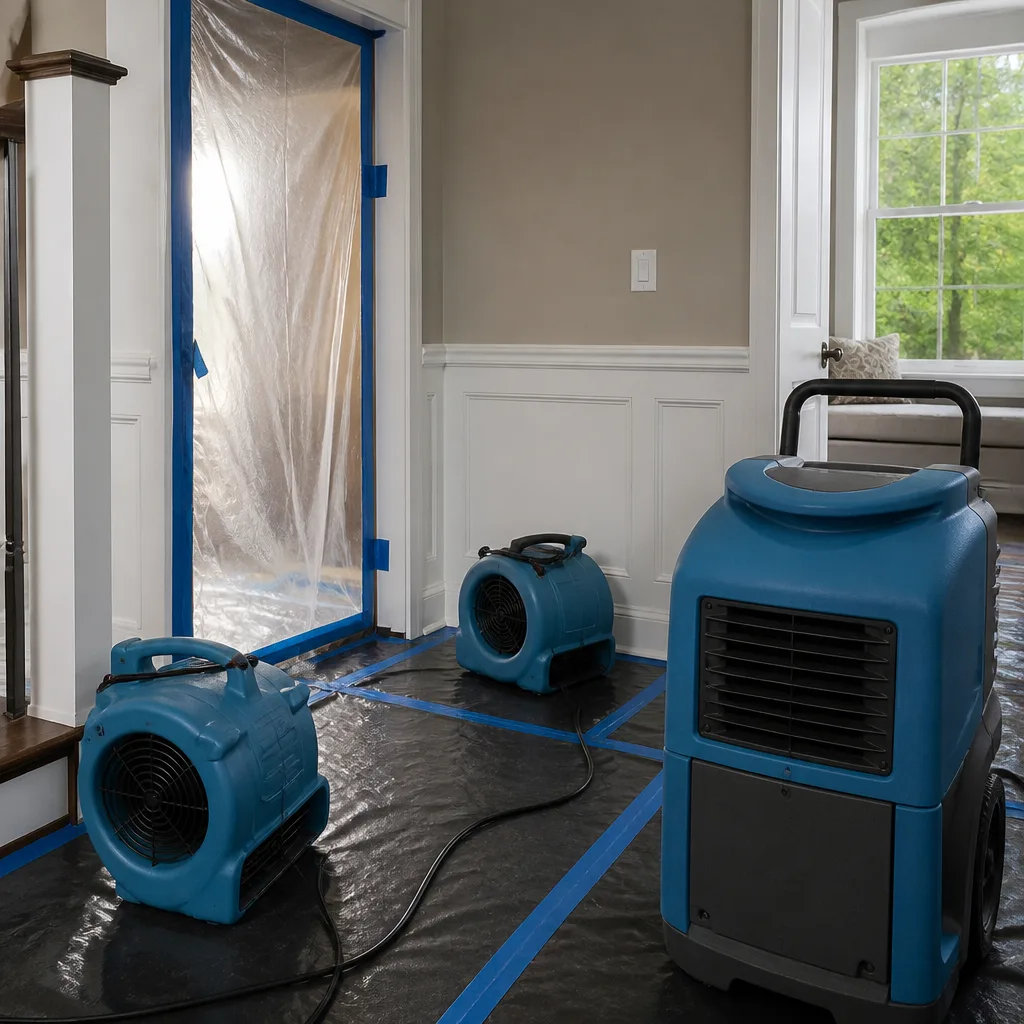 After
After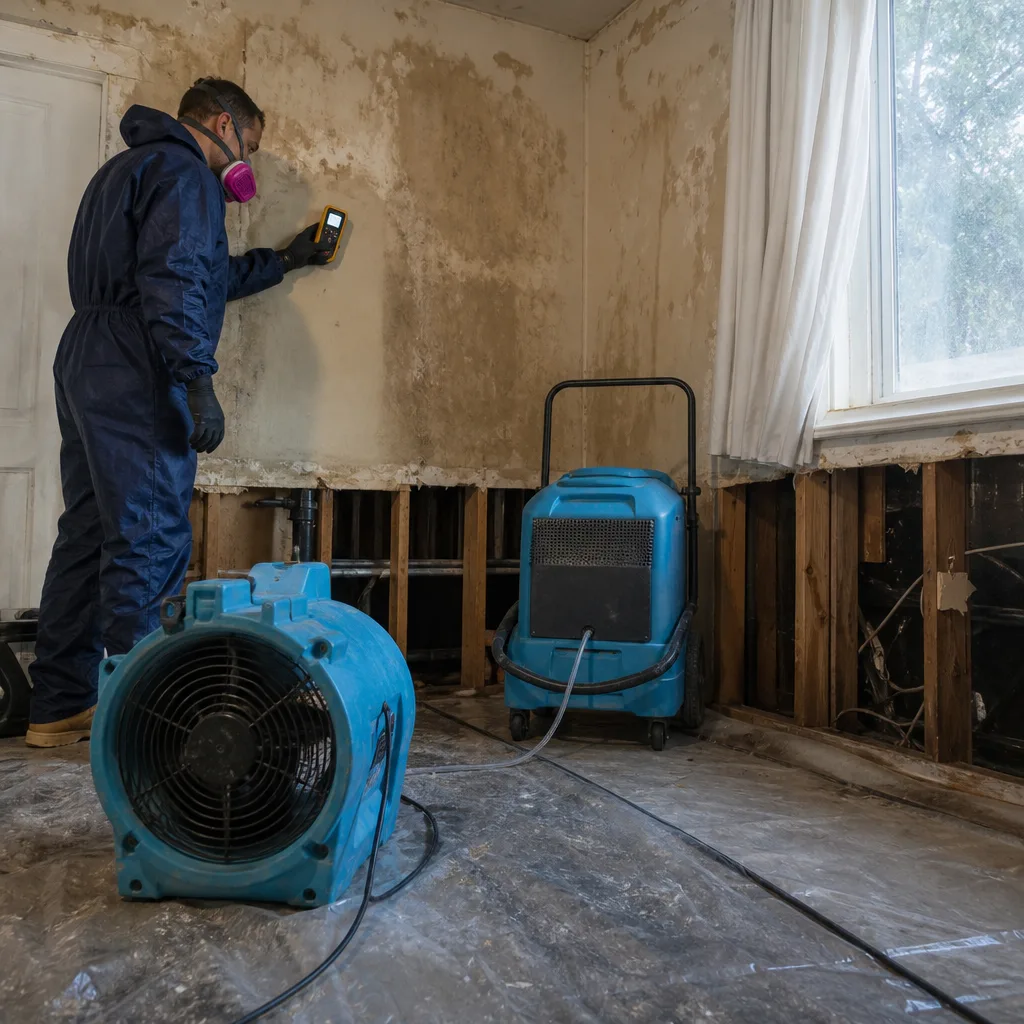 Before
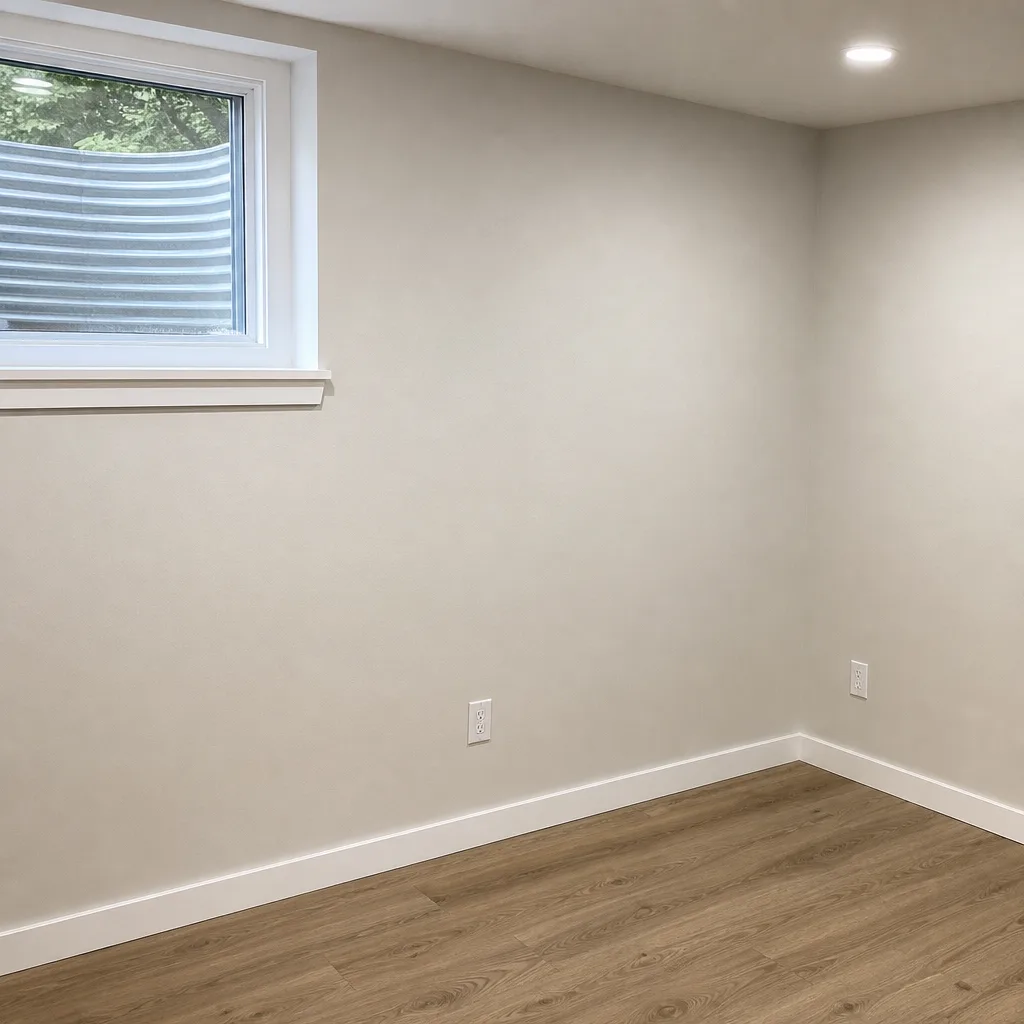 After
AfterDamage Restoration Warning Signs: A Tukwila Homeowner’s Reference Guide
A musty odor has no insurance value as a claim trigger. A moisture reading of 25% or higher on an interior wall cavity, photographed and dated, does. The difference between those two descriptions is often the difference between a paid claim and a denied one in Tukwila, where we’ve restored more than 12,000 homes since 2011. This guide pairs every visible warning sign with the instrument reading or threshold number that separates a cosmetic concern from a billable loss. You’ll learn which symptoms demand immediate documentation, which measurements confirm active damage versus historic moisture, and why the construction era of your Tukwila home changes what you should watch for.
Quick Answer
Water damage warning signs in a Tukwila home fall into three categories: visible indicators (staining, warping, efflorescence), measurable indicators (moisture content above 16% in wood, 25% in drywall, or relative humidity sustained above 60%), and olfactory indicators (musty odors that persist after ventilation). The critical threshold is 25% moisture content in porous materials, at which point mold activation becomes likely within 24-48 hours and the IICRC S520 standard for professional remediation applies. Document any reading at or above this level with a dated photograph before calling for assessment.
Table of Contents
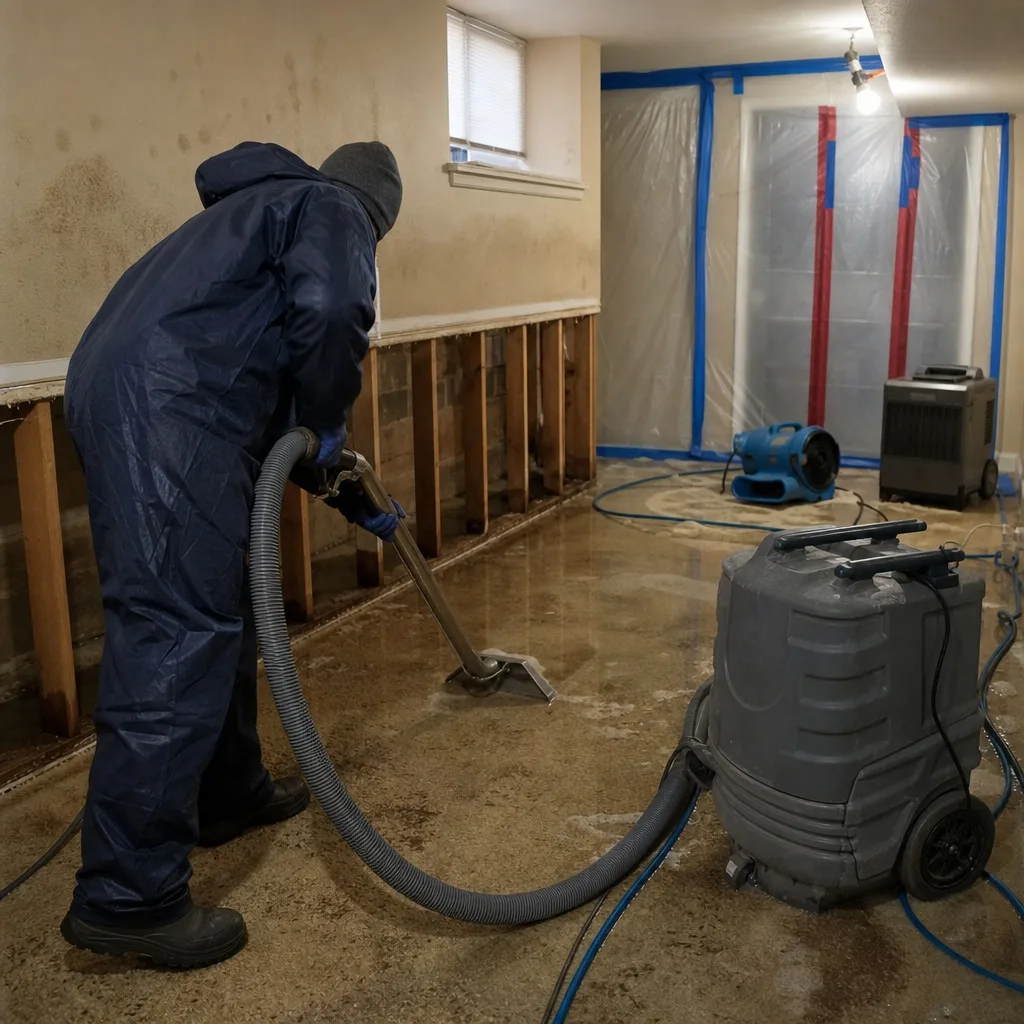
- The Symptom-to-Measurement Table: What Numbers Mean Action
- Tukwila Construction Era Warning Signs: 1960s-1980s Homes
- Primary vs. Secondary Damage: Why the Distinction Changes Your Claim
- The Documentation Protocol: What to Record Before Any Work Starts
- Mold Activation Risk: When IICRC S520 Applies in Washington
- Room-by-Room Warning Sign Guide
- Common Mistakes to Avoid
- When to Call a Professional
- Frequently Asked Questions
 Before
 After
AfterThe Symptom-to-Measurement Table: What Numbers Mean Action
Every warning sign needs a confirming number. Homeowners who call us in Tukwila with “a wet spot” and homeowners who call with “a 28% moisture reading on the north wall of the basement, photographed at 9:15 a.m.” receive different claim outcomes. The second caller has already begun the documentation that insurers require.
Here is the pairing we use on every assessment:
| Warning Sign | Instrument | Monitor Threshold | Call-Now Threshold | What It Indicates |
|---|---|---|---|---|
| Visible water staining on ceiling or wall | Pinless moisture meter | 10-15% moisture content | 20%+ or spreading between visits | Active leak or condensation event; 20% confirms wicking into adjacent materials |
| Musty odor that returns after ventilation | Hygrometer / thermal hygrometer | 50-55% relative humidity | 60%+ sustained over 24 hours | Hidden moisture reservoir; 60% RH supports mold germination on organic surfaces |
| Floor warping or cupping | Pin-type moisture meter, insulated probes | 12-16% in wood subfloor | 20%+ or 4%+ above baseline for that species | Moisture imbalance across plank thickness; 20% risks permanent deformation |
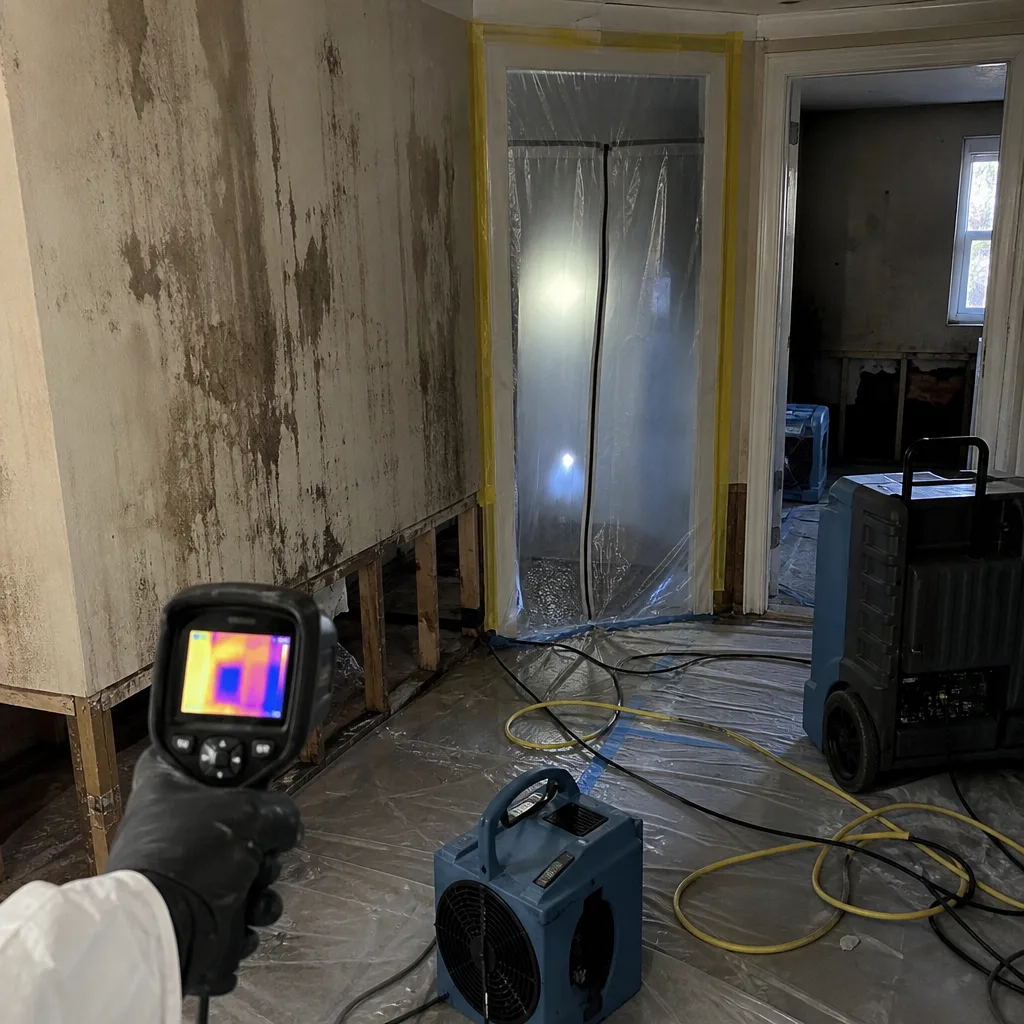
| Cold spot on wall or ceiling | Thermal imaging camera (FLIR or equivalent) | 2-3°F delta from surrounding surface | 5°F+ delta with confirmed moisture | Evaporative cooling at wet surface; confirm with moisture meter before concluding |
| Efflorescence on concrete or brick | Calcium chloride test or in-situ RH probe | 3 lbs/1000 sq ft/24 hrs (calcium chloride) | 5+ lbs or 80%+ internal RH | Vapor drive through masonry; indicates hydrostatic pressure or interior moisture source |
| Peeling paint or bubbling wallpaper | Pinless moisture meter | 15-20% in substrate | 25%+ or delamination of multiple layers | Moisture trapped at paint-substrate interface; 25% risks substrate degradation |
| Corrosion on metal fixtures near water lines | Visual + moisture meter on adjacent materials | Any corrosion with adjacent reading above 15% | Corrosion with active dripping or 25%+ adjacent | Chronic condensation or slow leak; metal oxidation accelerates at sustained moisture |
The 25% figure appears repeatedly because it is the practical threshold where porous materials transition from “damp” to “wet” under IICRC S500 standards. Below 25%, many materials can be dried in place with proper airflow and dehumidification. At or above 25%, removal and replacement often become more cost-effective than extended drying, and mold colonization becomes probable if time passes without intervention.
In our Tukwila work, we see homeowners miss the monitor threshold regularly. A reading of 18% on a bathroom subfloor after a toilet overflow seems resolved once the surface dries. Six weeks later, the same location reads 24% due to trapped moisture in the plywood voids, and the scope has expanded from a simple extraction to a subfloor replacement with potential mold remediation. The initial reading, logged and dated, would have justified more aggressive initial drying.
Tukwila Construction Era Warning Signs: 1960s-1980s Homes
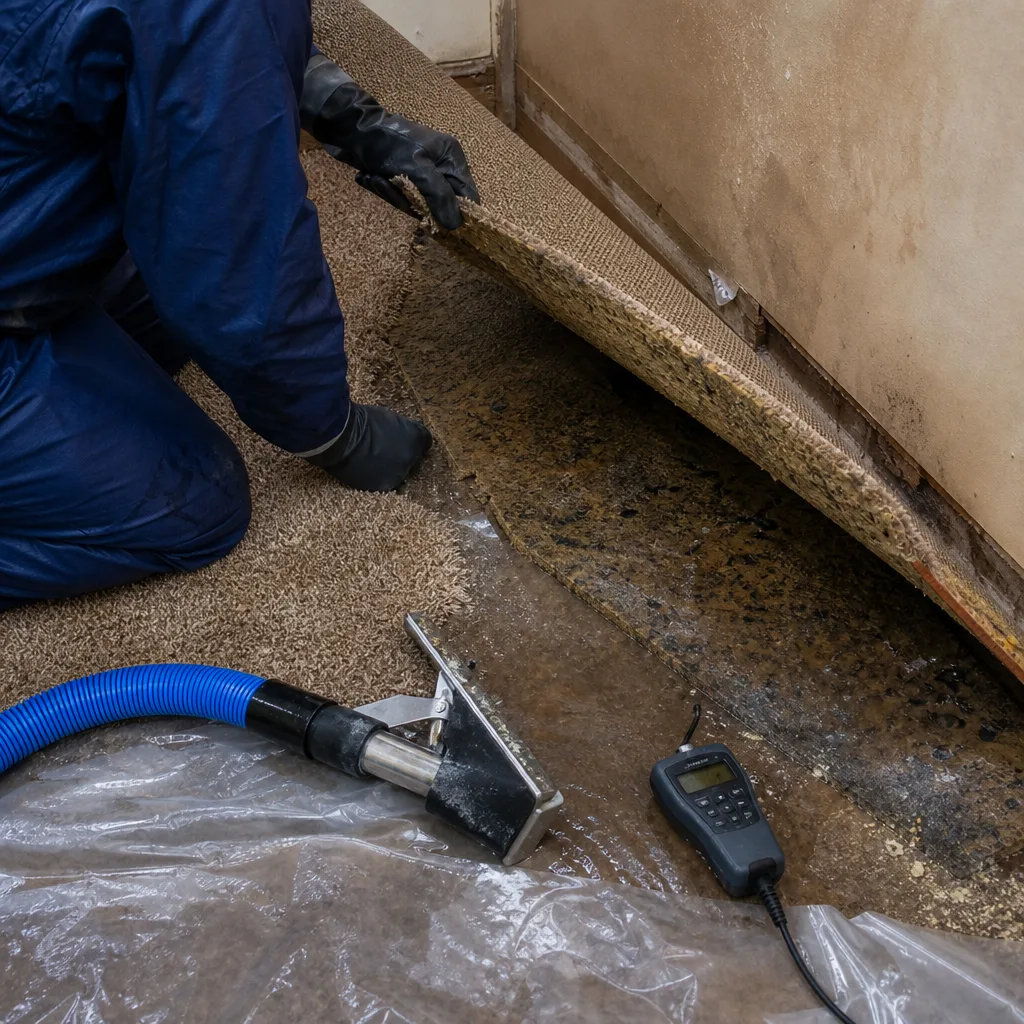
Tukwila’s housing stock includes significant construction from the 1960s through the 1980s, particularly in neighborhoods developed during the Boeing expansion era. These homes carry specific vulnerability patterns that newer construction does not.
Kraft-faced insulation. Fiberglass batts with kraft paper vapor retarders were standard in this era. The paper facing degrades when wet, losing its vapor-retarding function and becoming a mold nutrient source. In our assessments, we find kraft facing that has delaminated from the fiberglass, creating a double problem: the insulation loses R-value, and the paper debris collects in wall cavities where it supports mold growth on adjacent studs. Warning sign: insulation visible in basement rim joists or attic hatches that appears yellowed, brittle, or separated from the fiberglass core. Confirm with a moisture reading of the stud face behind the insulation; 20% or higher indicates the facing has been wet enough to compromise the assembly.
Original aluminum wiring. Homes built 1965-1973 in Tukwila may have branch circuit aluminum wiring, which oxidizes more readily than copper when exposed to moisture. The warning sign is not always visible: warm outlets, flickering lights, or the smell of ozone near electrical fixtures. After any water event involving walls or ceilings with original wiring, we recommend an electrician’s inspection before restoration work proceeds. We document the wiring type in our assessment photos and note it in the written scope, as insurers may require electrical clearance before approving reconstruction.
Single-pane windows with chronic condensation. Many 1960s-1980s Tukwila homes retain original windows. Single-pane glass in our Pacific Northwest climate runs below dew point for significant portions of the heating season, producing condensation that pools on sills and wicks into surrounding drywall. The warning sign is not the condensation itself, which is expected, but the moisture accumulation in the sill framing beneath. We check with a pin-type meter driven into the sill at a 45-degree angle; readings above 20% indicate the condensation has progressed beyond surface wetting into the structural framing. In Allentown and Riverton Heights, where we’ve worked extensively, this pattern is common on north-facing windows where solar drying never occurs.
Foundation drainage. Homes of this era in Tukwila often have perimeter drain systems of clay tile or early PVC that have collapsed or silted in. The warning sign is not water in the basement after rain, which is obvious, but the pattern of that water: seepage at the wall-floor joint that appears 24-72 hours after rainfall, rather than immediately. This delayed appearance indicates water moving through the soil, around a compromised drain, and under hydrostatic pressure through the foundation joint. We confirm with a calcium chloride test on the slab; readings above 3 lbs/1000 sq ft/24 hrs indicate active vapor drive that will compromise any flooring installed without a vapor barrier.
Primary vs. Secondary Damage: Why the Distinction Changes Your Claim
Insurers separate damage into two categories, and the distinction determines what they will pay for. Homeowners who understand the difference document more effectively and receive faster approvals.
Primary damage is caused by the direct action of water, fire, or other peril. A burst supply line that floods a kitchen floor. A fire that chars ceiling joists. This damage is typically covered, subject to policy limits and deductibles.
Secondary damage results from the primary damage not being addressed promptly. Mold that grows because water sat for five days. Warped hardwood that could have been saved with immediate drying but required replacement after a week. Insurers often dispute or deny secondary damage, arguing it resulted from the homeowner’s delay rather than the original peril.
The warning signs differ, and recognizing which category a symptom belongs to changes your documentation urgency.
| Indicator Type | Primary Damage Sign | Secondary Damage Sign | What to Document |
|---|---|---|---|
| Moisture pattern | Wet materials with defined edges, matching the water source path | Widespread, diffuse moisture beyond the original source area | Photograph the pattern with a measuring tape for scale; note time since the event |
| Odor | None or mild, consistent with clean water | Musty or earthy, intensifying over time | Describe in writing; note if it persists after ventilation |
| Material condition | Saturated but structurally intact | Delaminated, crumbling, or fungal growth visible | Close-up photos of material failure; include moisture meter reading |
| Spread pattern | Confined to lower levels, following gravity | Wicking into upper walls, across ceiling planes, into HVAC | Document the vertical extent with photos showing water line or stain progression |
In Tukwila, we see this distinction matter most with slow leaks. A refrigerator supply line that seeped for three weeks before discovery often presents as secondary damage in the subfloor while the kitchen tile above shows only primary damage. The homeowner who photographs the tile pattern, the subfloor from the crawl space, and the moisture gradient between the two has documented both categories separately. The homeowner who only notes “wet floor” invites the adjuster to classify everything as secondary.
Our documentation protocol on every Water Damage Restoration in Tukwila job includes a room-by-room classification of damage by category, with moisture readings and photos supporting each determination. This is not extra service; it is standard under The Haven Standard, and it is why our invoices convert to paid claims at a higher rate than industry averages.
The Documentation Protocol: What to Record Before Any Work Starts
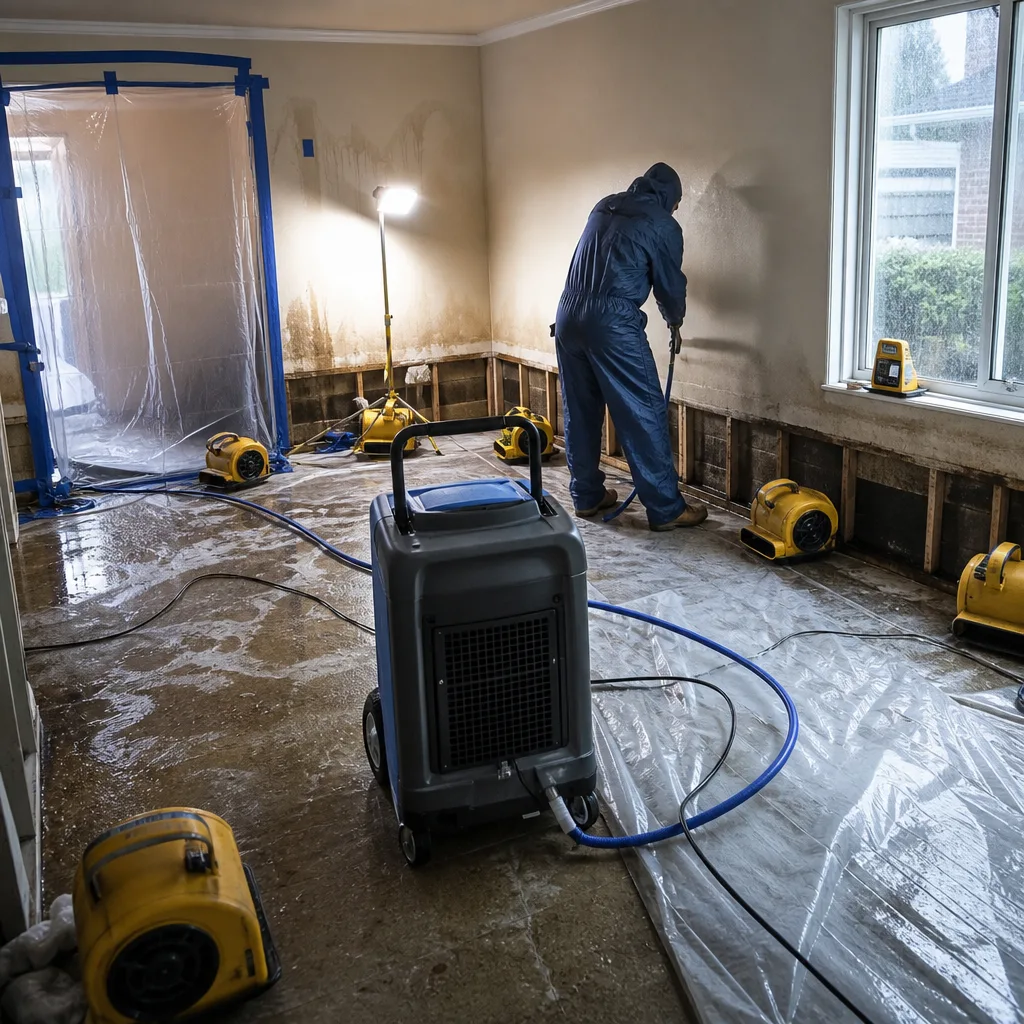
The first 30 minutes after discovering a warning sign determine whether your claim proceeds smoothly or stalls in dispute. We teach Tukwila homeowners this protocol because we have seen what incomplete documentation costs.
- Photograph the warning sign in context. Wide shot showing the room, the affected area, and a reference object for scale. Then close-ups of the specific symptom. Timestamp enabled on your camera or phone. If the timestamp is not automatic, hold a piece of paper with the date and time in the frame.
- Take the confirming measurement. If you have a moisture meter, record the reading and photograph the display with the probe in contact with the material. If you do not have a meter, note the extent of visible damage in measurable terms: “stain measures 14 inches by 8 inches,” “bubbling extends 3 feet from floor along baseboard.”
- Document the source if known. A photo of the leaking fixture, the storm date from a weather report screenshot, the fire department incident number. Causation documentation prevents later disputes about whether the damage matches the claimed peril.
- Record environmental conditions. Temperature and relative humidity in the affected room, if you have a basic thermometer/hygrometer. These affect drying calculations and help professionals assess whether conditions support mold growth.
- List affected contents. Furniture, electronics, textiles in the affected area. Photograph them in place before moving anything. Insurers may deny contents claims if items were moved before documentation.
- Write a brief narrative. Three to five sentences: what you noticed, when, what you did, what you measured. Sign and date it. This contemporaneous record carries more weight than memory if questioned months later.
Why timestamping matters: moisture readings change. A 28% reading on Tuesday that is not documented may be a 22% reading by Friday after natural evaporation, and 22% is below the threshold that justifies aggressive intervention. The adjuster sees Friday’s number, not Tuesday’s urgency. The photograph with Tuesday’s timestamp preserves the original condition.
Under The Haven Standard, our crews perform this same documentation on every visit, producing a dated photo record that we deliver to the homeowner and, with authorization, to the insurer. But the homeowner’s initial documentation, created before any professional arrives, establishes the baseline that all subsequent documentation references. It is the most important record in the file.
Mold Activation Risk: When IICRC S520 Applies in Washington
Not every mold sighting requires professional remediation under the IICRC S520 standard. But several warning sign combinations in Tukwila homes trigger the standard automatically, and DIY cleaning beyond that point can violate Washington Department of Health guidelines and compromise insurance coverage.
The S520 standard applies when any of the following conditions exist:
- Visible mold growth covers more than 10 square feet in a contiguous area
- Hidden mold is suspected based on odor or moisture readings, requiring intrusive investigation
- The affected area involves HVAC systems, where spore dispersal risk is elevated
- The occupant has documented respiratory conditions, immune compromise, or other health sensitivity
- The water source was Category 2 (gray water) or Category 3 (black water), which introduces bacterial competition that alters mold colonization patterns
The warning signs that precede these conditions are measurable and specific. In Tukwila’s climate, with our moderate temperatures and high humidity for much of the year, the critical window is 24-48 hours after moisture reaches 25% in organic materials. This is not a conservative estimate; it is the colonization timeline for common indoor molds like Aspergillus and Penicillium at typical indoor temperatures.
We assess mold activation risk with three measurements:
- Surface moisture content. Pinless meter on visible materials; 20%+ indicates conditions supportive of growth.
- Airborne spore count. Air sampling with spore trap cassettes, compared to outdoor baseline. Indoor counts exceeding outdoor by a factor of 2 or more, with similar species profiles, indicate active growth rather than normal infiltration.
- Vapor pressure differential. The difference in moisture vapor pressure between the affected area and adjacent spaces. A differential above 0.5 inches of mercury drives moisture migration into otherwise dry materials, expanding the colonization zone.
Vapor pressure differential is the measurement competitors often omit. It explains why mold in a Tukwila basement crawl space appears on second-floor bathroom drywall three months later: the pressure gradient, not liquid water, transported the moisture. We measure and document this differential on every Mold Remediation in Tukwila assessment because it determines where containment is required and whether negative air pressure is necessary during remediation.
DIY cleaning is appropriate only for growth under 10 square feet on non-porous surfaces, with a confirmed Category 1 water source, and only with proper personal protective equipment. Even then, we recommend a professional assessment to confirm the extent, because Tukwila’s older homes often have concealed growth behind the visible area. The Free Second Opinion we offer on any competitor’s written estimate applies to mold assessments as well; bring another company’s scope and we will review it at no charge.
Room-by-Room Warning Sign Guide
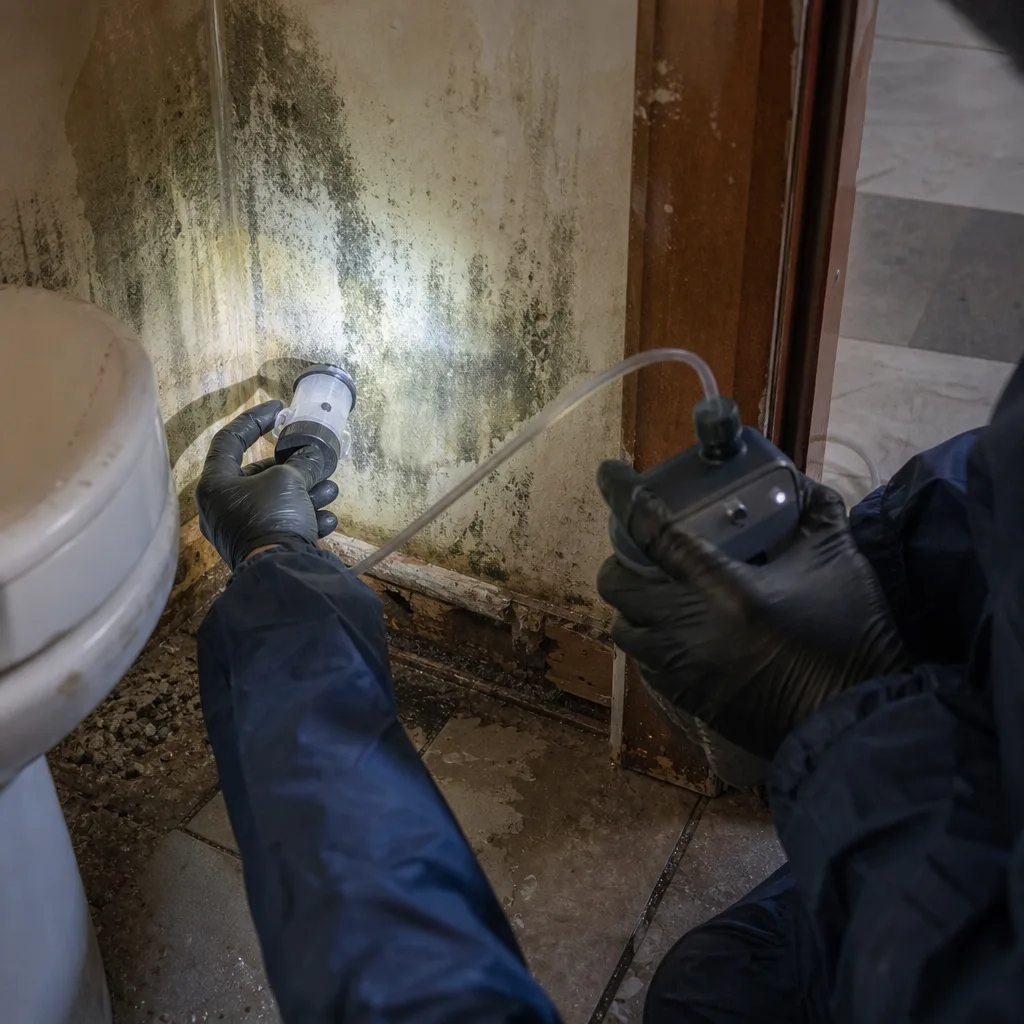
Different rooms present different risk profiles based on their plumbing, ventilation, and construction. Here is what we watch for in Tukwila homes, room by room.
Basement and Crawl Space
The most common source of undetected damage. In Tukwila, where the water table is high and many homes sit on glacial till with limited drainage, basements are vulnerable to both bulk water intrusion and chronic vapor drive, making seasonal damage restoration care especially important for year-round protection.
- Warning sign: White, crystalline deposits on concrete walls (efflorescence). Measurement: Calcium chloride test or in-situ RH probe; 80%+ internal RH or 5+ lbs/1000 sq ft/24 hrs indicates active vapor pressure that will damage finished materials.
- Warning sign: Rust on metal posts or fasteners. Measurement: Moisture reading on adjacent wood; 20%+ confirms sustained humidity above the corrosion threshold for steel.
- Warning sign: Sagging insulation between joists. Measurement: Weight and moisture content of fallen batts; saturated fiberglass loses R-value and compresses under its own water weight.
In the Foster area near the Green River, we regularly see spring runoff that raises the local water table for 4-6 weeks, producing basement seepage that homeowners mistake for a one-time event. The correct documentation is a series of moisture readings through the spring period, showing whether the problem is seasonal or indicates a permanent drainage failure.
Kitchen
- Warning sign: Discoloration at sink cabinet base. Measurement: Pin-type meter into the cabinet floor; 25%+ indicates the slow leak has progressed beyond surface staining into the subfloor.
- Warning sign: Dishwasher adjacent flooring that cups or separates. Measurement: Moisture gradient across the plank; more than 2% difference between the dishwasher side and the room side indicates a leak at the supply or drain connection.
- Warning sign: Refrigerator ice maker line with corrosion at the saddle valve. Measurement: Visual inspection for active dripping, plus moisture reading on the wall behind; any reading above 15% with visible corrosion warrants valve replacement and wall cavity inspection.
Bathroom
- Warning sign: Caulk separation at tub or shower enclosure. Measurement: Moisture reading on the stud framing at the gap; 20%+ indicates water has bypassed the finish and reached the structural components.
- Warning sign: Toilet rocking or wax ring visible. Measurement: Subfloor moisture around the flange; 25%+ requires flange repair and subfloor assessment before reset.
- Warning sign: Exhaust fan that fails to clear mirror fog within 10 minutes. Measurement: Relative humidity after a 10-minute shower; 70%+ after 30 minutes of fan operation indicates inadequate ventilation, a chronic moisture source that degrades paint and promotes mold.
Attic
- Warning sign: Dark staining on roof sheathing. Measurement: Moisture content of sheathing and rafters; 20%+ with no active leak indicates condensation from inadequate ventilation or air sealing.
- Warning sign: Compressed or stained insulation near eaves. Measurement: Insulation depth and moisture; wet insulation loses loft and R-value, and the compression indicates repeated wetting.
- Warning sign: Frost on nail points in winter. Measurement: Attic relative humidity; 70%+ at attic temperature indicates warm, moist air infiltration from below, a building envelope failure that produces spring melt damage.
In Tukwila’s older neighborhoods, we find attics with original soffit vents painted shut and no ridge venting, creating a moisture trap that produces sheathing readings of 30% or higher in winter. The warning sign is visible from the attic hatch; the measurement confirms whether the sheathing has degraded to replacement condition.
Living Areas and Bedrooms
- Warning sign: Baseboard separation from wall. Measurement: Moisture reading at the wall base; 20%+ indicates either a plumbing leak in the wall or slab moisture wicking into the framing.
- Warning sign: Window condensation that persists past mid-morning. Measurement: Sill moisture and room relative humidity; 60%+ RH with single-pane windows indicates a ventilation or humidification problem, not a window failure.
- Warning sign: New or expanding wall cracks near plumbing walls. Measurement: Crack width documented with a ruler, plus moisture reading on both sides; differential moisture across a crack indicates ongoing movement from wet-dry cycling.
Common Mistakes to Avoid
- Waiting for the smell to resolve itself. Musty odors that persist beyond 48 hours of ventilation indicate a moisture source that is still active. The mistake is assuming the odor is the problem; it is only the indicator. Measure and find the source.
- Using bleach on visible mold. Bleach does not penetrate porous materials and can add moisture that worsens the problem. It also produces no documentation. The correct response is measurement, containment assessment, and professional remediation if S520 thresholds are met.
- Assuming new construction is immune. Tukwila’s newer developments, particularly near Southcenter, have experienced rapid construction schedules that produce envelope failures from missed flashing or incomplete curing. We have found moisture readings above 25% in homes less than two years old from construction-phase water that was never properly dried.
- Documenting only the obvious damage. The stain on the ceiling is visible; the wet insulation above it is not. The photo of the stain without the attic inspection photo leaves half the claim unsupported.
- Discarding damaged materials before documentation. Insurers require evidence of damage before approving replacement. The carpet that was “obviously ruined” and thrown out becomes a disputed item when the adjuster has no photo or sample.
- Accepting verbal assurances without written scope. This is why Haven Standard, Clause 1 exists. A written price before work starts, with line items and quantities, is the only protection against scope creep. Verbal estimates have no standing in dispute resolution.
- Ignoring seasonal patterns. Tukwila’s rainfall concentration October through April produces recurring basement seepage that homeowners address each spring and forget each summer. The cumulative damage, documented over multiple seasons, often justifies a permanent drainage solution that a single-event claim would not cover.
When to Call a Professional
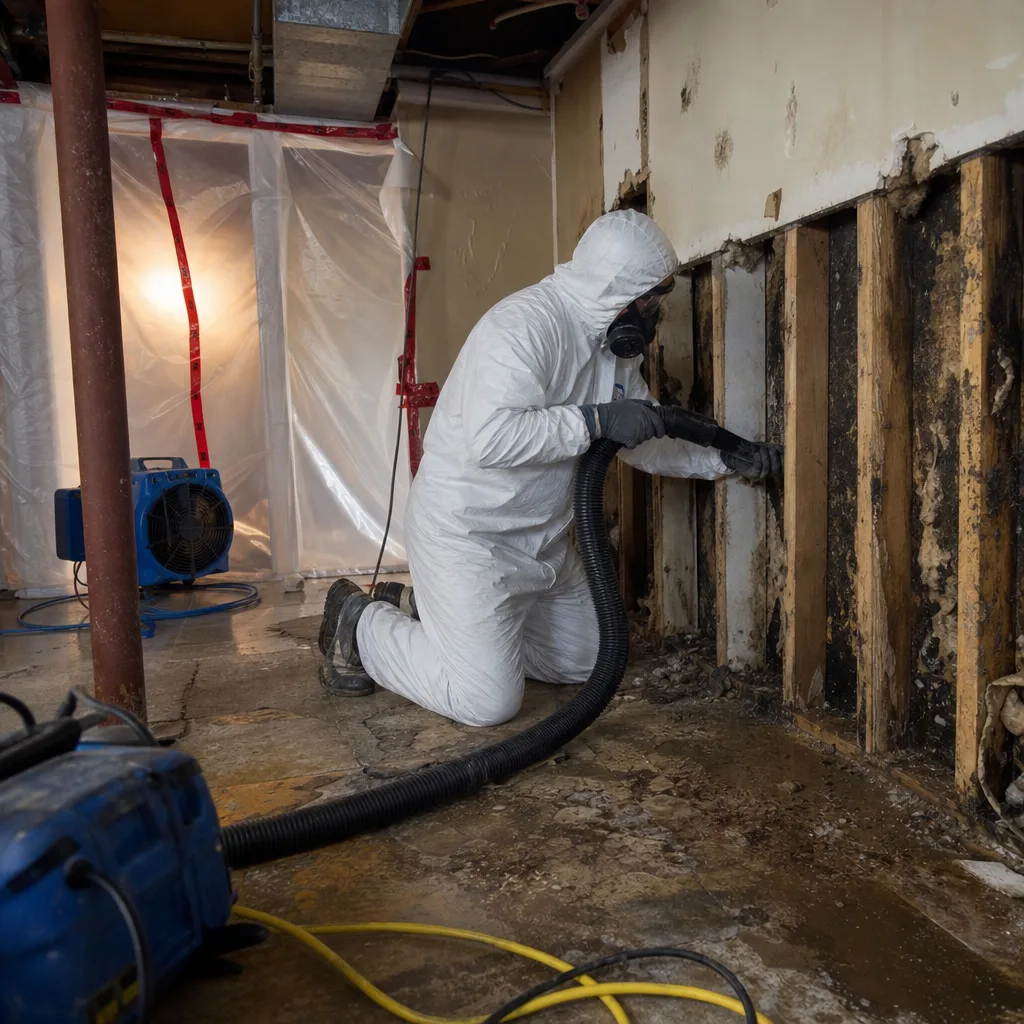
Call when a confirming measurement meets or exceeds the call-now threshold in the symptom-to-measurement table. Call when you suspect hidden damage behind a finished surface and do not have the instruments to confirm. Call when the water source was a drain line, sewage backup, or any Category 2 or 3 water, because bacterial contamination changes both the remediation protocol and the documentation requirements.
Call when mold is visible and exceeds 10 square feet, or when you smell mold but cannot locate the source. Call when electrical components have been wet, particularly in homes with aluminum wiring. Call when the damage has progressed beyond the room of origin, because containment and negative air pressure may be required to prevent secondary damage spread.
DryMark Restoration Tukwila offers free estimates in Tukwila and the surrounding communities. Every assessment includes moisture readings, thermal imaging where indicated, a written scope with line-item pricing before any work begins, and a documented photo record. Our live dispatch answers at all hours, and our crews arrive with Dri-Eaz and Phoenix drying systems ready to deploy. Call (253) 642-8884 to schedule an assessment or to request a Free Second Opinion on any competitor’s written estimate.
Frequently Asked Questions
Our assessment and written estimate are free. We arrive with moisture meters, thermal imaging, and hygrometers, document our findings with photographs, and deliver a written scope with line-item pricing before any work begins. Haven Standard, Clause 1 applies to every job. Call (253) 642-8884 to schedule.
Coverage depends on whether the damage is classified as primary or secondary. Primary damage, from the direct peril, is typically covered. Secondary damage, from delay in addressing the primary damage, is often disputed or denied. The documentation you create when you first notice the warning sign, with dated moisture readings, helps establish that the damage at that time was primary. Waiting without documentation makes the secondary classification more likely. We review your documentation and policy as part of our assessment.
A basic pinless moisture meter from a hardware store, costing $30-50, is sufficient for initial documentation. It will not provide the precision of our professional-grade meters, but it will establish a baseline reading that confirms your observation. The key is to photograph the reading with the date visible, creating a record that professionals can reference. We use calibrated meters traceable to NIST standards for our official documentation, but your initial reading has value in establishing timeline.
Our live dispatch answers every call, and for active water damage with continuing flow or saturation, we prioritize same-day response. For assessment of warning signs that are not actively spreading, we typically schedule within 24 hours. The response time is documented in our dispatch log and becomes part of your file. Call (253) 642-8884 to reach live dispatch now.
DIY cleaning is appropriate only when all of these conditions are met: visible growth is under 10 square feet, on a non-porous surface, from a confirmed Category 1 water source, and the area is accessible without disturbing concealed spaces. In Tukwila’s older homes, we find that visible growth almost always indicates more extensive hidden growth, particularly with kraft-faced insulation and balloon framing common in 1960s-1980s construction. We offer a Free Second Opinion on any competitor’s mold assessment if you want verification of the scope.
Every job receives a documented photo record on every visit, a daily drying log with psychrometric data and moisture readings, a written scope of work with line-item pricing signed before work begins, and a completion certificate with the 365-Day Done Right Promise under The Haven Standard. We coordinate directly with adjusters when authorized, providing the documentation package that supports claim payment. This documentation-first approach is why we were founded in 2011 by a former claims adjuster.
The Bottom Line
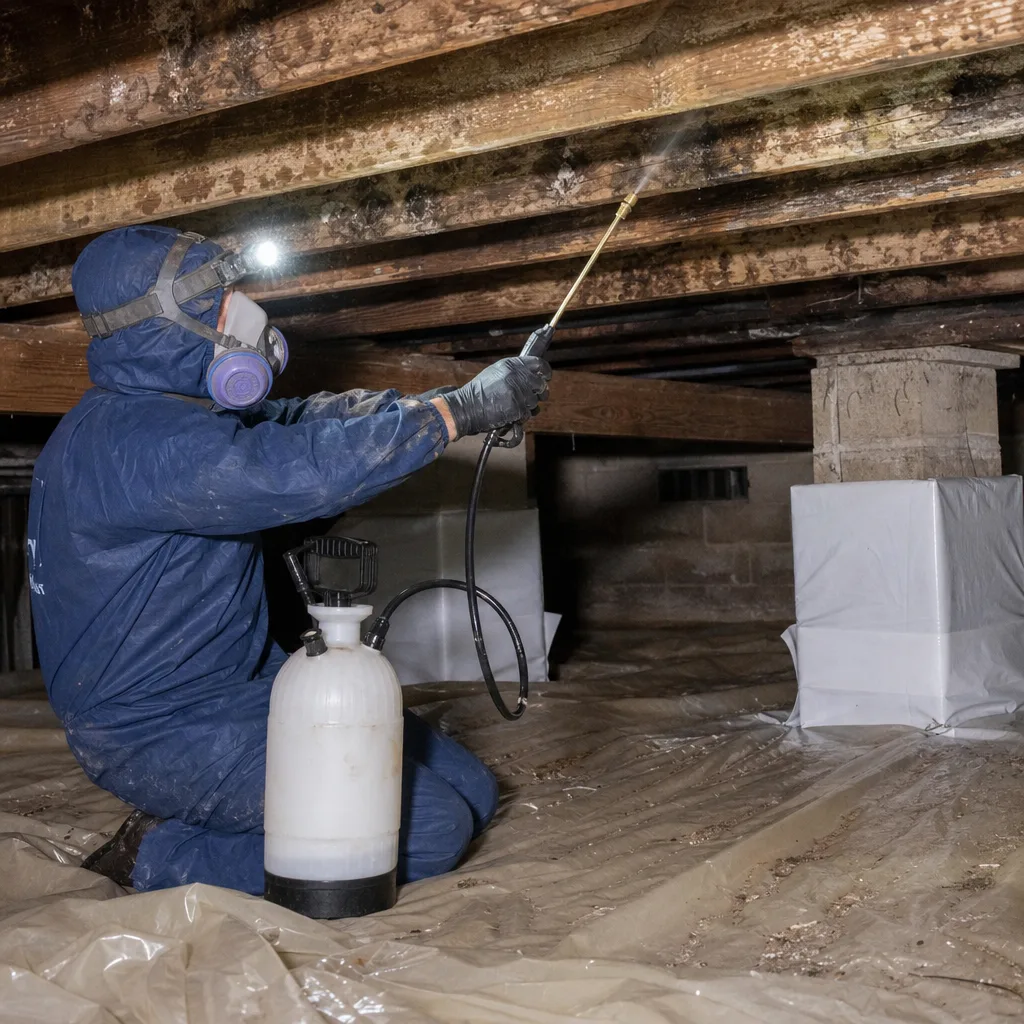
Warning signs are only useful when they lead to measurable action. A stain on the ceiling is a prompt to take a moisture reading, photograph it, and compare that reading to the threshold that separates monitoring from professional intervention. In Tukwila’s specific housing stock, the construction era of your home, 1960s-1980s or newer, changes which warning signs matter most and what hidden damage they predict. The documentation you create in the first 30 minutes after discovery, with timestamps and measurements, determines whether your insurer classifies the damage as primary and payable or secondary and disputed. Professional assessment, with instruments calibrated to IICRC standards and a written scope delivered before work begins, is the next step when your measurements meet or exceed the thresholds in this guide; for ongoing maintenance, see our more guides & resources.
Written by Alicia Brennan, Owner at DryMark Restoration Tukwila, serving Tukwila since 2011.